

Tuan Talk by Jess Lawton – Newstead Landcare AGM
Posted on 17 October, 2017 by Asha
This Thursday evening, 19th October 2017, Newstead Landcare Group is hosting a presentation by PhD candidate Jess Lawton. Jess is studying the Tuan or Brush-tailed Phascogale, a threatened and declining species of the Box-Ironbark country. The presentation will start at 8pm at Newstead Community Centre and all are welcome. A gold coin donation would be appreciated. Afterwards there will be supper and a brief AGM.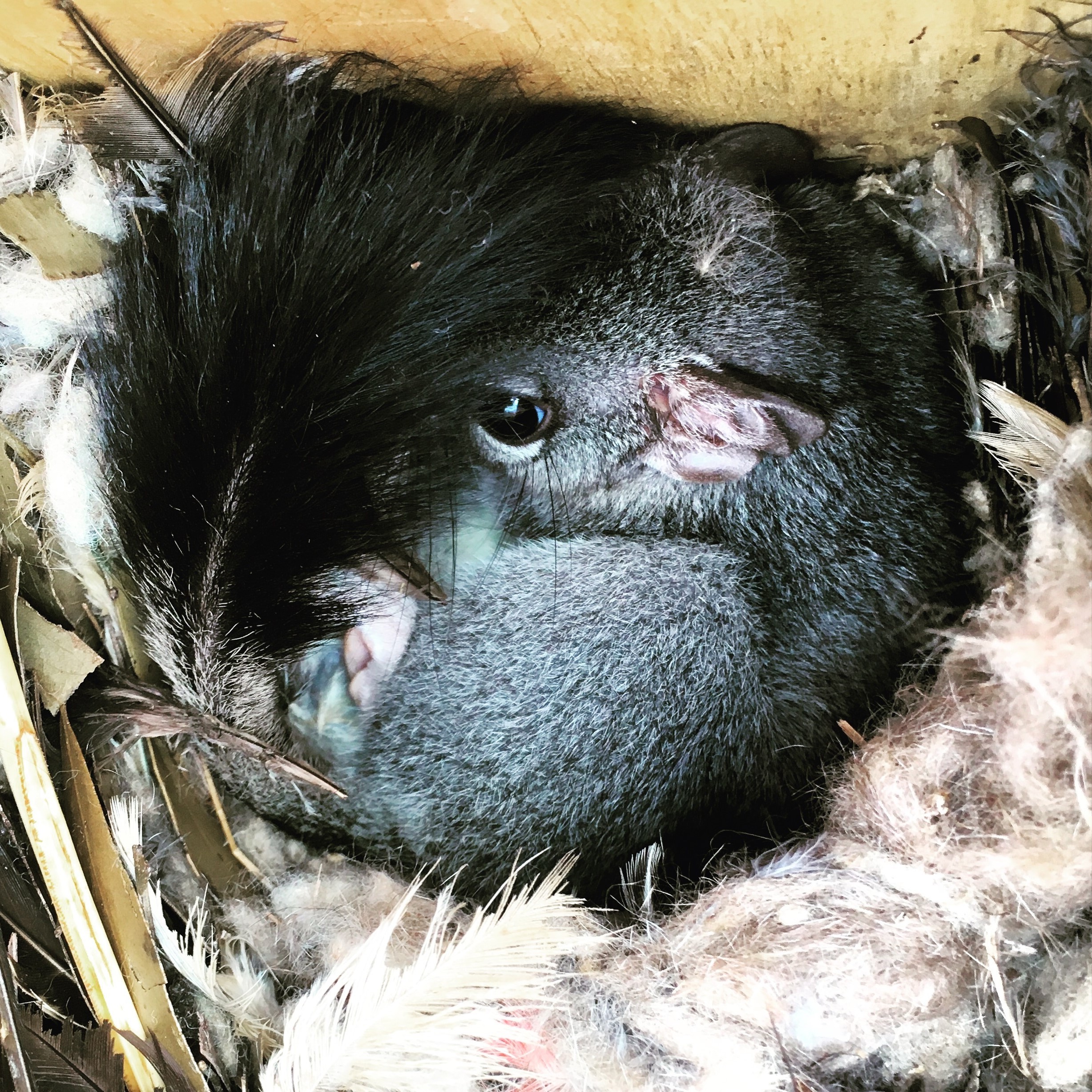
Jess says,
“The Brush-tailed Phascogale is a rare, threatened species, and is declining in Victoria. Our understanding of its conservation biology is limited because it is sparsely distributed, ‘trap-shy’, and has been difficult to survey using traditional techniques. We know that this species has a rapid reproductive cycle, whereby all males die of stress and exhaustion after their first breeding season. We also know that this species often has a large home range of up to 100 ha. Therefore, the current thinking is that it requires large areas of intact forest for a population to persist. However, this species still occurs in modified habitats, such as paddock trees, roadsides, and isolated remnant patches. The aim of my study is to see if the occurrence of the Brush-tailed Phascogale in a modified landscape relates to patch size and patch connectedness.
Connecting Country set 150 nest box sites in 2010 to provide habitat for this species through the Mount Alexander Shire. They have since monitored many of these nest box sites every two years, and now have a number of years of data on this species occurrence in the region. I selected 50 of these 150 sites, stratified according to landscape context (ie. the amount of tree cover surrounding each nest box site). Between April and June 2016, while Connecting Country conducted their nest-box checks, I set two cameras at each of these 50 sites.
In this study, I model the occurrence of Brush-tailed Phascogales in the Mount Alexander Shire with landscape attributes, such as the size of a forest patch, and a number of habitat attributes collected in the field, including forest productivity, forest structure, logs and leaf litter, and tree size and species.
One property near Axe Creek was home to a particularly active population of Brush-tailed Phascogales, and you can watch a video of the sort of footage we detected” https://www.youtube.com/watch?v=VTklMGskLyYc
Getting to know plants of Maldon and surrounds
Posted on 12 October, 2017 by Asha
Intern Sarah Edwards has recently commenced her placement with Connecting Country and attended the ‘Get to know your local plants’ workshop in Maldon on Saturday the 7th of October 2017. This is her account of the afternoon:
Out of the 1100 plant species found in beautiful central Victoria, 60% of these are native species. These native plants are separated by their characteristics (flowers, fruit, seeds, leaves, bark) and are crucial for the survival of the birds, bugs, marsupials and other native animals that are found here.
This was an invaluable workshop. When attempting to correctly identify plants using reference books, there is often a limited amount of information and pictures able to be displayed, making detailed identification a challenge. The last thing I would want to do is accidentally pull out a native plant that I thought was a weed. One of the values of this workshop was being able to use live plant samples to practise on and have experts (Bonnie Humphreys and Frances Cincotta) on hand to help.
We all undertook a series of activities, the aim of which was to use the brief descriptions and other clues provided to identify what a given plant specimen was called. Each table had different types of plants (eucalypts, wattles, pea flowers, prickly shrubs etc.) that share similar characteristics.
Working in small groups, we touched, inspected, smelt and viewed juveniles and adult plant samples and worked as a team to correctly name them. It was like trying to work out a puzzle. Some species were more difficult to identify than others and at times it was quite tricky (and prickly!) but collaborating with others made this activity very enjoyable.
There are two more plant identification workshops coming up that are focusing on local weeds in Newstead and Chewton. See https://connectingcountry.org.au/get-to-know-your-local-plants-weed-and-native-plant-workshops/ for the details.

Sarah working with her team to identify native plants and weeds

The Eucalypt table

Participants hard at work

Groups rotated to try out activities at each table
Spring at Pilchers Bridge event – Sat 7 October 2017
Posted on 2 October, 2017 by Tanya Loos
The Axe Creek Landcare Group would like people to know of their upcoming event “Spring at Pilchers Bridge”, a jam-packed program of expert speakers on the flora, fauna and management of Box-Ironbark forests.  The program includes:
- A bird identification walk around the Trust for Nature covenanted property, Led by Salli Dearricott, followed by a quick pancake breakfast
- A video on Indigenous Burning techniques presented by Trent Nelson, Parks Victoria and Mick Bourke, DELWP
- Orchids of the Box-Ironbark Forests by Julie Radford-Whitfield, Amaryllis Environmental
- Bushfire Preparedness by a representative from the CFA
- Wildlife, Habitat, and Nestboxes by Miles Geldard, Wildlife Nestboxes
- Flowering patterns of local Eucalypts by Bob McDonald, apiarist.
They have also asked us to let you know the following:
- Lunch can be purchased from the Eppalock Primary School Sausage Sizzle.
- Bring your own binoculars, sturdy shoes, camera and water bottle
- Free entry, pancake breakfast, tea coffee and sunscreen
- All welcome but no dogs please
Saturday 7 October.
8am to 4pm at 178 Huddle Creek Rd, Myrtle Creek
Enquiries: Chris Kirwan phone 5439 6494
Email: cwkirwan@bigpond.com
For a flier of the event, click here.
Tuesday 17 October 2017 – CC’s AGM, film launch and special guest speaker
Posted on 21 September, 2017 by Tanya Loos

Georgia lives in Castlemaine with her husband Ben and whippet Henry.
Connecting Country members, supporters and other interested people are invited to our 2017 Annual General Meeting (AGM), which includes a special presentation titled “kicking goals for conservation” by Dr Georgia Garrard plus the launch of our new short film!
Please help us celebrate the achievements on the past year, and look ahead to another exciting year of working with our local community. The evening is a great chance to catch up with our staff, committee and other friends.
The AGM will be held at the Newstead Community Centre (on the main street in Newstead, next to the supermarket) on Tuesday 17 October 2017. We encourage people to arrive from 6.45pm, with the AGM formalities taking place from 7pm until 7.30pm. CLICK HERE for a copy of the agenda.
We are thrilled to launch a short film about Connecting Country filmed by Wild Melbourne. Approximately 3 minutes in length, it features Connecting Country staff, committee members and supporters in our quest to preserve habitat for woodland birds.
Following the film, we will hear from Dr Georgia Garrard. Georgia is a Senior Research Fellow in RMIT University’s Interdisciplinary Conservation Science Research Group. Through her research, she aims to find solutions to the challenge of conserving biodiversity in human-dominated landscapes. Georgia’s presentation is titled Kicking goals in conservation – through better decision making and communication. We are looking forward to hearing how Georgia’s research can help Connecting Country, Landcare groups and individual landholders plan and carry out conservation projects.
After Georgia’s presentation, a light supper and drinks will be served.
Important information regarding the AGM
If you are a current Connecting Country member over the age of 15 then you are entitled to vote on any and all relevant agenda items. If you are unable to make it to the AGM, but still wish to cast a vote, then proxy forms are available. These must be received at least 24 hours before the AGM is held.
If you are a current Connecting Country member aged 18 or over, then you are also able to nominate to join the Committee of Management. If you are interested, you are encouraged to contact the current president – Brendan Sydes – to talk more about what is involved and the opportunities that are available (info@connectingcountry.org.au). A copy of the CC committee nomination form can be downloaded (CLICK HERE).
If you haven’t already, please renew your Connecting Country membership online (CLICK HERE). Contact Chris (chris@connectingcountry.org.au) if you are unsure if you are a current Connecting Country member; if you’d like a proxy voting form; or if you’d like a copy of the 2016 AGM Minutes or 2016-17 Financial Statements to read before the meeting.
We look forward to seeing you all in mid-October!
Wildflower Show at Bendigo this weekend
Posted on 21 September, 2017 by Tanya Loos
The Bendigo Native Plant Group invite you all to come and enjoy the blossoms at their Australian Flower Show this weekend. The 2017 show is at a new venue and will be bigger and better than ever, involving six specialist native plant nurseries. Over 200 specimens on display; book, pottery and photography sales.

Some beautiful blossoms from the 2016 Flower Show
23 & 24 September 2017
9 a.m. – 4.30 p.m.
Kangaroo Flat Primary School. Olympic Parade, Kangaroo Flat
Entry fee: Adults $3
The Australian Flower Show 2017 is hosted by Bendigo Native Plant Group Inc.
Enquiries – bendigonativeplantgroup@yahoo.com.au 0400 149 319
Get to know your local plants: weed and native plant workshops
Posted on 15 September, 2017 by Asha

Learn how to identify plants such as Bridal Creeper at Connecting Country’s “Get to know your local plants” workshop series (photo by Bonnie Humphreys).
Connecting Country and local Landcare groups will be running four plant identification workshops over the next couple of months for community members. These free workshops will include the chance to chat with a botanist, meet members of Landcare groups over a cuppa, and learn identification tips through fun games.
Three of the workshops will be focused on how to identify and manage noxious weeds; the fourth will be focused on both native and invasive plant species. With workshops in Sutton Grange, Maldon, Newstead, and Chewton, there will be a workshop nearby for everyone to learn about the plants and weeds most relevant to their local area. You can also bring along photos or samples of plants (in a ziplock bag) if you’d like help from a botanist to identify them.
Details of the workshops are below, or you can contact Asha Bannon for more information at asha@connectingcountry.org.au or 5472 1594.
Get to know your local weeds – Sutton Grange & surrounds
When: Saturday 23rd September 2017, 10am-12:30pm
Where: Sutton Grange Hall, 921 Faraday-Sutton Grange Rd
RSVP: by Wednesday 20th September for catering purposes
Get to know your local plants – Maldon & surrounds
When: Saturday 7th October 2017, 1pm-3:30pm
Where: Maldon Community Centre, 6 Francis St, Maldon
RSVP: by Wednesday 4th October for catering purposes
Get to know your local weeds – Newstead & surrounds
When: Tuesday 24th October 2017, 6pm-8:30pm
Where: Newstead Community Centre, 9 Lyons St, Newstead
RSVP: by Thursday 19th October for catering purposes
Get to know your local weeds – Chewton & surrounds
When: Wednesday 15th November 2017, 6pm-8:30pm
Where: Chewton Community Centre, Pyrnees Hwy, Chewton
RSVP: by Friday 10th November for catering purposes
Celebration afternoon tea for the bird friends of the region: Sept 29, 2017
Posted on 14 September, 2017 by Tanya Loos
Birds hold a very special place in the hearts of the Mount Alexander Region community. Connecting Country has nearly 200 subscribers to the bird survey eNews, over 16 participating households with long term bird monitoring sites on their property, and a regular band of birdwatchers on our bird walks and outings. Hundreds of bird records have been sent in by our volunteers for addition to our bird survey database. And now it is time to say “thanks!”.
You are all invited to a lush afternoon tea at the Chewton Town Hall on Friday September 29. This event will provide an opportunity to thank you all for your participation in the two year Stewards for Woodland Birds project, and most importantly present the results of the last two years of bird monitoring!
It will also be time an opportunity to talk about the next steps, as we are also moving into a new phase of citizen science bird monitoring. Therefore, I also hope to officially assign one or more local survey sites to those birdwatchers who are interested in being involved. All of the landholders who have existing bird survey sites on their land are also being invited, and it would be great for birdwatching volunteers and landholders to meet face to face. I also want to hear from YOU – what are your needs and interests for our continued bird monitoring program?
Lastly, we will be joined by Fiona Blandford from BirdLife Australia who will talk to us about the possibility of a new BirdLife Branch in the region – tentatively to be known as BirdLife Goldfields! This is a most exciting development and I would love to see some folks put their hand up to possibly be involved.
Friday September 29, Chewton Town Hall 2- 5pm. Please RSVP for this event so I can ensure I have the right amount of delicious treats for you all. For further information call me on 5472 1594 or email tanya@connectingcountry.org.au
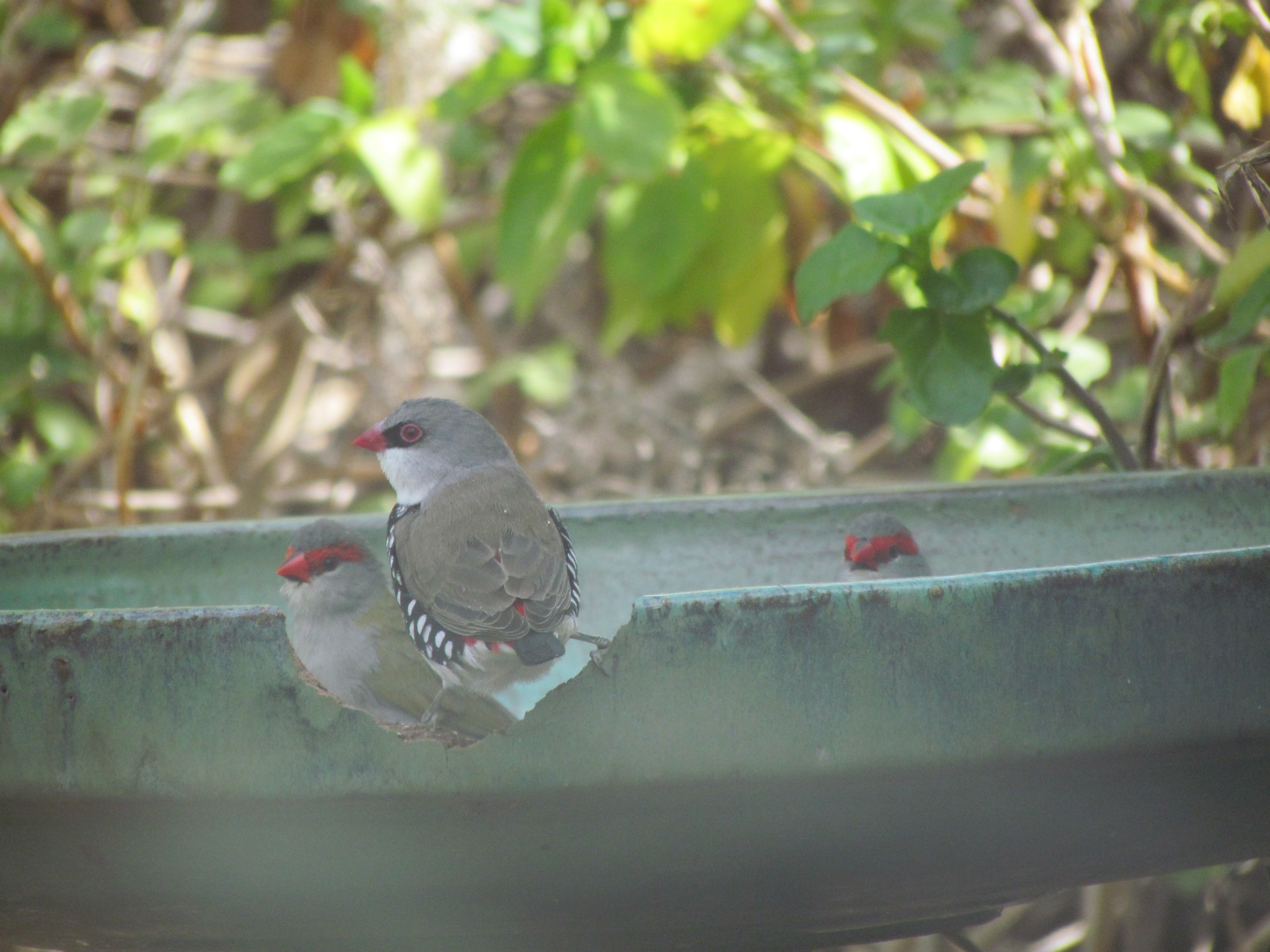
Two finches – A Diamond Firetail with two Red-browed Finches, in a bird bath in the Nuggetty area – sent in by Nick Schulz. Thanks Nick!
Out of town events of interest in September 2017
Posted on 6 September, 2017 by Tanya Loos
As the wattles bloom, groups around the region launch into the busy spring period. Don’t forget to check out one or more of the ten “Try Out Landcare Month” activities – click here for details. Other interesting events just out of our area include:
Create a Frog Pond or Turn your Dam into Habitat, Newham Landcare: Friday 8 September 2017
Evening presentation and discussion with Damien Cook, Rakali ecological Consulting. Damien is a recognized expert in wetland, riparian and terrestrial ecology, particularly in the factors affecting the establishment and management of aquatic and wetland plants. A selection of water-loving plant species will be available to purchase on the night. Newham Mechanics Institute. 7pm for 7.30. Supper follows. Click here to view flier. RSVP to Penny Roberts by email or tel. 5427 0795.
Restoring Country: A Field Day on the Patho Plains: Friday 22 September 2017
This year Trust for Nature will join Peter Morison and Jennifer Alden on their beautiful property at Pine Grove, which they are covenanting with Trust for Nature through the Remnant Grassy Ecosystem Project (managed by the NCCMA & funded the Australian Government’s National Landcare Programme).
For more information on this great event – download the flier here .
Dr Ken Walker from the Melbourne Museum: 24 September 2017 – 1.30pm
This event is presented by the Ballarat Environment Network as part of their AGM. After the AGM, which includes a presentation, there will be a BowerBird Workshop with Ken. Bowerbird is the database for the Melbourne Museum. Venue: Ballarat South Community Hub, Tuppen Drive, Sebastopol (behind Phoenix College)
RSVP for catering and for workshop by 18th September – secretary.ben@gmail.com
To find out more about BowerBird click here.

Local groups and volunteers honoured at the Victorian Landcare Awards 2017
Posted on 4 September, 2017 by Connecting Country
 Environmental groups from the Mount Alexander Shire dominated the 2017 Victorian Landcare Awards ceremony at Government House last Friday, the 1st September 2017. Connecting Country was awarded the Landcare Network Award, and the Tarrangower Cactus Control Group was awarded the Fairfax Media Landcare Community Groups Award.
Individuals were also recognised for their voluntary work; Ian Higgins, from Friends of Campbells Creek won the Australian Government Individual Landcarer award, and Ian Grenda was Highly Commended in this category.
Around 350 Landcarers from around the state gathered at Government House, with a jubilant group of 16 from the Mount Alexander region. The Landcare Awards are an opportunity to showcase people and projects that are contributing to sustainable agriculture and the protection of Victoria’s environment.
This year’s awards received significant interest from right across the state, with 85 nominations submitted across the 14 categories. Also nominated from this region were Asha Bannon for the Young Landcarer Award; and Chewton Primary and Winters Flat Primary for the Junior Landcare Team Award.
These awards are a strong testament to the energy and enthusiasm of the Mount Alexander Shire community for our natural environment. Mount Alexander Shire is incredibly fortunate to have such an active network of Landcare groups, schools and individuals working together with passion and a focus on landscape scale restoration. Congratulations to all the nominees and winners at the Landcare Awards this year.
CLICK HERE to read all of the winners’ stories from across the state.
Here are a few shots from the exciting day:


Now is the best time to try out Landcare!
Posted on 31 August, 2017 by Asha

Tanya on a walk with some excited ‘nature detectives’ at the 2017 Camp Out on the Mount
Landcare Week is coming up next week: September 4th – 10th 2017. It’s the perfect time to get outside, get your hands dirty, and connect with other community members. We have over 30 groups in the Mount Alexander region alone, so it’s easy to find an event or working bee that’s near you and suits your interests.
Landcare and Friends groups are always looking for extra hands to help and are keen to share their knowledge of our beautiful local plants and animals. During September, there are more than eleven events being run by Landcare groups, including nature walks to learn from experts and soak up the bush, and working bees to develop some hands-on skills and help improve habitat for native species.
CLICK HERE to visit our page with information about all of the Landcare events happening in the Mount Alexander region in September 2017.
Saturday 12 August 2017: Sharing Stories around the Fire and The Other Renewables Forum
Posted on 9 August, 2017 by Tanya Loos
This Saturday the 12th August 2017 is a busy day culturally and environmentally for our community! We have the Parkrun cultural morning at the Castlemaine Botanic Gardens previously posted here and we would like to promote two more events.
Sharing Stories around the Fire: a Words in Winter event
 Join the Talking Fire group this Saturday 12 August 2017 in Newstead from 4.30-8.30pm to explore stories of fire in our landscape. We’ll visit a spot in the nearby forest, for readings and to listen to the language of the forest. Back at the Arts Hub, with hearty soup in hand, we’ll share our own stories and create some new stories too. Please RSVP so we have enough soup for all! Book via Eventbrite or through Chris on 5476 2457.
This journey through place, story, memory, myth and experience is a special event offered by the Talking Fire group as part of Newstead’s Words in Winter. Bring a story to share.
For more info: CLICK HERE.
The Mount Alexander Sustainability Group (MASG) presents: The Other Renewables Forum
On Saturday the 12th August 2017, 1.30pm – 5.30pm, the Mount Alexander Sustainability Group (MASG) will be presenting ‘The Other Renewables Forum’ at the Castlemaine Town Hall, with a line-up of recognised guests working in both a local and national context in the fields of bioenergy, geothermal, mini-hydro, pumped hydro, thermal solar and soil carbon sequestration.
Speakers:
MC: Mary Blain, MASG
Presenters: Andrew Lang, Alan Pears, David Taylor, Professor Lu Aye, Dr Guillermo Narsilio, David Carre, David Stratton, Deane Belfield, Chris Corr.
Cost: $20 General | $5 Members | Students Free
Bookings: https://otherrenewablesforum.eventbrite.com.au/
For more information:
Email: info@masg.org.au
Ph: 03 5470 6978
Web: http://masg.org.au/events/other-renewables-forum/
12 Aug 2017 – Cultural morning at Castlemaine parkrun
Posted on 8 August, 2017 by Connecting Country
Connecting Country’s blogs have rarely – if ever – addressed sports-related events. However, this weekend’s Castlemaine Parkrun is an exception, as they are holding a special cultural-awareness event, and they are inviting everyone from the local community and beyond to join in.
Parkrun is an not-for-profit organisation that supports volunteers to host free timed 5km events each week at locations throughout the world, to be enjoyed by people of all ages and abilities – from walkers to experienced runners, children to retirees, and everyone in between. It is not a race, but a chance for people to improve their health in a local parkland setting with a friendly supportive atmosphere.
There has been a weekly parkrun held in Castlemaine for more than 2 years, early every Saturday morning at the botanic gardens. It starts and finishes just near the BBQ and playground area. Connecting Country’s Co-Director, Chris, is a regular attendee.
As described on their Facebook page, this special parkrun event at Castlemaine will commence on Saturday 12 August at 7:45am and will include both a welcome and a smoking ceremony by representatives from the local aboriginal community. At 8am, the standard 5km event will occur – 3 laps of the botanic gardens at your own pace. (If on leads, dogs are also always allowed on the walk). There will then be cultural activities after the run at 9am, as well as food and drink from the Myrnong Mammas. Attendees are encouraged to get in the spirit of the day by wearing Red/Yellow/Black.
All community members (runners, walkers, onlookers) are invited to what should be a great morning.
As noted above, parkrun is a free event. First time participants are encouraged to register beforehand, but it is not compulsory to do so (more details on the Castlemaine parkrun homepage – click here).

North Central Chat – August edition
Posted on 7 August, 2017 by Tanya Loos
The North Central Chat August edition is here! Asha’s Landcare event “Meet your Land Manager” features in this month’s edition – and the results of the Landcare Group Health Survey. The August edition is available to download here.
Another highlight in this edition is the 2017 Chicks in the Sticks event, to be held on Walkers Lake in the Avon Plains on Sunday 10 September.
“Are you inspired by opportunity and the stories of others? Keen to meet like-minded women who share a connection to agriculture and the environment? Pull on your gumboots, don your favourite frock and add your own native flora accessory…it’s time for the fifth Chicks in the Sticks event, hosted by North Central Catchment Management Authority (CMA) in partnership with Project Platypus.”
All the details are in the Chat and here is your link to register: https://2017chicksinthesticks.eventbrite.com.au
Street Moss – a photography exhibition of our urban mosses
Posted on 31 July, 2017 by Tanya Loos
Street Moss is the subject of an exhibition of photos by Bronwyn Silver and Bernard Slattery that has just opened at Falkner Gallery, 35 Templeton Street, Castlemaine. The show runs from 20 July to 3 September 2017 and the gallery is open each week between 11 am and 4 pm, Thursday to Sunday.
Bronwyn and Bernard are well placed to present a photography exhibition on moss, as both contributed to the very popular Guide to Mosses of Dry Forests in Eastern Australia which was published in 2014. More recently, Bronwyn and Bernard, along with Ern Perkins, co-wrote Eucalypts of the Mount Alexander Region. These books are both fantastic achievements and contribute considerably to the understanding and appreciation of nature in our region.
Below are some words from Bernard to introduce the fabulous photos of “Street Moss”…
Moss never sleeps
The paved streets of our towns and cities are imperfect coverings of a nature always ready to stage a comeback. We’re all familiar with scenes of deserted settlements rapidly growing over with weeds, streets cracked by emerging shrubs and trees. But even bustling towns actively cleaned by teams of usually underpaid workers show signs that humanity is really just holding nature at bay.
The margins of manholes, the gaps between gutter paving stones, the shady neglected corners of industrial sites, all harbour active plant colonies ever ready to expand and undo the work of the bitumen and concrete industries.
The vanguards of these saboteurs of neatness and order are usually moss species. They can bide their time in the town’s narrowest cracks for implausibly long periods of dusty sterility, to flourish suddenly with the first shower of rain. Modest, apparently fragile, improbably beautiful: given time, they could bring down the cloud capped towers of the industrial world!
And they’re great to look at, too.

Street moss grid by Bronwyn Silver
and another beautiful photo…

Parker Street 3. by Bernard Slattery, 2017
Birds thriving in Campbells Creek
Posted on 27 July, 2017 by Tanya Loos
Connecting Country has been carrying out bird monitoring at a site in Campbells Creek since 2010, and so it was with great pleasure that Tanya had an opportunity to lead a walk there on Sunday 22 July 2017, with some of the members of Friends of Campbells Creek Landcare that had a hand in the restoration of this part of the creek and surrounding land.
Over twenty people attended the Feathered Friends of Campbells Creek event, which was part of Mount Alexander Shire Council’s Sustainable Living workshop series. The workshop started with a bird walk at Campbells Creek, near Honeycomb Rd. We walked down to the Connecting Connecting bird survey site to carry out a twenty minute two hectare survey – the standard bird monitoring method. I was impressed to see nearly everyone had their own binoculars.
We all had great views of New Holland Honeyeaters, and at one point a Wedge-tailed Eagle soared majestically overhead. An abundance of thornbills darted about through the wattles, along with pardalotes, a Grey Fantail, superb fairy-wrens and a small flock of Red-browed Finches. Towards the end of the walk, we caught a glimpse of a female Scarlet Robin, and this was only the third sighting of this species in 28 surveys! For a copy of the Bird Monitoring results for the Campbells Creek site click here.
It was seven degrees, a bit glary and a bit breezy – not the best conditions for seeing small birds. However it was clear that the wattles, hakeas, native grasses, hop bush and cassinia were providing excellent cover and hiding places for the small birds of the area!

“Hmmm – are they Yellow Thornbills calling and bustling about up there? “
After the bird survey, David King from the Friends gave us an overview of the work of the group over the past thirty years, in particular Ian Higgins. David told us that before the group started their revegetation work, Ian had counted a mere five individual wattles between Castlemaine and this section at which we stood! An incredible transformation. We then walked back up the path to the sign, which had a whole range of information and QR codes so that you could use your smart phone to find out more about the flora and fauna the Friends are such fine custodians of.

David King talked about the sign. Moments later we saw a Swamp Wallaby!! Photo by Jay Smith.
After our walk we returned to the Campbells Creek Community Centre for a short presentation on birds and habitat, where I had the opportunity to emphasise how the restoration work has made the site so perfect for small bush birds such as thornbills, fairy-wrens and pardalotes. The Scarlet Robin is an excellent candidate for a focal or flagship species for the area – and I predict that sightings of the Scarlet Robin may become more frequent in the coming years – thanks to the work of this fantastic group!
Many thanks to David King, and to Jay Smith from Mount Alexander Shire Council for hosting the walk.
As previously posted, the Friends are participating in National Tree day this Sunday:
Friends of Campbells Creek Landcare will be planting in the Honeycomb Bushland Reserve in Campbells Creek. It’s a 10 minute walk from car parking to the site, along an bush trail used by recreational walkers, with interesting features along the way. The planting will be followed by a free BBQ lunch for all, catering for a range of dietary needs.
When: 10am – 1pm, Sunday 30th July 2017
Where: Meet at the Honeycomb Bushland Reserve, Campbells Creek, where Honeycomb Road meets the gravel trail (CLICK HERE for map).
More information: follow them on Facebook (CLICK HERE), go to their website (CLICK HERE) or contact Shona on 0408 724 699
Dams to Wetlands Workshop – Muckleford Catchment Landcare
Posted on 17 July, 2017 by Asha

Workshop attendees will visit dams like this one in Muckleford (photo by Beth Mellick).
Join Muckleford Landcare to visit two dams and discuss ways in which to improve their function for biodiversity. Everyone is welcome to come along and learn how to turn your dam into a thriving wetland.
The workshop is on this Sunday 23rd July, from 9.30am to 12 noon. Meet at the end of Lyndham Road (off Golf Links Road). For any questions, contact Beth on 0431 219 980 or bethmellick@gmail.com.
Enjoying birds in frosty July – two events to come
Posted on 11 July, 2017 by Tanya Loos
Any bird lover knows that a wintery day is no barrier to birdwatching! The birds go about their business undaunted by the cold; well-wrapped in their feathery coats. If we rug up well, and there is no wind, then winter birding can be a lovely change from huddling by the fire!

This Jacky Winter is well insulated! Photographed by Peter Turner
There are two events coming up soon for those that are interested in their local birds and their habitats. Both events involve a bird walk followed by a presentation about the birds of the local area.
Sunday July 16, 2017 – Bird walk and Landcare workshop for Guildford area
Bird Walk: Local bird and habitat walk along Casley Lane, near Guildford. 9:15am – 11:00am. Meeting point map sent with your RSVP.
Presentation: Guildford birds and how you can care for them, by Connecting Country’s bird enthusiast, Tanya Loos. Also hear from Maurie Dynon, Guildford and Upper Loddon Landcare. Morning tea and presentation: Guildford Hall 11:00am – 12:30pm
Please RSVP (with any dietary requirements) to Tanya Loos on 03 5472 1594 or by email tanya@connectingcountry.org.au
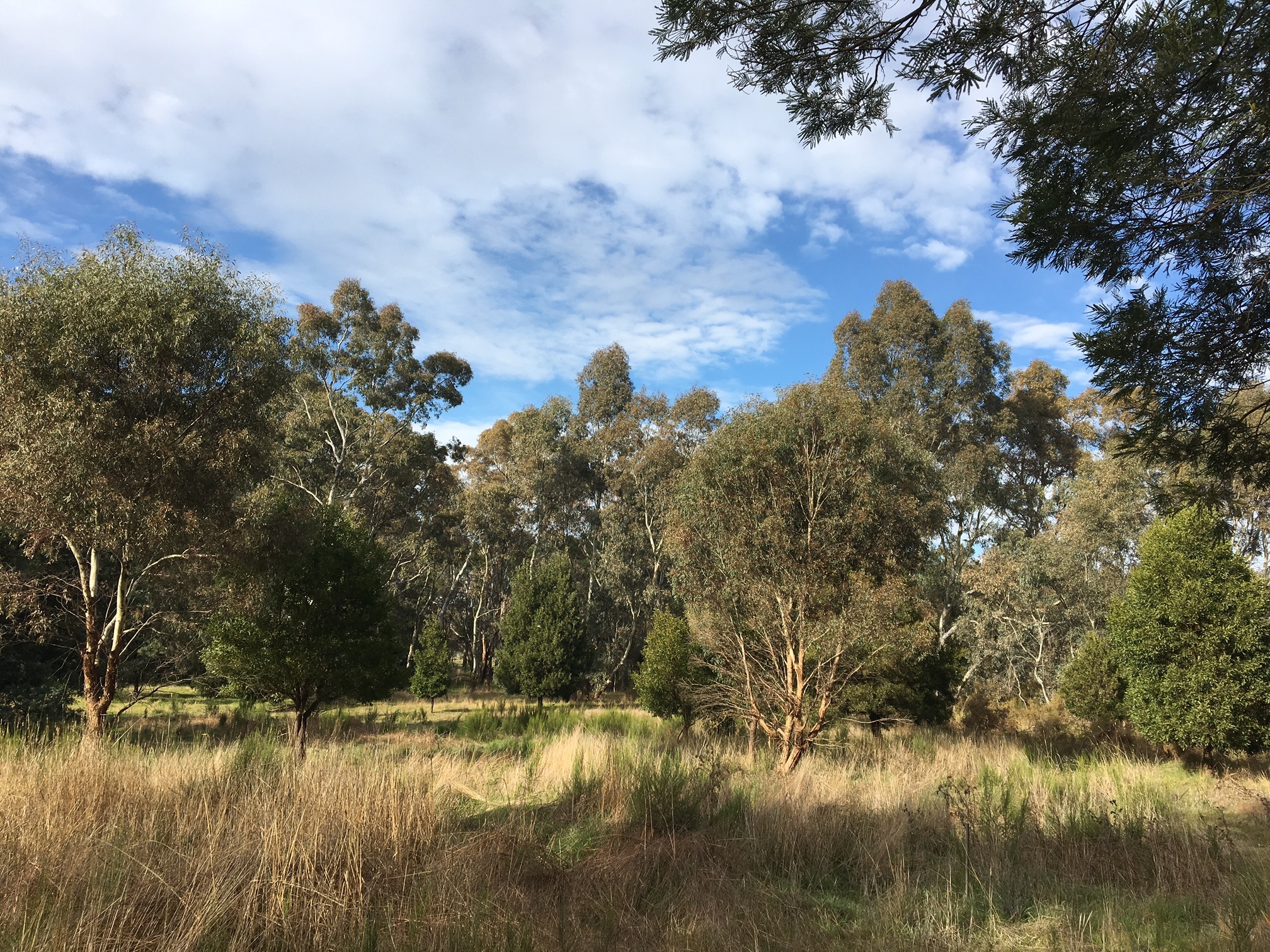
This section of Campbells Creek has been surveyed for birds since 2010. The birdlife is amazing!
Saturday July 22, 2017 – Feathered Friends of Campbells Creek (part of Mount Alexander Shire Council’s Sustainable Living Workshop series)
Castlemaine and Chewton now have beautifully revegetated waterways thanks to the tireless work of local community groups. This has benefited our local birdlife greatly. Connecting Country has surveyed the birds of Campbells Creek for 7 years – and is keen to present a portrait of the creek’s burgeoning birdlife. Dress warmly for a mid-winter presentation, morning tea and bird walk at nearby Honeycomb Rd if weather permits.
The details: From 10.30am to 12.30pm. Presented by Tanya Loos from Connecting Country. In Campbells Creek area (the address/location will be provided to registered attendees closer to the date). To reserve your place for the Feathered Friends walk contact Council’s Healthy Environments team on 5471 1700 or d.giles@mountalexander.vic.gov.au.
These two events are generously supported by the Helen Macpherson Smith Trust.
Fryerstown bird walk and workshop
Posted on 3 July, 2017 by Tanya Loos
Last Sunday, June 25 2017, Fryerstown residents and bird lovers from as far afield as Woodend and Shepherds Flat enjoyed a bird walk and gathering at the old Fryerstown School. We were pleasantly surprised by the mild weather and yes – even sunshine!
Our group of twenty spotted 18 bird species , with Yellow-tufted Honeyeaters most definitely “bird of the day” as they were present in large numbers feeding on the flowering Yellow Gums. Another highlight was some very good views of one of our target species, the Brown Treecreeper. Nina Tsilikas took this lovely photograph of a Brown Treecreeper hopping about on the moss-covered ground. Out of shot is a large group of Long-billed Corellas who were digging for a bulb of some kind – the two species made quite a contrast. They were foraging on a site known as Blue Duck Mine – soon to be the site of an exciting new project, but more on this later!

They appear to be plain brown – but the Brown Treecreeper is very beautifully patterned when seen at close quarters.
We walked along Turners Road to the Fryerstown Cemetery. Sadly the Eastern Yellow Robins who are usually there were absent, but we did get some lovely views of a male and female Galah. Nina was there again with her trusty camera – and these shots show the subtle difference between the sexes – the male has a dark brown coloured eye, and the female a pinkish red eye.

Male Galah

Female Galah
After the walk we all enjoyed sandwiches, cake and tea and coffee served by the School committee – and I gave a short presentation on woodland birds and how to help them thrive in the Fryerstown area.
Maurie Dynon from Guildford and Upper Loddon Landcare kindly stood up and gave the group an update on an exciting proposed restoration project in the Fryerstown township – the weed removal and revegetation of a patch of land known as the Blue Duck Mine. The funding is yet to be confirmed, but the land managers (Department of Environment Land Water and Planning) are on board and so is the Fryerstown CFA, whose fire shed abuts the reserve. Fryerstown locals such as Clodagh Norwood, Helen Martin and Bill Burris are thrilled that the Blue Duck Mine project, auspiced by the landcare group, could set in motion a number of habitat restoration projects locally.
Many thanks to the wonderful residents of Fryerstown for their generosity and enthusiasm – it was a really fun morning!
Finally, Connecting Country is calling out for landholders who are interested in helping protect and enhance bird habitat on their property – if you are in the Fryerstown, Tarilta, Glenluce area and have remnant vegetation on your land – please fill in an expression of interest form – see Expression-Of-Interest-Form-July-2017-Connecting-Country and get in touch!
This event was generously supported by the Helen Macpherson Smith Trust.

Watching the Brown Treecreeper
Mon 10 July 2017 – FOBIF AGM and guest speaker
Posted on 30 June, 2017 by Connecting Country

Brian Bainbridge will be the guest speaker at the 2017 FOBIF AGM.
The Friends of the Box Ironbark Forests (FOBIF) Annual General Meeting will be held from 7.30pm on July 10 in the Ray Bradfield Rooms, next to the IGA carpark and Victory Park in central Castlemaine. More details on the night, including how to nominate for the FOBIF Committee can be found here. Supper will be served and everyone is welcome. The guest speaker on the night will be Brian Bainbridge, an Ecological Restoration Planner whose background is working with the Merri Creek Management Committee.
His topic will be Single species – many outcomes.
Single species conservation projects can have wide-ranging benefits when pursued in a holistic manner. Projects to secure local populations of Matted Flax Lily and Plains Yam Daisy have led Merri Creek Management Committee to build a deeper understanding of the Merri Creek’s changing ecology and the potential for landscape-scale conservation. The projects have stimulated fresh approaches to engaging with community.
Dates for the 2017 Regent Honeyeater Planting Weekends
Posted on 30 June, 2017 by Connecting Country

Help build habitat for the endangered Regent Honeyeater by attending a planting weekend in the Lurg Hill near Benalla this year.
Connecting Country’s friends at the Regent Honeyeater Project in the Lurg Hills near Benalla have put out a call for volunteer planters over the coming months. This project has established itself as one of the most active volunteer conservation projects in the nation. It has engaged a whole farming community in restoring remnant Box-Ironbark habitat for the endangered Regent Honeyeater, and attracted ongoing support from a wide cross-section of the community to help farmers with the on-ground works.
Propagation and planting days are organised each year for a thousand students from more than 20 local schools and hundreds of volunteers from universities, walking clubs, church groups, bird observers, scouts, environment groups and the like. The massive scale of their tree-planting work has enormous benefits for landcare in their area as well as for wildlife. Almost 900 hectares of restored habitat is reducing salinity and erosion problems, and improving water quality, stock shelter and natural pest control.
Please find the weekend planting dates for the Regent Honeyeater Project in and around Lurg in 2017 year below:
August 12-13
August 26-27
September 9-10
September 23-24
October 7-8
They have plenty of great sites available that will improve ecosystems and give benefits into the future for the endangered wildlife. The project can supply accommodation in the Scout and Guides halls in Benalla in the form of mattresses and an evening meal on Saturday and an onsite lunch on Sunday.
Please contact field Officer with the Regent Honeyeater Project, Andie Guerin, with any queries and to RSVP via email: andie@regenthoneyeater.org.au