

Bird of the Month: Masked Lapwing
Posted on 23 July, 2026 by Hadley Cole
Bird of the Month is a partnership between Connecting Country and BirdLife Castlemaine District. Each month we take a closer look at a special local bird species . As always thank you to the brilliant Jane Rusden and Damian Kelly for these wonderful articles and fabulous photos.
Written by Damian Kelly and Jane Rusden
Masked Lapwings are known for their loud call, being fiercely protective parents and nesting in what appears to us to be pretty daft spots, like rooftops and in the baking sun. However, the parents do know what they are doing. Unlike many native Australian bird species, they have adapted to using urban and altered environments and they inhabit open grassy areas, beaches and marshes, where they have 360 degree views to see approaching predators. Paddocks, carparks, sports grounds, median strips and gardens are prime habitat for this species.
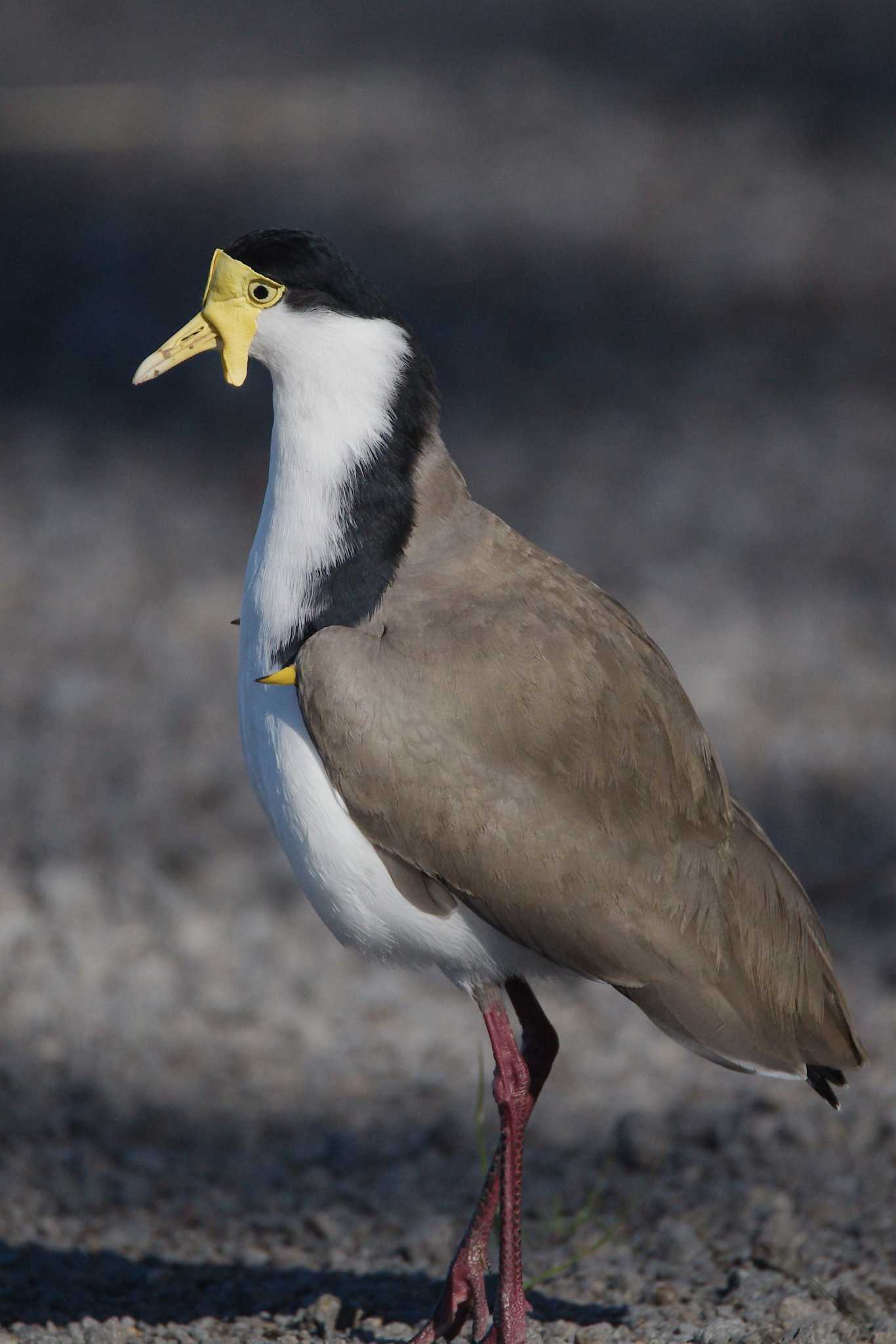
The wing spurs are visible on this Masked Lapwing. Photo by Damian Kelly.
A bold but wary bird that lives and nests on the ground, Masked Lapwings (or Spur-winged Plovers) create a simple nest, a scrape in the ground away from cover, and they’re ready for eggs!. The 3-4 eggs are incubated by both parents for about 30 days, interestingly the sun keeps the eggs warm and parents may use their bodies to shade the eggs in the middle of the day. Plover chicks are precocial (born in a mature state) and can walk and leave the nest almost immediately after hatching, as well as start feeding themselves. However, they depend on the protection of their parents for 6-7 weeks until they can fly. Masked Lapwing parents will protect their unfledged chicks with great enthusiasm, they call loudly and alarmingly and will sometimes swoop to scare threats away, however they rarely make contact. Also, parents will pretend they have a broken wing to draw predators away from a nest or chicks. Once the chicks can fly, the parents drop their guard down a notch or two, but remain vigilant.
The spurs on their wings are used to deter predators and gives them the name Spur-winged Plovers. It’s difficult to tell males and females apart, but the males have slightly larger spurs. These spurs are not poisonous and rarely make contact, in defence of young and nests during the breeding season.
The Masked Lapwing ranges over most of Australia, apart from the south west of the Kimberly region and is rarely found around greater Perth. It has even expanded its range into New Zealand and Papua New Guinea. Although they are usually sedentary they will sometimes travel. Local movements often occur at night and it is not unusual to hear their loud slightly alarming calls as they fly. They mostly eat a variety of insects, worms, molluscs and crustaceans along with seeds, leaves and frogs.
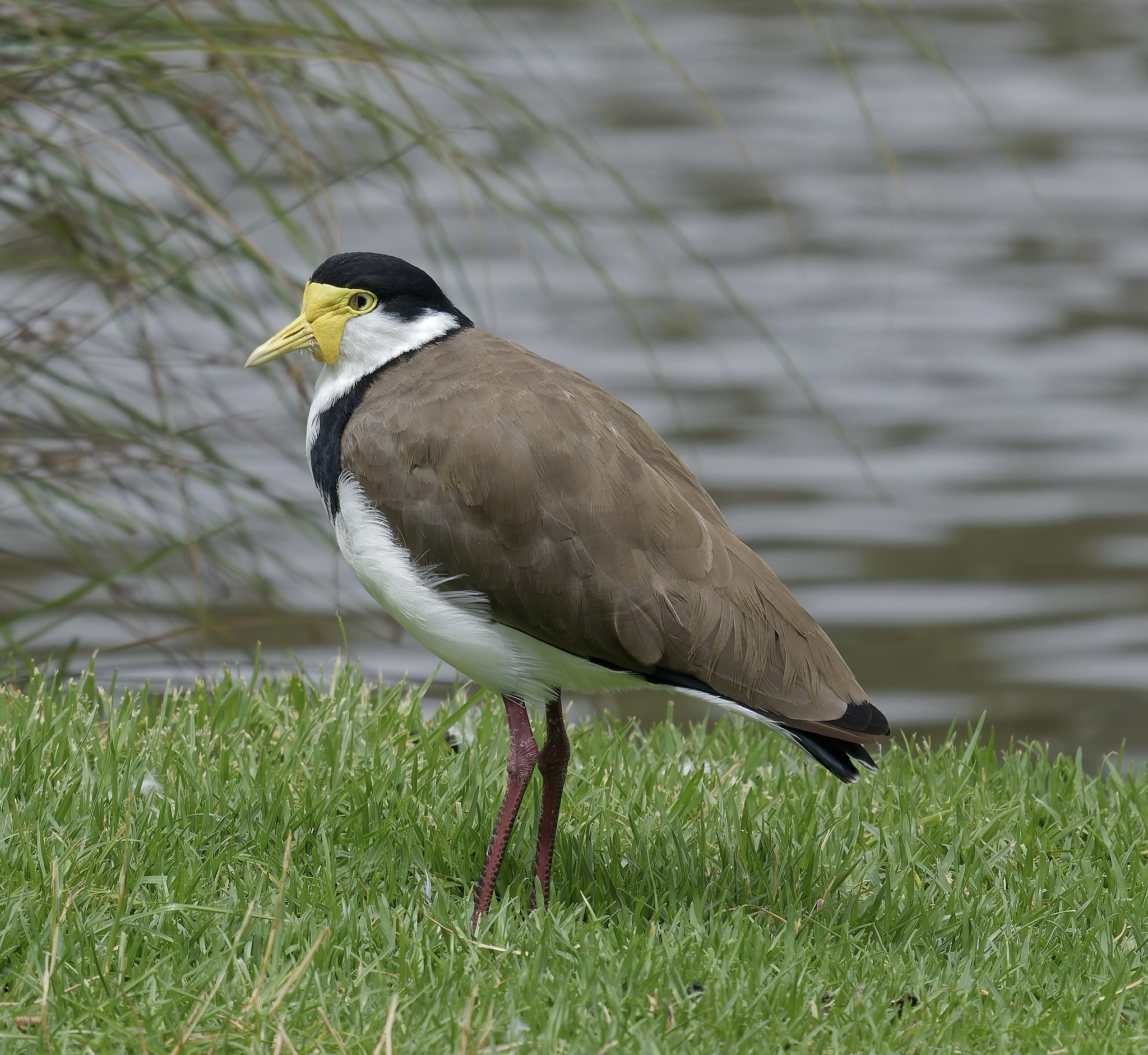
Masked Lapwing at Castlemaine Botanical Gardens, in very typical altered habitat. Photo by Damian Kelly.
If a pair of Masked Lapwings have nested on your roof, they will most likely be fine. They use the sun to incubate chicks and the newly hatched young ones will jump safely to the ground. The same as hollow nesting duck species.
If there is a nest in a wildly unsafe place, approach the nest slowly and don’t make eye contact with the parents and place a chair or other suitable barrier around the nest to protect it. Keeping in mind Masked Lapwings like a 360 degree view around their nests. Attempting to move the nest is illegal without proper licences and will likely cause the adults to abandon the eggs.
If you are concerned about Masked Lapwings, where they have nested or are worried about their eggs or chicks, here’s a couple of helpful links:
https://www.wiresmembers.org.au/wildlife-information/plovers
Words by Jane Rusden and Damian Kelly.


Leave a Reply