

Platypus survey in Campbells Creek
Posted on 7 November, 2019 by Ivan
Our partners and good friends at Friends of Campbells Creek Landcare Group have arranged for the Australian Platypus Conservancy (APC) to conduct a Platypus survey at six locations along Campbells Creek, Victoria, in mid-November 2019.
The survey has been funded by Coliban Water. The survey will commence on the evening of Friday 15 November 2019 (depending on appropriate weather conditions), and finish early on Saturday morning. The APC team will be based at the Campbells Creek Community Centre. The first inspection of the nets will be at around 10 pm and continue throughout the night, approximately every two hours.
On Saturday morning at around 7.30 am, the results of the survey will be discussed at the Campbells Creek Community Centre (45 Elizabeth St, Campbells Creek VIC). Interested community members are welcome to join in and see the results. Tea and coffee will be available. In 2020 the APC team will return to conduct a citizen science workshop to present information on the biology and conservation considerations of Platypus and Rakali (native water rat), followed by a practical session on Campbells Creek. We will keep you informed of this event.
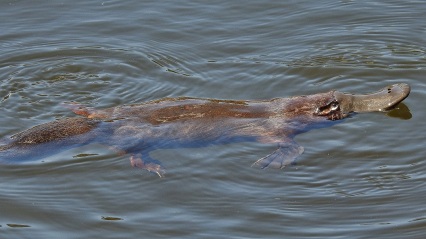
The platypus has a streamlined body and a superficially duck-like bill (photo: APC)
For more information about Friends of Campbells Creek Landcare Group and the Platypus project, please click here.
For more information about the Australian Platypus Conservancy (APC) and the survey methods, please click here.
Eltham Copper Butterfly events 2019
Posted on 28 October, 2019 by Frances
Confused about all the exciting things happening with Eltham Copper Butterfly (ECB) around Castlemaine at the moment?
We’re delighted that Castlemaine’s local populations of this threatened butterfly are getting the attention they deserve. Here is a summary of events prepared with help from local ecologist and ECB guru, Elaine Bayes of Rakali Ecological Consulting.
- If you would like to help protect Eltham Copper Butterflies or would simply like a purpose while walking out in the bush, then come and join us in finding where ECB are so that they can be protected from threats.
- If you are just curious and want to learn more about Eltham Copper Butterflies then come along to the Butterfly Celebration Day, ECB monitoring education session or Castlemaine Field Naturalist talk.
- If you would like to become an Eltham Copper Butterfly Monitor and carry out searches either with our group or on your own, then join us on the ECB Monitor Training Events, so that you can learn how to contribute to conservation of the amazing Eltham Copper Butterfly.
2019 Eltham Copper Butterfly events around Castlemaine
| Date | Activity | Further information |
| Friday 8 November 2019 7.30 – 9.00 pm |
Castlemaine Field Naturalists Club talk on ECB with Elaine Bayes Hear general information on ECB biology and monitoring |
Castlemaine Field Naturalists Club click here |
| Saturday 9 November 2019 1.30 – 4.00 pm |
Field trip to Kalimina Park with Castlemaine Field Naturalists Club See ECB habitat and learn method of ECB search |
Castlemaine Field Naturalists Club click here |
| Saturday 16 November 2019 12.00 – 4.00 pm |
ECB monitor training – introduction Receive training day on how to monitor ECB |
Connecting Country click here |
| Sunday 17 November 2019 1.00 – 3.00 pm |
Butterfly Celebration Day at Castlemaine Botanical Gardens Attend family event with art and music and ECB habitat tours |
Castlemaine Landcare Group click here |
| Sunday 1 December 2019 12.00 – 4.00 pm |
ECB monitor training – practical Carry out ECB searches as a group |
Connecting Country Bookings not required For more information click here |
| Sunday 15 December 2019 12.00 – 4.00 pm |
ECB monitor training – practical Carry out ECB searches as a group |
Connecting Country Bookings not required For more information click here |
| Saturday 28 December 2019 12.00 – 4.00 pm |
ECB monitor training – practical Carry out ECB searches as a group |
Connecting Country Bookings not required For more information click here |
Trained ECB Monitors are also invited to join Karl Just and Elaine Bayes on their searches throughout November and December. The following dates are scheduled but may change depending on the weather – contact elaine@rakali.com.au if you would like to be kept updated:
- Friday 15 November 2019
- Friday 29 November 2019
- Thursday 19 December 2019
- Friday 20 December 2019
- Friday 27 December 2019
This year’s events are supported by the Wettenhall Environment Trust and Mount Alexander Shire Council.
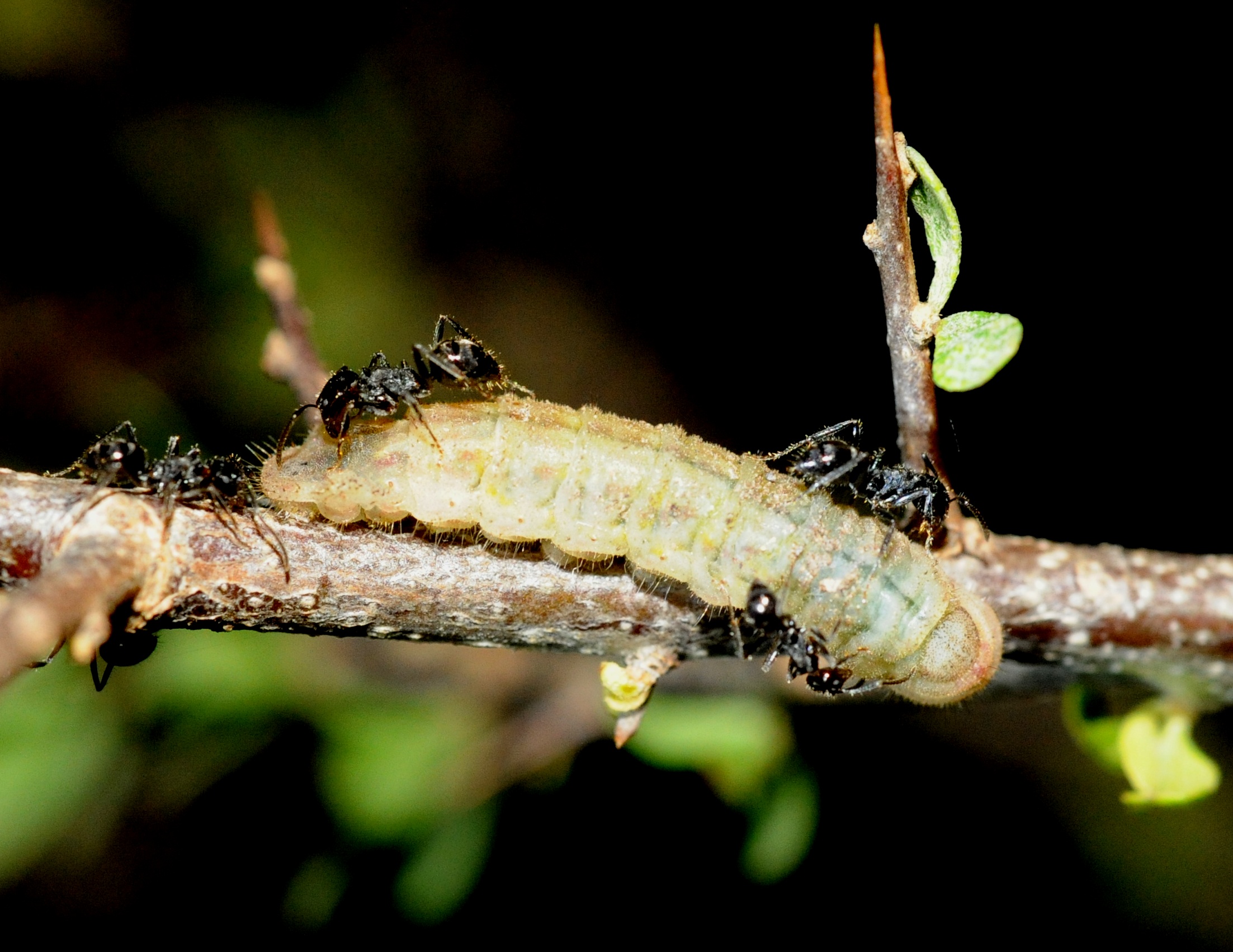


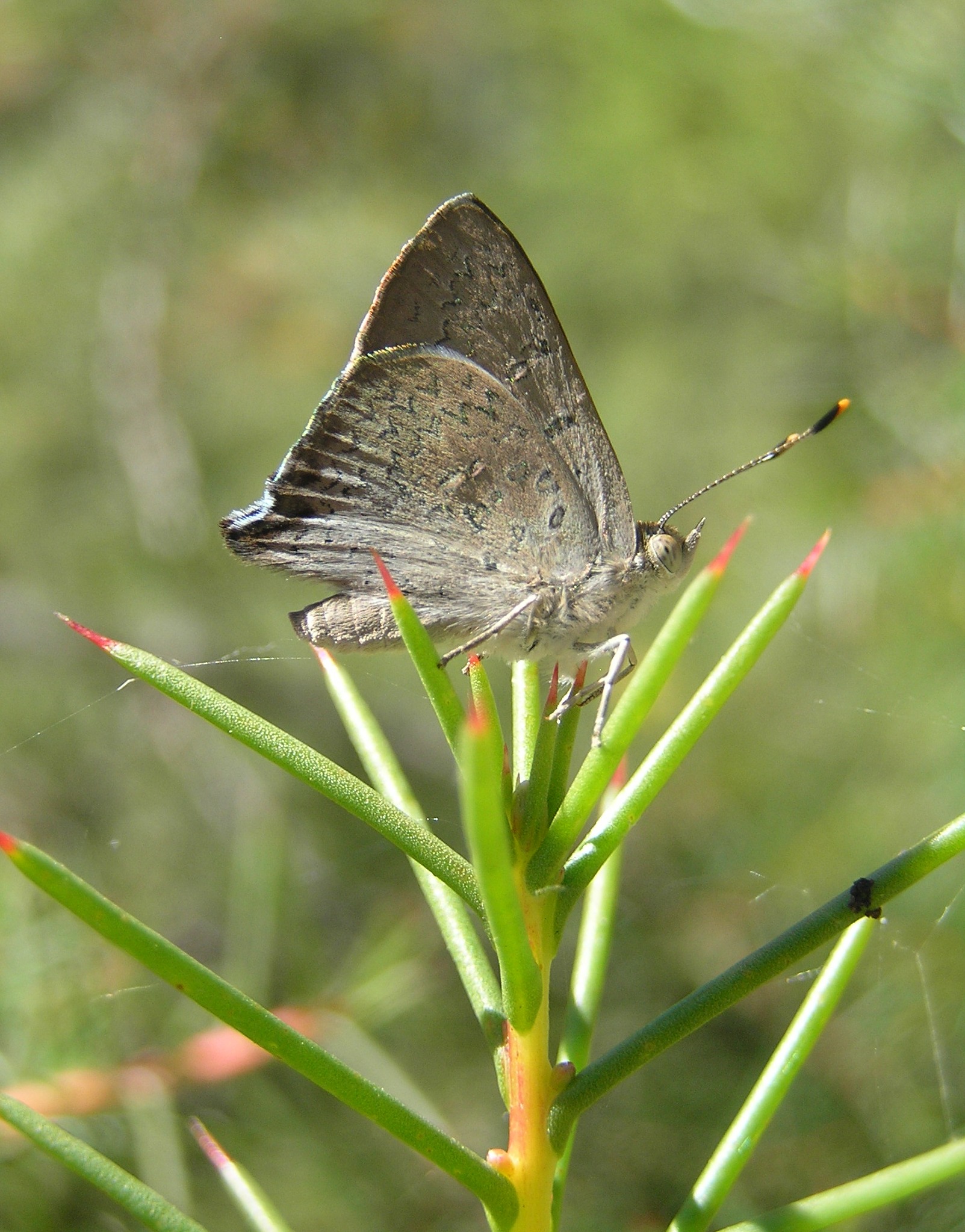

The Eltham Copper Butterfly is a small and attractive butterfly with bright copper coloring on the tops of its wings visible during the summer flight season (photo: Elaine Bayes)

Butterfly Celebration Day – 17 November 2019
Posted on 28 October, 2019 by Frances
Bring a picnic and help celebrate the special story of our local Eltham Copper Butterfly, and the Notoncus ants and Sweet Bursaria plants that make magic in our own backyards!
When: 1.00 – 3.00 pm on Sunday 17 November 2019
Where: Castlemaine Botanical Gardens, Downes Rd, Castlemaine VIC
Further information: click here
With funding support from Mount Alexander Shire Council, Castlemaine Landcare Group has sent choreographer Vanessa Case and musician Andy Rigby to work with local primary school students to tell this story in movement and music.
Butterfly Celebration Day will include a Welcome to Country and the Meeting Place, local musicians, community choirs and a preschool storytelling and craft workshop by Rose Demaria. Other local environmental groups will also be there. The community can go on a guided tour of the Butterflie’s habitat, which can be booked to avoid disapointment by clicking here
Connecting Country will be having a stall all day at the event, and will be giving away some Sweet Bursaria plants to early visitors. We will also have information on woodland birds, local plants and education events.

Birdlife Castlemaine November bird walk – 2 November 2019
Posted on 24 October, 2019 by Ivan
You’re invited to join our partners Birdlife Castlemaine on their next bird walk on 2 November 2019 at Muckleford Forest VIC. Here are the details.
We begin our walk in a beautiful gully full of woodland birds. This is a Key Biodiversity Area. Eastern Yellow Robin, Little Lorikeet, Diamond Firetail, Rose Robin and Brown Treecreeper are all nesting in this area, along with with many parrots and honeyeaters. We will walk beside a creek, then uphill to a drier ridge where we should also see a variety of native plants. Later we will travel 1.5 km by car along the South German Track to a dam where we are likely to hear Crested Bellbird see White-browed Babbler and many cuckoos. We may have time for a morning tea at the cars before travelling to the dam.
All ages and levels of experience welcome. This is an easy walk with gentle slopes with mine shafts and a creek nearby, covering approx 4 km, finishing around midday. Leaders are Sue and Peter Boekel. Please note that there are no toilets available.
Location and directions: Travel west from Castlemaine for about 15 km along Pyrenees Hwy (B180), towards Newstead VIC. Turn right down the unsealed Mia Mia Rd – please travel slowly and see how many birds you can spy. After 1.5 m, turn left into Mia Mia Track and in 100 m, two Jacky Winters should be on your right. Travel slowly for 1.5 km and pass South German Track on your right, then in 50 m turn next left up Sullivans Track where we will park on the verge. If required, copy these GPS coordinates into Google Maps search field: -37.0806347, 144.0753035.
When: Saturday 2 November 2019. Meet at Sullivans Track, Muckleford Forest at 9.00 am, or to carpool from Castlemaine meet at 8.30 am outside Castlemaine Community House (former Continuing Ed building), 30 Templeton St, Castlemaine VIC.
Bring: water, snacks, binoculars, hat, sunscreen, sturdy shoes, long pants during snake season, and other weather-appropriate gear.
Important information about walks: Walks will be cancelled if the temperature is forecast to be 35 degrees or more during the walk period, severe weather warnings are forecast, and/or if the day has been declared a Total Fire Ban.
Questions: If you have questions about our walks program, you can email us at castlemaine@birdlife.org.au, or call Judy Hopley (0425 768 559) or Asha Bannon (0418 428 721).
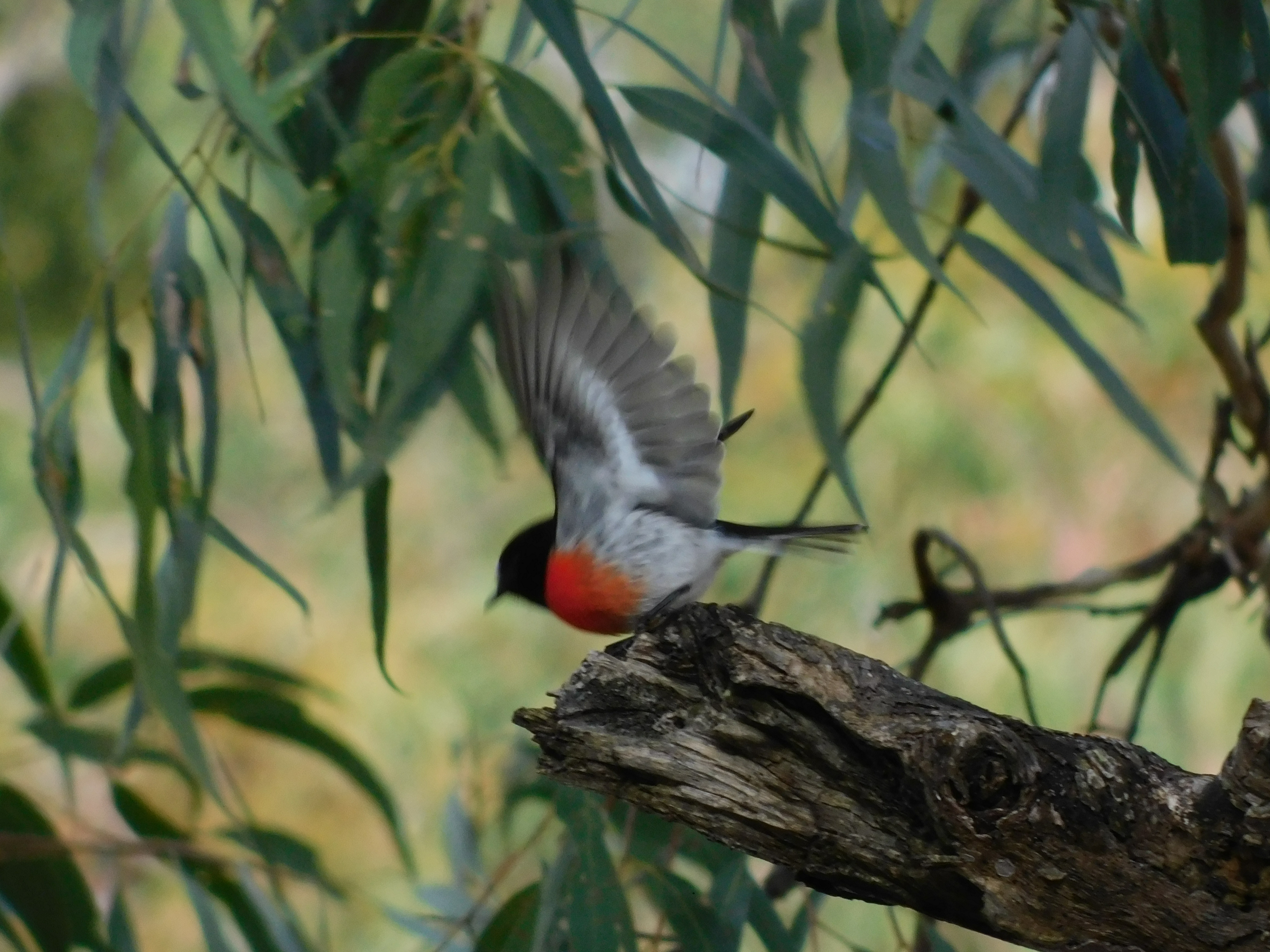
Action shot of a Scarlet Robin on a dead branch (photo by Bonnie Humphreys)
Where is that weed heading?
Posted on 24 October, 2019 by Ivan
A new web-based tool developed by Macquarie University in collaboration with the NSW Office of Environment and Heritage is helping tackle the problem of weeds. It can be used by anyone but is particularly useful for land managers to help identify which weeds pose the greatest threat on their land.
Weed Futures is a web-based decision-support tool that anyone can use to find out information for over 500 weed species. The information available is a comprehensive assessment of potential weed threats for regions of interest under current and predicted future climates. It also rates weed species that are not yet invasive as having low, medium or high potential for establishment and expansion now and in the future. This tool is ideal to assist land managers in identifying those species for which detailed weed risk assessment and management are needed.
Weeds damage our environment, economy, biodiversity, threatened species and our public land. So much so that 18% of key threatening processes listed across the country are weed related. Collectively, these threats affect 54% of all threatened species and communities. To make matters worse, the interaction between weeds and other threats, such as climate change, only exacerbate the problem and can increase the invasive potential of weeds.

Weeds are often garden plants that escaped into the landscape (photo by Ivan Carter)
To tackle this pervasive issue, experts from Macquarie University, NSW Office of Environment and Heritage and others worked together through the NSW Adaptation Research Hub – Biodiversity Node to come up with some solutions. This work resulted in Weed Futures.
The Weed Futures tool can be used by anyone, but is particularly valuable to decision-makers, councils, government authorities, weeds officers, bush care groups and researchers. Weed Futures fills a significant knowledge gap about the potential distribution of weed species, an important factor in determining a weed’s risk.
Connecting Country will be using the Weed Futures mapping tool to assess the risk of many localised invasive species into the future, under a changing climate. Interestingly, the website gives predictions of potential distributions into 2035 and 2065, under a variety of climate change scenarios.
By using an informed evidence-based approach to decision-making, weed threats can be prioritised and efforts targeted to areas where the greatest benefit can be achieved. With the help of tools such as this, the combined effort of land managers and decision-makers can best target effort to reduce the impact of weeds on our environment and hopefully create a brighter future for our threatened species.

Predicted suitable habitat of Blanket Weed (Galenia pubescens) by 2065 (image by Weed Futures)
Connecting Country’s new factsheets for landholders
Posted on 24 October, 2019 by Ivan
Landholders and managers now have access to four new factsheets from Connecting Country. The factsheets are tailored to suit the needs of the Mount Alexander region of central Victoria, and include local information about invasive species management and creating habitat for our unique biodiversity.
The four factsheets clear and practical information about:
- Weed control.
- Nestboxes for wildlife.
- Invasive pest animals.
- Revegetation planting with tubestock.
The advantage of these factsheets is they were developed and produced specifically for our region’s landscape, biodiversity and local conditions. They cover invasive animals that you are likely to see in this region and give an overview of the landowner responsibilities for invasive animals and plants. Managing invasive species is an important step to restoring our local habitat and biodiversity. Invasive species was listed as the number two threat for threatened species, with only habitat loss having a larger impact on our threatened species.
These factsheets were made possible by funding from the North Central Catchment Management Authority, as part of our project called ‘Prickly plants for wildlife on small properties’. Through this project we’ve helped numerous local landholders with smaller areas of remnant vegetation to protect and improve habitat on their land. We’ve supported landholders with on-ground actions such as revegetation planting, weed and rabbit control, and nestbox installation, as well as delivering three popular community education events.
A lot of people contact Connecting Country regarding how to best revegetate the landscape using native species in tubestock. There are many factors to consider when using this technique, such as when to plant, how to prepare the soil, what to plant, and how to protect your plantings. The new revegetation planting factsheet covers all these topics and more to help you give your precious native plants the best start in life.
To view the four factsheets – click here
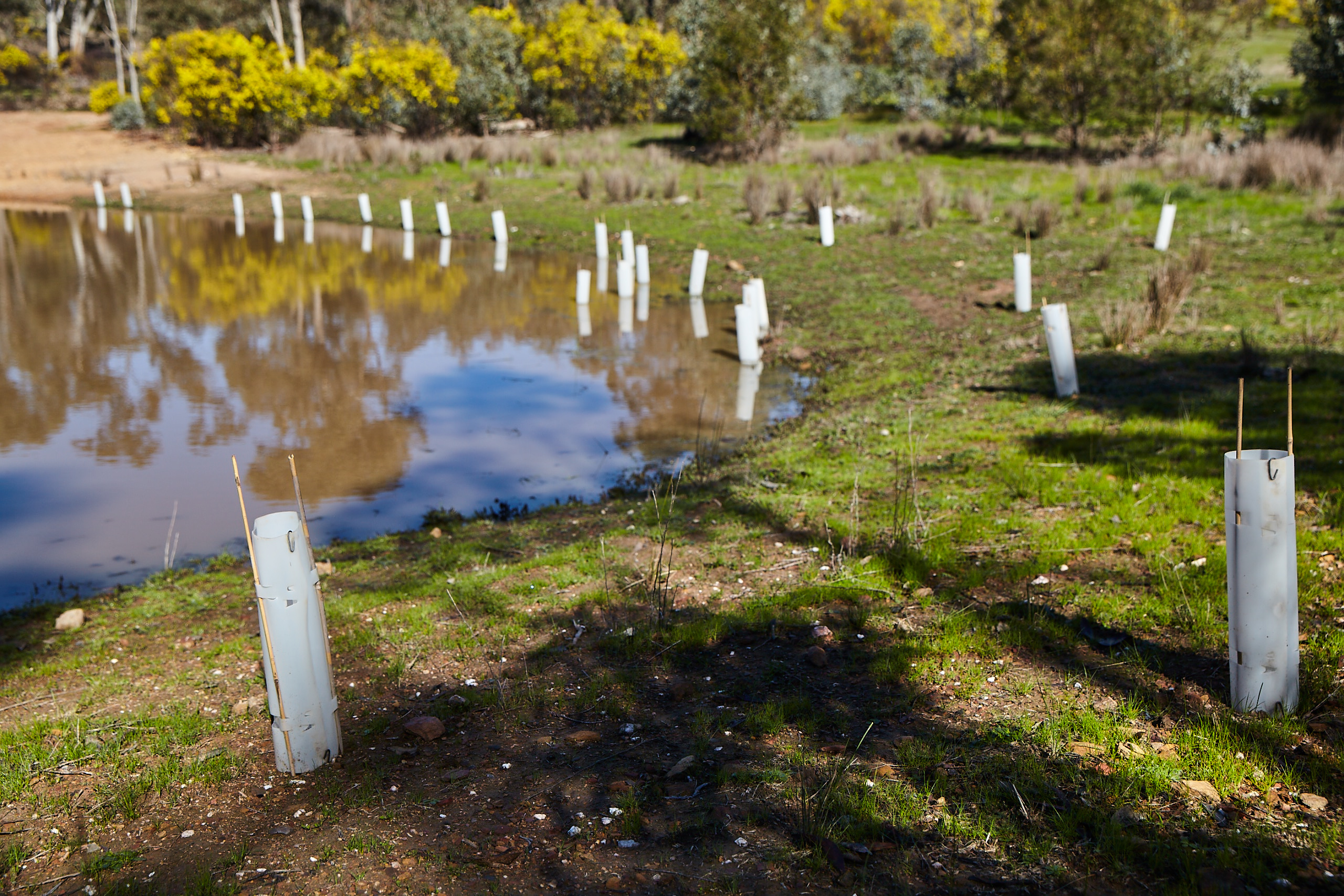
Following best practice will give your tubestock planting the best chance of long-term success (photo by Ivan Carter)
‘Hearing our place’ with Andrew Skeoch – Connecting Country AGM 2019
Posted on 17 October, 2019 by Asha

Andrew Skeoch listening to nature (photo from Listening Earth website)
All are warmly invited to the Connecting Country 2019 Annual General Meeting, where guest speaker Andrew Skeoch will speak about ‘Hearing our place’ in nature.
Frances Howe, Connecting Country Director, says ‘Andrew Skeoch is an educator, naturalist, environmental thinker and one of Australia’s best-known nature sound recordists. From his bush home near Newstead, he has journeyed over the last 25 years to remote locations in Asia, India, America, Europe, Africa and the Pacific in search of some of our planet’s most beautiful and fascinating sounds.
Combining this field experience with a deep curiosity, Andrew explores the crucial role of sound and communication in nature and evolution. He weaves the latest scientific understandings into a fascinating celebration of the natural soundscape around us.
His intriguing presentation will focus on our box ironbark birdsong and natural soundscapes, and will have you appreciating our local bushlands from an entirely fresh perspective.’
The AGM will include a brief presentation from staff and committee members about Connecting Country’s achievements over the last decade, to allow supporters old and new to hear what Connecting Country does and our plans for the coming year.

Crimson Spider Orchid (photo from Connecting Country archives)
This free event is at 4.00 – 6.00 pm on Saturday 16 November 2019 at Campbells Creek Community Centre (45 Elizabeth St, Campbells Creek VIC).
Afternoon tea will be provided from 3.30 pm.
Please RSVP online (click here) by 13 November 2019 for catering purposes. If you have any questions, please email asha@connectingcountry.org.au or call (03) 5472 1594.
- Click here to download the flier including agenda.
- Click here to download a committee nomination form.
- Click here to download a membership application.
Become a butterfly monitor and help protect a threatened species – updated
Posted on 17 October, 2019 by Frances
Castlemaine’s Kalimna Park is home to the largest remaining population of the threatened Eltham Copper Butterfly in the world. However, we don’t know how many butterflies there currently are, and its entirely possible that other, undiscovered populations exist around the Castlemaine area.
Local ecologists Elaine Bayes and Karl Just will be running four Eltham Copper Butterfly monitoring sessions around Castlemaine VIC over November and December 2019, when the adult butterflies are out and about. The aim is to support interested community members to learn how to monitor with expert guidance, conduct more monitoring and (hopefully) discover new populations.

Eltham Copper Butterfly perched on flowering Sweet Bursaria (photo by Elaine Bayes)
This is a fantastic opportunity to get out in the bush, learn more about your local environment, and collect some really important data to help protect this beautiful threatened species. You might even discover a new population of this special butterfly!
Everyone is invited to get involved. Monitoring isn’t difficult but you will need:
- A reasonable level of physical fitness, as monitoring involves walking off-track through the bush, often in warm weather.
- A positive attitude and willingness to learn.
- Ability to read maps, follow simple procedures and record sightings.
- Please bring water, a hat and suitable clothing, and snacks to keep you going.
Monitoring dates and locations are:
- 12-4 pm Saturday 16 November 2019. Location: Kalimna Park Rotunda, Kalimna Tourist Road, Castlemaine – click here for map.
- 12-4 pm Sunday 1 December 2019. Location: Water tank on Hunter Track, top end of Hunter Street, Castlemaine – click here for map.
- 12-4 pm Sunday 15 December 2019. Location: Parking spot just north of where golf course intersects with Kalimna Tourist Road, Castlemaine – click here for map.
- 12-4 pm Saturday 28 December 2019. Location: Corner of Vanstan Road and Lawson Parade, behind Castlemaine Secondary College, Castlemaine – click here for map.
You don’t need to attend all these events to become a monitor. Once you understand the monitoring method and feel confident you can identify an Eltham Copper Butterfly, you’re welcome to do your own monitoring and report sightings.
If you’d like to get involved in Eltham Copper Butterfly monitoring, please just come along to a monitoring event, or for further information contact Ivan at Connecting Country (ivan@connectingcountry.org.au).
Our small endangered butterfly pulls a big crowd
Posted on 17 October, 2019 by Ivan
Our Eltham Copper Butterfly education event was a delightful success over the past weekend, with an enthusiastic crowd of 40 people attending to learn about this unique and threatened butterfly. The event was held at the Tea Room in the Castlemaine Botanical Gardens (Castlemaine VIC) and included a guided walk with local experts Elaine Bayes and Karl Just, exploring the native woodlands north of the gardens. Karl and Elaine delivered an informative and engaging presentation on the fascinating biology of the Eltham Copper Butterfly and its symbiotic relationship with Notoncus ant species. It was warming to hear Elaine’s enthusiasm about the mating cycles of this butterfly and her excitement that more populations may exist around our region, and could be discovered during monitoring over the next few months.
The Eltham Copper Butterfly is a small and attractive butterfly with bright copper colouring on the tops of its wings visible during the summer flight season.
Some interesting butterfly facts:
- This unusual species due has a close symbiotic association with a group of ants from the genus Notoncus and the shrub Sweet Bursaria (Bursaria spinosa).
- Adult butterflies lay their eggs on the roots and stems of Sweet Bursaria. Once the eggs hatch, the ants guard the caterpillars (providing protection from predators), ushering the larvae to and from the ant nest at the base of the shrub, to feed on the Sweet Bursaria leaves at night. In return the ants feed on the sugar secretions exuded from the body of the caterpillar.
- The butterfly prefers open flight paths and receiving direct sunlight. It likes vegetation with an open middle and understorey.
Karl and Elaine will be conducting Eltham Copper Butterfly monitoring sessions around Castlemaine over November and December 2019. We encourage interested people to come along, learn how to monitor and get involved with protecting this special butterfly.
If you’d like to get involved in monitoring please see our relevant blog post (click here) or contact Ivan at Connecting Country (ivan@connectingcountry.org.au)
Here are some photos from our recent event from Ivan Carter, and some lovely Eltham Copper Butterfly photos from Elaine Bayes:

A citizen science event in 2019 attracted a strong crowd and interest in the Eltham Copper Butterfly (photo: Frances Howe)


The Eltham Copper Butterfly is a small and attractive butterfly with bright copper coloring on the tops of its wings visible during the summer flight season (photo: Elaine Bayes)
Do you have a spare rabbit bait station? – we need your help
Posted on 9 October, 2019 by Asha
Over the years Connecting Country has distributed free rabbit bait stations for landholders to use. For more information about what these look like and how they work, click here. These days we are working with less funding and no longer have a supply of bait stations. We hope to source more funding soon. However, in the meantime there is still a need out there!

We have had requests from local landholders and Landcare groups who are struggling with rabbits and need bait stations. We hope to coordinate a rotation system where spare bait stations can be returned to our depot and then be distributed to those who need them.
If you live in the Mount Alexander region and have a bait station that you no longer need, please let us know by emailing info@connectingcountry.org.au or calling (03) 5472 1594.
Bird walk at Castlemaine Botanical Gardens – Sunday 20 October 2019
Posted on 9 October, 2019 by Ivan
BirdLife Castlemaine’s next monthly bird walk will be in the beautiful Castlemaine Botanical Gardens.
Local bird legend Tanya Loos will lead an afternoon walk for Bird Week, the same week as the Aussie Backyard Bird Count. Bring your binoculars, and if you have a smartphone, come with your Aussie Backyard Bird Count App already downloaded and ready to go. Beginners and families welcome. We will do a count together to get you all set up for the Bird Count!
When: 3.00 pm on Sunday 20 October 2019
Where: Meet outside the Tea Room in Castlemaine Botanical Gardens, Downes Rd, Castlemaine VIC.
Bring: Water, snacks, binoculars, hat, sunscreen, sturdy shoes, long pants during snake season, and other weather-appropriate gear.
Walks will be cancelled if the temperature is forecast to be 35 degrees or more during the walk period, severe weather warnings are forecast, and/or if the day has been declared a Total Fire Ban.
Questions?: If you have questions about BirdLife Castlemaine’s walks program, you can email them at castlemaine@birdlife.org.au, or call Judy Hopley (0425 768 559) or Asha Bannon (0418 428 721).

Flame Robin enjoying some morning sun (Photo by Bonnie Humphreys)
Reminder: Meet Castlemaine’s endangered butterfly – Saturday 12 October 2019
Posted on 8 October, 2019 by Ivan
Last chance to book for this Saturdays wonderful event! We still have some spaces available – all welcome. Come along and learn about our very special local butterfly. See details below.
Click here to make a booking.
Did you know Central Victoria is home to the largest known population of the endangered Eltham Copper Butterfly in the world?!

Enjoy these beautiful pictures of the Eltham Copper Butterfly taken by Elaine Bayes.
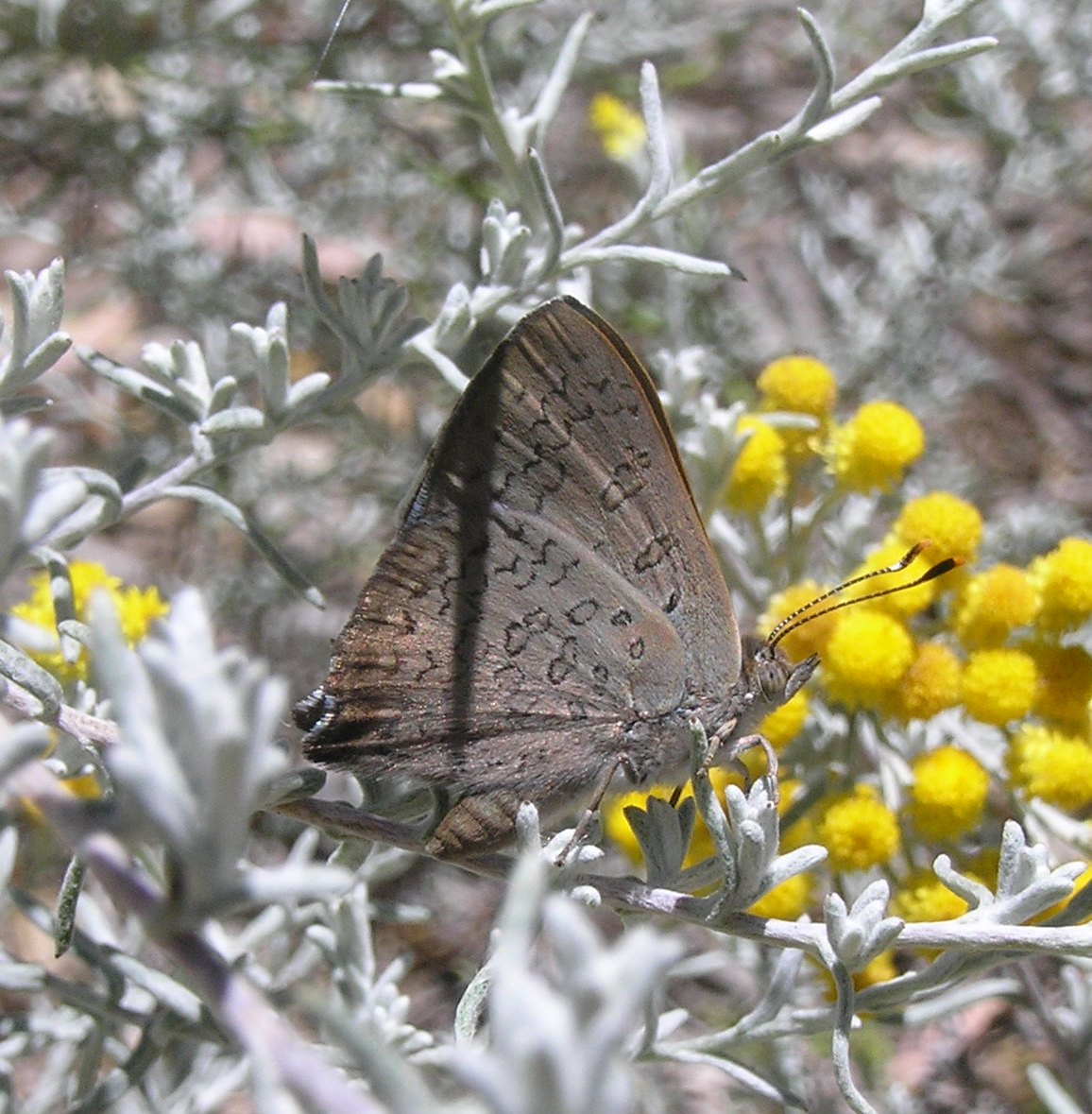
Photos: Elaine Bayes


Birdlife Castlemaine District celebrates its first birthday
Posted on 26 September, 2019 by Ivan

Sue, Jane, and Phil celebrate Birdlife Castlemaine District’s first birthday at a bird walk in July (photo: Birdlife Castlemaine District)
Connecting Country work with Birdlife Castlemaine District on many projects and share a common love for our regions birds and biodiversity. It was a significant effort and milestone for Castlemaine to have its own Birdlife branch, highlighting the community support and passion for our nature hotspots and wildlife. The newest branch of BirdLife Australia was officially launched at the Castlemaine Botanic Garden’s Tea rooms in July 2018, meaning they recently celebrated their first birthday! A belated ‘Happy Birthday’ and congratulations on a fabulous first year to Birdlife Castlemaine District.
How you can be involved with Birdlife Castlemaine District:
‘Like’ their Facebook page: CLICK HERE
Email castlemaine@birdlife.org.au if you would like to be added to their eNews list.
Become a member of BirdLife Castlemaine District by joining their parent, BirdLife Australia: CLICK HERE
Looking after parks across Victoria – your chance to help!
Posted on 26 September, 2019 by Asha
Parks Victoria are developing a state-wide Land Management Strategy to guide and inform future planning and decision-making across the parks estate. The Strategy is intended to respond to key challenges – including climate change, population growth, changing community needs, increased visitation, invasive pest species, accessibility requirements and more.
Parks Victoria are now inviting communities and stakeholders to provide their feedback on the draft Aspiration and Guiding Principles that will form the basis of the Land Management Strategy.
You can provide feedback online at www.engage.vic.gov.au/lms until midnight Sunday 29 September 2019. Parks Victoria have also prepared an Engagement Park document (click here to download), to support groups promote the engagement and hold conversations.
If you have further questions, you can contact parkstrategymailbox@parks.vic.gov.au
The Victorian National Parks Association (VNPA) have also offered support and advice through their website: CLICK HERE.

Parks play an important role for biodiversity and habitat refuge. Photo: Alison Pouliot
Weeds at the Early Stage of Invasion – Thursday 3 October 2019
Posted on 17 September, 2019 by Ivan
The Weeds at the Early Stage of Invasion (WESI) Project, together with Connecting Country, invite you to join us for a session on identifying environmental weeds.
When: Thursday 3 October 2019 from 10.00 am to 3.00 pm
Where: Newstead Community Centre, 9 Lyons St, Newstead, VIC
To register: click here
To download the event flyer: click here
The session will focus on identification of some early invader environmental weeds relevant to the Mount Alexander region. The WESI Project focuses on high risk invasive species at the early stage of invasion (early invaders) that threaten biodiversity. The WESI project works mainly with Department of Environment, Land, Water and Planning (DELWP) and Parks Victoria staff looking after public land and biodiversity across Victoria.
This training is targeted at community groups, individuals, organisations and land managers. Come along to learn how to identify these plants, how to record and photograph them, and how to treat and survey the area. Early invaders are plants that have naturalised and started to spread. When spread has just begun, such plants are localised and generally encountered only by chance. Coordinated management intervention (i.e., eradication or containment) is feasible at this stage, due to their highly restricted distributions.
This is a free event with morning tea and lunch provided.
Spaces are limited so please register below asap to ensure you don’t miss out!
For more information please contact Bianca Gold and Kate Blood (WESI Project), or Ivan Carter (Connecting Country):
- Kate Blood (0417 135 356 or kate.blood@delwp.vic.gov.au)
- Bianca Gold (0436 694 971 or bianca.gold@delwp.vic.gov.au)
- Ivan Carter (5472 1594 or ivan@connectingcountry.org.au)


Chilean needle grass was once an emerging weed in this region, but is now established around Taradale (photo by Connecting Country)
Meet Castlemaine’s endangered butterfly – Saturday 12 October 2019
Posted on 17 September, 2019 by Ivan
Did you know Central Victoria is home to the largest known population of the endangered Eltham Copper Butterfly in the world?!
Enjoy these beautiful pictures of the Eltham Copper Butterfly taken by Elaine Bayes.
Photos: Elaine Bayes
Walking together towards Reconciliation: Weather knowledge of the KULIN Nations
Posted on 17 September, 2019 by Ivan
In some regions the Kulin Nations observed and named seven seasons of varying length in a year; each season happens when certain stages are reached in the natural world. The local Dja Dja Wurrung clans of the Kulin Nation, however, divided the year into six seasons.
The name Poorneet, meaning tadpoles, is given to the time in September and October when temperatures are rising, although there is still plenty of rain. Tadpoles are found in the water holes, and Pied Currawongs are louder and cheekier than ever. Days and nights are of equal length.
Plants like the Murnong (Yam Daisy) are flowering, so it’s time to dig for the yam tubers. Murnong, once abundant all over Victoria, rapidly became scarce after colonists brought what were soon vast numbers of sheep into the region.
Yams may make a comeback as a food source, since Aboriginal communities in East Gippsland and the NSW south coast have begun experimenting with yam cultivation. In his book Dark Emu, Bruce Pascoe tells how the very first records of European explorers and pioneers give evidence that Aboriginal people were farming the land. But to the newcomers, for whom the crops and agricultural methods were totally different from the familiar ones of home, they meant very little. All too soon, grain stores, tilled land, eel traps, houses and wells returned to the soil from which they had come.
Many thanks to Nalderun for this article. Nalderun is a service that supports the Aboriginal Community, led by Aboriginal people. Many people and organisations in the Mount Alexander Shire contribute to Nalderun; the name is a Dja Dja Wurrung word meaning ‘all together’. More information can be found at www.nalderun.net.au
Tim Low’s challenging ‘New Nature’ talk in Newstead
Posted on 17 September, 2019 by Ivan
Connecting Country and Newstead Landcare Group recently hosted a presentation by well-known author and biological scientist Tim Low. Tim attracted a packed room of 200 excited people to Newstead VIC. He guided us through some highlights from his recently revised book ‘The New Nature’, exploring the concepts of winners and losers in a world of human impact, changing climate and declining resources.
Tim said the attendance was one of the best he had been involved with and interest from the audience was outstanding. Tim described some surprising examples of how conservation and urbanisation can co-exist in some situations. A theme from the talk was that the conservation movement often talks about declining species, as it should, but this leaves many people unaware that some animals and plants are doing better today than ever before, because they have found ways to exploit us.
The ‘New Nature’ book reinforces the concept that animals don’t have any concept of ‘natural’ or ‘unnatural’ so they don’t automatically recoil from cities and farms. Sometimes they can do better in cities than in forests, and Tim suggested that Australian cities and towns are gaining animals over time. The audience was surprised to hear that Melbourne, Sydney and Brisbane are now home for peregrine falcons that nest on skyscrapers, and feed off pigeons and other city-dwelling birds. After the talk Tim took questions from the audience. He stressed that while we will have some winners from our changing planet, we must continue to work hard to prevent losing more species to extinction through habitat loss.
Many thanks to Frances Cincotta and Newstead Landcare Group for helping organise this event and doing some fantastic work. The event was supported by funding from North Central Catchment Management Authority as part of Connecting Country’s ‘Prickly Plants for Wildlife on Small Properties’ project, as well as a donation from Friends of the Box-Ironbark Forests.
Although the event was not recorded, there is link to a similar talk on Youtube below.

Tim Low (second from left) with Frances Howe, Frances Cincotta and Ivan Carter (photo by Connecting Country)
 Tim Low
Tim Low is a biologist and best-selling author of seven books about nature and conservation. ‘Where Song Began’ won several prizes, including the Australian Book Industry Award for best general non-fiction. It was praised in the New York Review of Books and recommended by Scientific American. ‘The New Nature’ was praised by Time magazine and listed by Who magazine as one of the books of the year. ‘Feral Future’ inspired the formation of a conservation group, the Invasive Species Council. Tim’s articles have appeared in Australian Geographic, The Weekend Australian Magazine, The Guardian and many other places. He works partly as an environmental consultant, and has a lizard named after him. He recently returned from a visit to Manchuria as a guest of the China Writer’s Association.
You can read more about Tim Low and view his Blog and website – click here
Youth grants for invasive species – closing 30 September 2019
Posted on 12 September, 2019 by Ivan
Connecting Country are keen to engage and involve youth in natural resource management activities across our region. This grant program supports youth-friendly initiatives with a focus on invasive pest and weed issues in Victoria. The program aims to increase young people’s participation in community environmental projects and encourage new ideas and innovations in the invasive species challenge. Funding can be used to support the engagement of young people in existing groups and initiatives, or to develop new youth-focused initiatives.
Applications close: 5.00 pm on 30 September 2019
Grants between $5,000 and $15,000 (excluding GST) are available.
Who can apply: Open to community groups, education providers and local councils, with a focus on projects that connect with young people and develop their skills, and deliver broader benefits for local communities.
How to apply:
- Read the program guidelines – click here.
- Contact the Grants Program Coordinator if you have questions about your application. Lauren Hull can be contacted on 0472 876 695 or lauren.hull@agriculture.vic.gov.au.
- Download the application form and complete all sections – click here.
Key dates:
- Successful grants announced – November 2019.
- Projects undertaken – November 2019 to June 2020.
Inspiration and ideas: There’s lots of projects underway that are boosting youth participation in environmental initiatives. If you’re looking for a starting point for your invasive species work, click here to see just a few projects that have been proposed.
More information: Contact Lauren Hull 0472 876 695 or lauren.hull@agriculture.vic.gov.au

Frankie Cook plants a tree along Forest Creek (photo from Castlemaine Landcare)
The rumours are true: North Harcourt & Sedgwick Landcare is back!
Posted on 12 September, 2019 by Asha
You may have heard the rumors. And yes, they are true! After a five year hiatus, North Harcourt & Sedgwick Landcare Group are planning on planting on, and they need YOU!
Anyone who is interested is welcome to come along to a casual meet up, where they will be throwing a BBQ, giving away some free plants, and showing off some nest boxes.
When: Sunday 22 September 2019 from 12:00 pm – 2:00 pm
Where: Sedgwick Hall, corner Springs Rd and Sedgwick Rd, Sedgwick, VIC (scroll through photos below for a map)
RSVP: Appreciated via nhselandcare@gmail.com or their Facebook event – click here
To stay up-to-date, join their public Facebook group here: click here


