

Have your say on regional biodiversity planning – postponed
Posted on 5 March, 2020 by Frances
These events have been postponed
Following our recent post on the 2020 Regional Round Table sessions (click here), North Central Catchment Management Authority (CMA) have announced a further workshop on Tuesday 7 April 2020 at Daylesford Town Hall (76 Vincent St, Daylesford VIC).
Community members are invited to join the North Central Catchment Management Authority and the Department of Environment, Land, Water and Planning (DELWP) at their 2020 roundtable sessions to have your say about what you value in the region. This year’s roundtables focus on renewing the CMA’s 2021-2027 Regional Catchment Strategy and DELWP’s Regional Biodiversity Response Planning. They give the community a unique opportunity to have input directly into these important plans.
To book your seat at the table: click here

The round-table events are an important tool to ensure the community is involved in future biodiversity and land use planning. Photo: NCCMA
Bird walk at Mount Tarrengower – 7 March 2020
Posted on 5 March, 2020 by Frances
Our friends and partners at Birdlife Castlemaine are having their monthly bird walk this weekend, at the beautiful Mount Tarrengower West, led by the wonderful Damian Kelly. This is a great opportunity to walk and talk with some of the best bird watchers around and increase your knowledge, as well as enjoy some lovely landscapes and company. Please find the event overview below, from their newsletter, as well as information about the AGM following the walk. For more details on Birdlife Castlemaine, please click here.
BirdLife Castlemaine District March Bird Walk
Saturday 7 March – Mount Tarrengower West
BirdLife Castlemaine’s next walk takes us to Mount Tarrengower West, led by Damian Kelly. The habitat is grassy dry forest with box eucalypts on slopes, Red Gums and Yellow Box in lower areas. Birds that may be seen include Large Parrots, Eastern Rosellas, Thornbills, Scarlet Robin, Jacky Winter and Restless Fly Catcher.
Location and directions: From Maldon VIC take the Maldon-Bridgewater Road. About 2 km out of town turn left into Watersons Road. A further 1 km along is the turn off on the left to Mount Back Road. The walk starts here. Plenty of parking is available near this intersection.
Time: Meet at the destination at 9:00 am, or to carpool from Castlemaine meet at 8:30 am outside Castlemaine Community House (30 Templeton Street, Castlemaine VIC).
Important information about walks: Bring water, snacks, binoculars, hat, sunscreen, insect repellent, sturdy shoes, long pants during snake season, and other weather-appropriate gear.
Walks will be canceled if the temperature is forecast to be 35 degrees or more during the walk period, severe weather warnings are in place, persistent rain is forecast, or if the day has been declared a Total Fire Ban day.
Questions? If you have questions about our walks program, you can email us at castlemaine@birdlife.org.au, or call/text Judy Hopley (0425 768 559) or Asha Bannon (0418 428 721).
All levels of experience are welcome – they’re a friendly bunch and the walks are a great chance to learn from and have fun with fellow birdwatchers.
The 2020 Annual General Meeting (AGM) of BirdLife Castlemaine District Branch will follow the walk at 11:30 am, at 25A Church Street, Maldon. Morning tea will be provided from 11:00 am.

Mistletoebird on a dead branch. Photo: Geoff Park
Nature photography in Newstead – 8 March 2020
Posted on 5 March, 2020 by Frances
The Mount Alexander region is blessed with some extremely talented nature photographers. Their thoughtful and evocative images help us appreciate and connect with the local environment. Local photographers and Connecting Country supporters, Janet Barker, Frances Cincotta, Patrick Kavanagh, Geoff Park and Bronwyn Silver, are holding an exhibition, Photographers of the Goldfields, at the Newstead Arts Hub in March 2020.
The launch and exhibition opening will be this Sunday 8 March at 11 am, so please come along and enjoy the talent on display and some tasty local food.

Heron and Egret (photo: Geoff Park)
Here is a message from the photographers:
From the tiniest world contained on a dewdrop, to the expansive landscapes of the Plains and Mounts, the beauty of the Goldfields is all around us. However many treasures remain sight unseen, until revealed by the camera’s lens/focus.
Photography allows us to appreciate, understand and learn more about our local environs. Seen in its best light and in the moment, a photograph reveals that millisecond in time, for all time.
Bronwyn Silver, Geoff Park, Patrick Kavanagh and Janet Barker see their photography as a way of celebrating and ultimately protecting nature. Photographers of the Goldfields 2020 will feature some of our favourite gems, worth taking a longer look at.
Saturday 7 March to Sunday 29 March 2020
Weekends & Monday 9 March from 10 am to 4 pm
Launch: Sunday 8 March at 11 am – All welcome
Newstead Arts Hub: 8A Tivey Street, Newstead VIC
Scroll through below to enjoy some favourite images and visit the exhibition to see more.
-

Praying Mantis (photo: Patrick Kavanagh)
-

Fog (photo: Janet Barker)
-

Dawn at Cairn Curran (photo: Bronwyn Silver)
-

Rainbow Bee-eater with Cicada (photo: Geoff Park)
-

Clematis microphylla – Small-Leaf Clematis in seed (photo: Frances Cincotta)
Clean up Australian Day: Sunday 1 March 2020
Posted on 27 February, 2020 by Ivan
Clean up Australia is happening this Sunday 1 March 2020, including at eight locations across the Castlemaine region in central Victoria. Clean Up Australia inspires and empowers communities to clean up, fix up and conserve our environment. What was started 30 years ago, by an ‘average Australian bloke’ who had a simple idea to make a difference in his own backyard. It has now become the nation’s largest community-based environmental event. It is hard to believe that this initiative began as the inspiration of one man, Ian Kiernan.
An avid sailor, Ian was shocked and disgusted by the pollution and rubbish that he continually encountered in the oceans of the world. Taking matters into his own hands, Ian organised a community event with the support of a committee of friends, including co-founder Kim McKay AO. This simple idea ignited an enthusiasm and desire among the local community to get involved and make a difference. And surely if a capital city could be mobilized into action, then so could the whole nation! And so it was that Clean Up Australia Day was born in 1990.
Local working bees in our region, include:
- Expedition Pass Reservoir – click here for information
- Campbells Creek – click here for information
The best way to get involved in a cleanup activity is to view the map of all working bees (click here), where you can search via postcodes and townships. You can also create a cleanup event working bee, which is really awesome, and fundraise for your event if required.
Climate change resilience workshops in Castlemaine
Posted on 27 February, 2020 by Ivan
Our fabulous Castlemaine Community House is offering a series of three workshops to assist individuals and families to develop resilience around the climate crisis. The workshops will be facilitated by Dr Susie Burke, environmental psychologist and therapist, and member of Psychology for a Safe Climate.
- Where: Castlemaine Community House, 30 Templeton St, Castlemaine VIC
- When: Please refer to times and dates for each workshop below
- Cost: $15, or $10 concession (or if booking for more than one person)
- How to book: Please book directly with Castlemaine Community House online via the website links below.
Further information regarding the workshops is available from Castlemaine Community House via their website (click here) or by telephone at (03) 5472 4842
Coping with Climate Change
Date: Wednesday 11 March 2020
Time: 6.30 pm – 8.30 pm
To book: click here
An experiential workshop to help people deal with grief and anxiety, come to terms with the climate emergency, and stay engaged in solutions.
This workshop is for anyone who is deeply concerned about the impacts of climate change on the things they love and care about, and would like to explore with others how to come to terms with the climate crisis and cope with distressing thoughts and feelings.
Participants will learn techniques for making room for uncomfortable feelings, free themselves from self-defeating thoughts and urges, cultivate a perspective of active hope, and increase their capacity to be present and focus on what matters in the context of the climate emergency.
Deep Adaptation to Climate Change
Date: Monday 23 March 2020
Time: 6.30 pm – 8.30 pm
To book: click here
A workshop to help people start to come to terms with the climate emergency, and stay engaged in solutions.
In this workshop participants will discuss and begin to work out what ‘Deep Adaptation’ could mean (and what it doesn’t). Four questions guide the work on Deep Adaptation:
- Resilience: what do we most value that we want to keep and how?
- Relinquishment: what do we need to let go of so as not to make matters worse?
- Restoration: what could we bring back to help us with these difficult times?
- Reconciliation: with what and whom shall we make peace as we awaken to our mutual mortality?
Parent Workshop – Talking with Children about Climate Change
Date: Monday 30 March 2020
Time: 6.30 pm – 8.30 pm
To book: click here
A workshop which aims to help parents think through the impact of climate change on their children, cope with that knowledge themselves, whilst at the same time supporting their children to cope with climate change now and in the future.
By attending this workshop participants will be able to:
- Think through how they, as parents, can respond to the current reality of climate change and the threat of worse impacts to come.
- Learn strategies for coping with the ‘uncomfortable truths’ of climate change
- Gather ideas about how to support their children to cope with it.
- Learn about the skills and capacities that our children, the next generation, will need for engaging in efforts to restore a safe climate, and for adapting to the inevitable changes ahead.
Facilitator: Dr Susie Burke PhD FAPS
Dr Susie Burke is an environmental psychologist, therapist, climate change campaigner and parent, currently working in private practice in Castlemaine. She is a Fellow of the Australian Psychological Society, and author of the Climate Change Empowerment Handbook and other articles and resources on the psychology of climate change. She consults, and runs workshops and individual sessions to help people cope with and come to terms with climate change, with a particular interest in how to raise children in and for a climate altered world.
What scat is that? – take the quiz
Posted on 27 February, 2020 by Ivan
Have you ever been out walking and wondered ‘what scat is that?’ You can call it scat, faeces, or just plain poo, but if you’re not too squeamish, you can learn a lot from animal poo. Wild animal poo is known as scat, and it can be very useful in working out what species are nearby because each type of scat is different. It is a fascination among the scientific world and the broader community alike.
Of course, some scat will begin to dry out and look different with age, so if you really know your business, you’ll be able to tell how long ago the animal was there. It is well known that Koala poo, for example, goes from a moist green to something that looks more like dried out grass pellets. Regardless of the name you give it, most people go out of their way to avoid digested animal waste – but not the most dedicated scientists and animal lovers.
If you’re interested in finding out more about the animal world, identifying scats can tell you a lot about a creature, including what they eat, where they go and even how they live. The ABC has created a fun ‘What scat is that’ online quiz, which has excellent images and questions to assist learning. It is part of the ABC’s ‘How to Summer’ science series, which covers a variety of topics including ants, sea-creatures and scats.
Take the scat quiz to test your skills and learn a bit more about another survey technique and potential curiosity wonder!
To take the quiz – click here

Around two centimetres wide and high, this scat forms almost a perfect cube. Which animal left it? (photo: ABC)
New factsheets proving popular
Posted on 20 February, 2020 by Ivan
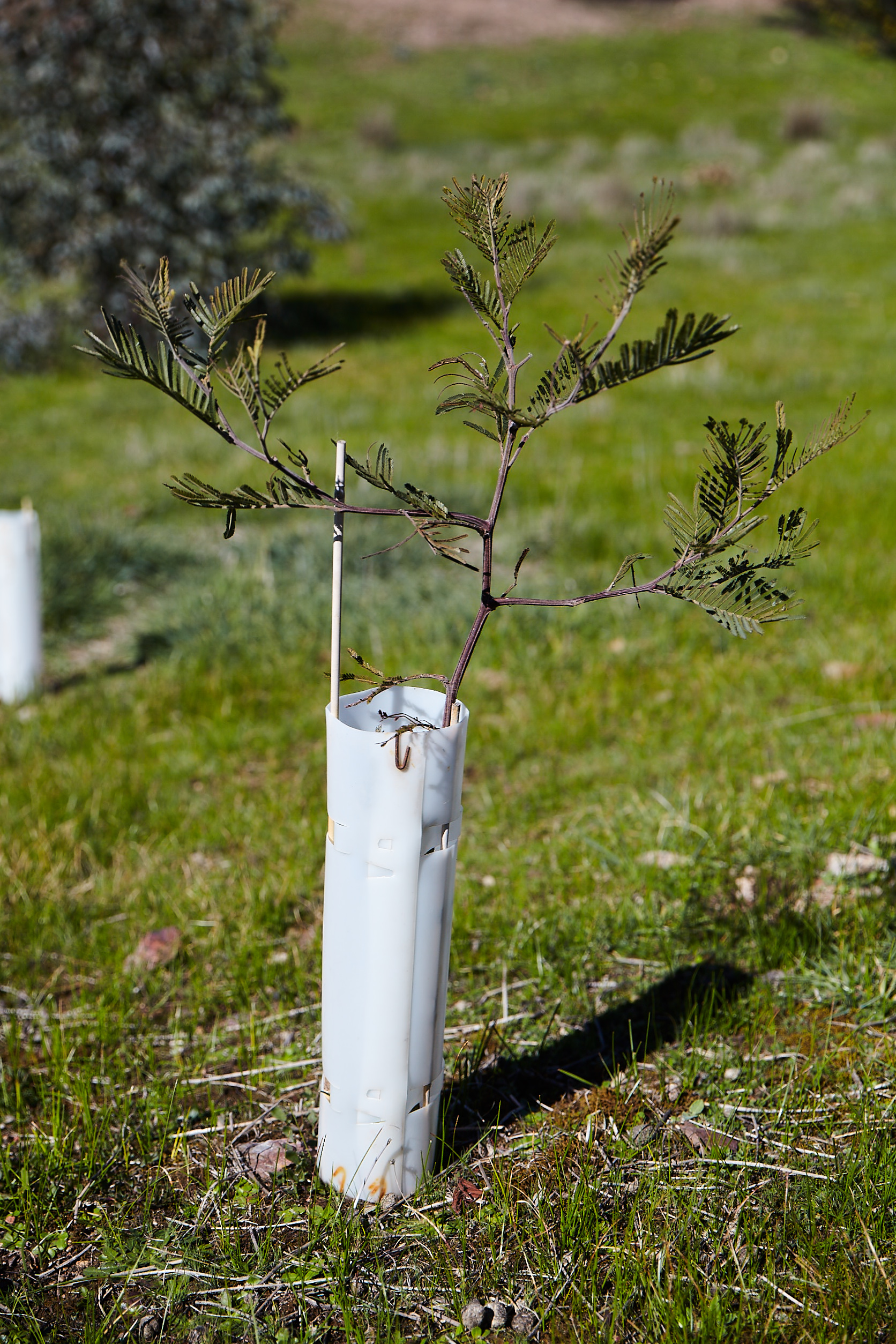
Following best advice on revegetation will give your plants the best chance of survival (photo by Gen Kay)
We developed the factsheets courtesy of funding from the North Central Catchment Management Authority. The factshets form part of our ‘Prickly plants for wildlife on small properties‘ project, which targeted landowners with smaller properties who are keen to manage their land as wildlife habitat, but were excluded from previous projects. Through this project we’ve helped numerous local landholders with smaller areas of remnant vegetation to protect and improve habitat on their land. We’ve supported landholders with on-ground actions such as revegetation planting, weed and rabbit control, and nest box installation, as well as delivering three popular community education events.
Many people contact Connecting Country regarding how to revegetate their land using native tubestock plants. There are numerous aspects to consider when using this technique, such as when to plant, how to prepare the soil, what to plant, and how to protect your plantings. The new revegetation planting factsheet covers all these topics and more, to help you give your precious native plants the best start in life.
Here is a brief outline of each of the four factsheets:
- Weed control. Weeds, or invasive plants, are one of the main extinction threats to Australia’s native plants and animals. Some weeds were introduced initially as garden plants, and others accidentally introduced and spread through seeds or plant material. Some native species become weeds if they spread aggressively beyond their natural range. To download – click here.
- Nest boxes for wildlife. A nest box is an artificial enclosure provided for hollow-dependent animals to live and nest in. Providing a well constructed and maintained nest box on your property can provide a supplementary home for native animals where natural tree hollows are missing. To download: click here
- Invasive pest animals. Invasive animals are a major threat to biodiversity and agriculture. They can cause long-term damage to ecosystems and have resulted in dramatic extinction rates of species across Australia. To download: click here
- Revegetation planting with tubestock. Planting within or next to existing bush land to provide habitat for native animals can be a satisfying endeavour. Taking time to plan and prepare your revegetation will give you the best chance of seeing your plants survive to maturity. To download: click here
Further information and factsheets on a variety of restoration topics can be found on the Connecting Country website – click here.
Local book launch: Landing With Wings
Posted on 20 February, 2020 by Frances

Local artist and children’s book author, Trace Balla, is excited to be launching her latest book ‘Landing With Wings’ set right here at Forest Creek and Moonlight Flat, near Castlemaine in central Victoria. Many local people, plants and animals have been of great influence on this book. It features the Bibrons Toadlet living at Happy Valley, Ballantinia plants growing at Leanganook, Golden Whistler, a smoking ceremony with Dja Dja Wurrung elder Uncle Rick, local veggie growers Gung Hoe, Little Habitat Heroes, Castlemaine Seed Library and more!
The book launch is at 11.00 am on Saturday 28 March 2020 at Castlemaine Botanical Gardens Tea Room, Castlemaine VIC.
For more information see the flyer, or visit Trace’s website by clicking here.

Trace Balla is often found exploring nature and assisting ecological projects in central Victoria (photo by Allen and Unwin Publishing)
Farm fencing course – Sunday 15 March 2020
Posted on 20 February, 2020 by Frances
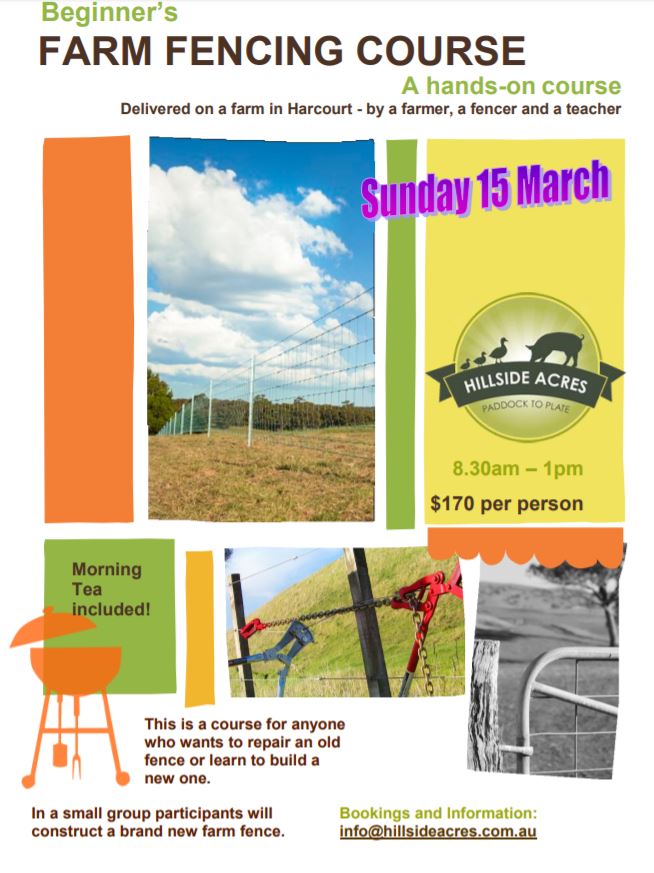 Local guru Jarrod Coote is running his popular Beginner Farm Fencing Course again on Sunday 15 March 2020 2020 in Harcourt VIC.
Only one course will be run this year so grab the opportunity.
For details, please refer to the event flyer: click here
If you have any questions, please contact Jarrod:
Jarrod Coote
Hillside Acres
Harcourt, Victoria 3453
0438 069 849
Bird of the month: the chatty Crimson Rosella
Posted on 13 February, 2020 by Ivan
Welcome to our first-ever Bird of the month, a partnership between Connecting Country and BirdLife Castlemaine District. Each month we’ll be taking a close look at one special local bird species. We’re excited to be joining forces to deliver you a different bird each month, seasonally adjusted, and welcome any suggestions from the community and our supporters. We are lucky enough to have the talented Jane Rusden from BirdLife Castlemaine District writing about the first-ever bird of the month. We know you’ll be familiar with the first bird off the ranks. We thank Jane for the following words, the first of many posts to come.
Crimson Rosella (Platycercus elegans)
Recently I returned from a month-long conservation volunteer hiking trip pulling weeds in coastal south-west Tassie. As I sat looking out on the bush from my living room, a Crimson Rosella flew in to drink from one of the many freshly fill birdbaths around my home. It walked in that funny fashion parrots do which is slightly pigeon-toed, up to the rim of the pot base holding water and dipped its head for a drink. Using it’s incredibly dexterous foot, it then scratched its head, turned and flew off.

A mature Crimson Rosella (above) and two immature Crimson Rosellas (below) showing the different coloring (photos by Jane Rusden)
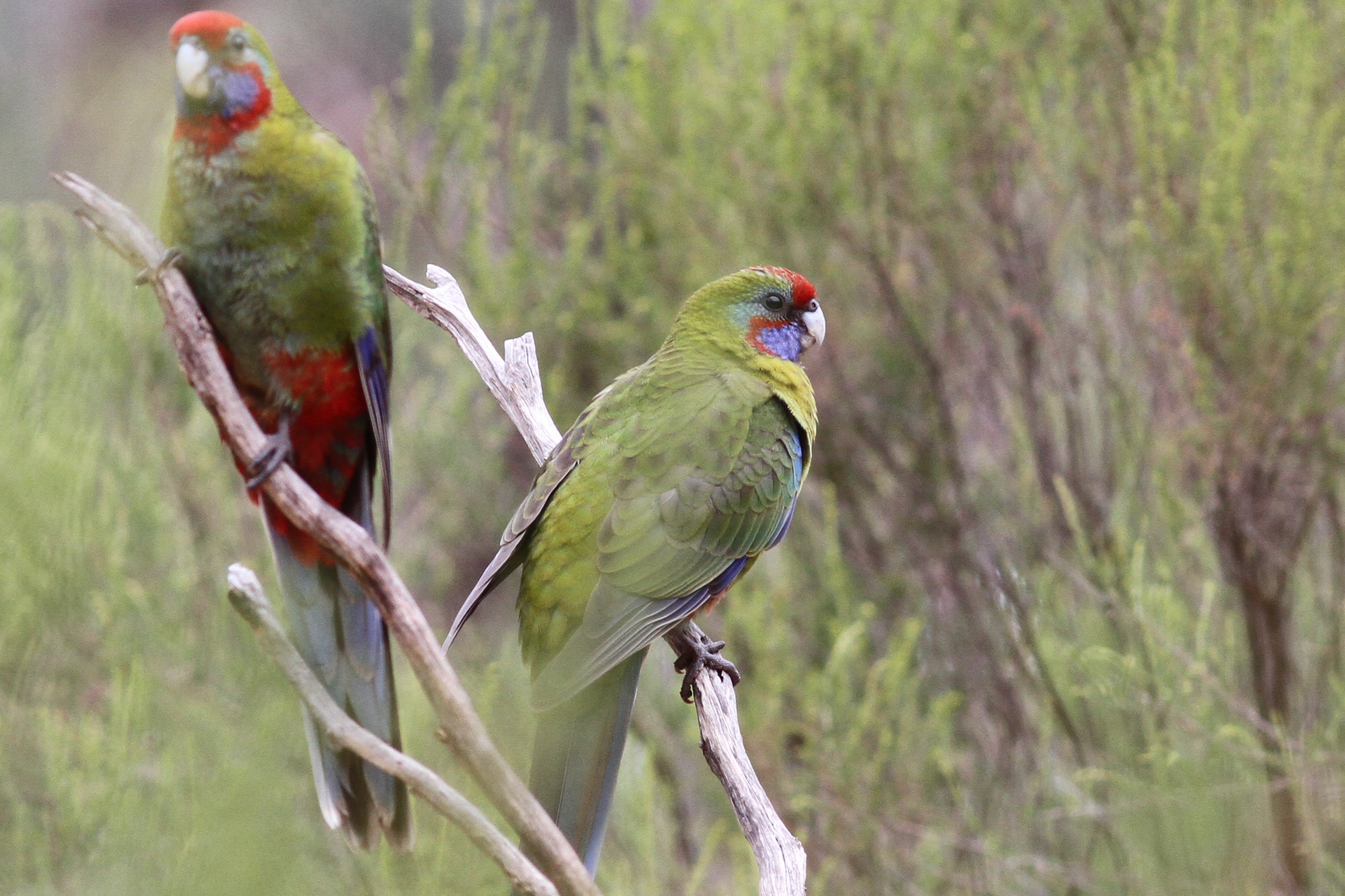
There are various races (forms, often denoted by color variation), but let’s take a look at our local Crimson Rosellas. Mature adults have a vibrant crimson head and chest, with mid to very dark blue wings and tail. Immature birds are olive green in the body and head, as they mature the crimson replaces the green. Both mature and immature birds have a mid-blue patch which extends from the lower mandible (bill) to the cheek.
Being a parrot, they have an extremely strong, down-curved bill, which is powerful enough to crack wattle and grass seeds, as well as gum nuts. Like many parrots, they are amazingly expert chewers, which is useful when renovating tree hollows in eucalyptus at breeding time. For such a powerful bill, Crimson Rosellas can use it to be very clever and delicate at manipulation of all manner of things.
Primarily you’ll see Crimson Rosellas in trees, thought they do wander about on the ground at times. They are a species that can be found in both the local Box Ironbark forest as well as in towns and gardens. I mentioned tree hollows – parrots need tree hollows in which to nest and raise their young. In our area much of the bush was cleared during the gold rush, which in tree terms is not that long ago. Therefore, there hasn’t been the passage of time for trees to grow old and develop tree hollows. You might like to consider putting up a Crimson Rosella nest box in your garden. I have several at my place and they are used regularly by a number of species, including Crimson Rosellas.
To listen to the varied and lovely calls of the Crimson Rosella, please click here.

Distribution of the Crimson Rosella (image from Atlas of Living Australia)
Words by Jane Rusden
Who’s who in the Connecting Country zoo: Frances
Posted on 13 February, 2020 by Ivan
We thought it might be nice for our friends and supporters to get to know the team at Connecting Country, and learn about why they joined us. First off the ranks is our director and superb (fairy wren) leader, Frances Howe.
Frances joined Connecting Country in 2017, after a career in assessing and managing environmental and social impacts of large development projects, across Australia and around the world. She has led environmental teams in Melbourne, Adelaide and Dubai, and been an environmental advisor for a non-government organisation in Lesotho (Africa). Her qualifications including a Bachelor of Science (Honours) and Master of Environment from the University of Melbourne. Having travelled far and wide, including living in the Middle East, Africa and the United States, Frances returned to settle in Castlemaine. She lives with her husband and dog on a bush block outside Castlemaine, surrounded by the Castlemaine Diggings National Heritage Park, where she enjoys watching the wildlife and rehabilitating the degraded landscape.

What motivated you to join Connecting Country?
Throughout my life and career I’ve focused on practical ways to reverse environmental problems, initially in addressing the effects of land contamination, then in managing natural resource projects to reduce environmental and social impacts. Connecting Country offered a new challenge, a compelling opportunity to use my skills to help my local environment and community.
After 20 years as an environmental consultant, I was ready for a more meaningful role, helping make a difference on the ground. Connecting Country impressed me because it does real stuff to stop environmental degradation and improve habitat at a grassroots level. We don’t just talk, we work with community to deliver practical actions based on scientific evidence. I think that’s pretty cool.
What have you learnt from your time at Connecting Country?
The Connecting Country team have taught me heaps about our local plants and animals, but I still have much to learn! I am endlessly amazed by the rich pool of visionary, knowledgeable, committed and resourceful people within our local community, and their capacity to drive positive change. So many locals freely dedicate their time, land, skills and money to repair the land and care for wildlife. I’ve also learnt it’s really difficult to get funding, even when our work is essential to secure a viable future for ourselves and fellow inhabitants of the land.
Which projects do you manage at Connecting Country?
I manage the team and the overall organisation, rather than individual projects. A big part of my role is developing projects and sourcing funding. I work with Connecting Country’s dedicated management committee, oversee finance and administration, review documents, manage staff and support the team as needed. As a people manager, I aim to empower and support the team to plan and run their own projects. I’m proud and impressed how each of them has stepped up to build their skills and develop as project managers. It’s an honour and pleasure to work with such a collaborative, committed and talented bunch of people.
How did you first become interested in our natural environment and our unique ecosystems?
As a kid, all my annual summer holidays were spent camping in the lush forest of the Otways. There I got curious about the plants and animals, why they were there and how they all fitted together. At university I initially enrolled on a different path, but another camping trip made me reassess and change to study ecology. Growing up, I also spent a lot of time at my aunt and uncle’s tiny cottage near Daylesford, which is how I came to love central Victoria.
 How do you spend your time away from work?
I’m fortunate to be passionate about my work, so there is little distinction between work and everything else. When not in the office I like to do yoga, grow veggies, enjoy good food and wine with my man, hang out with my dog and chooks, fix up old stuff and work on restoring my land. I’m an avid traveller – I’ve been to a lot of places, but currently enjoy being in one place.
What is your favourite movie and why?
I love a lot of movies but my favourite is Lantana. It’s a carefully crafted mystery, but really so much more about trust, relationships and chance. And it’s named after a weed!
What is your favourite place to visit in our region and why?
If I have to choose just one, it’s Leanganook Track along Forest Creek in Wesley Hill. Castlemaine Landcare has done an incredible job of converting it from a highly disturbed wasteland into a beautiful home for native plants, frogs and birds. It’s inspiring.
Birdlife Castlemaine AGM: Saturday 7 March 2020
Posted on 13 February, 2020 by Ivan
Our partners and friends at BirdLife Castlemaine are having their Annual General Meeting (AGM), following their monthly bird walk. It is a good chance to hear their achievements and what is planned for the year ahead, as well as enjoy a bird walk at the lovely Mount Tarrengower. Here are the details from BirdLife Castlemaine.
Please be advised that the 2020 Annual General Meeting of the BirdLife Castlemaine District Branch will be held on Saturday 7 March 2020 at 11.30 am at 25A Church Street, Maldon VIC.
The meeting will follow the monthly bird walk to be held on Mount Tarrengower. Morning tea will be available from 11.00 am. A nomination form for committee positions is available by contacting BirdLife Castlemaine via email (castlemaine@birdlife.org.au). The positions vacant are Convenor, Secretary, Treasurer and committee members. A proxy voting form is also available. Please consider nominating for the committee.
Nomination forms and proxy voting forms should be emailed to castlemaine@birdlife.org.au OR mailed to: Secretary, BirdLife Castlemaine District Branch, 25A Church Street, Maldon VIC 3463. Nominations will also be accepted on the day of the AGM.
Best wishes
Secretary – BirdLife Castlemaine District Branch
For further information please – click here
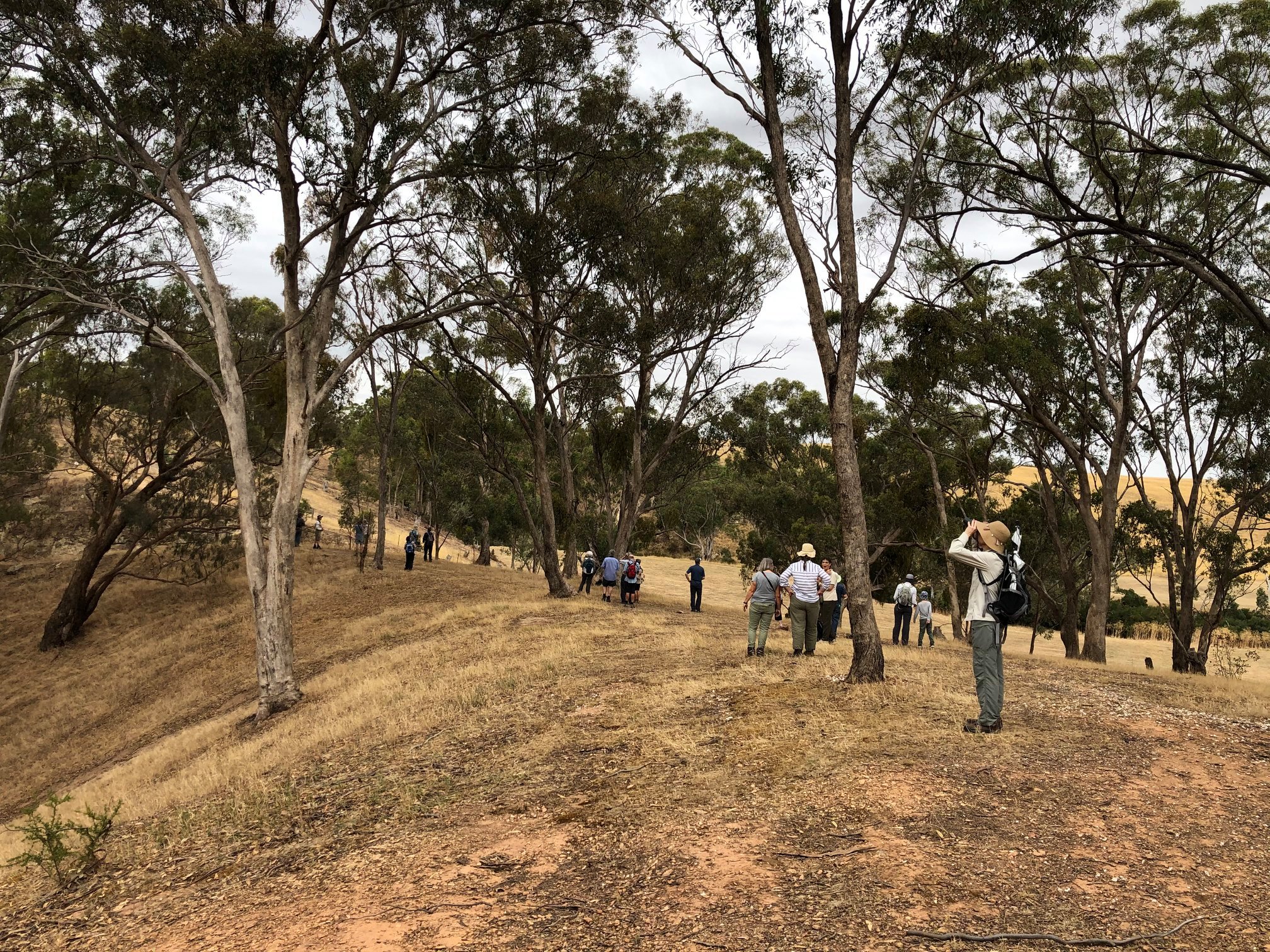
Twenty-eight bird lovers enjoyed ‘Breakfast with the Birds’ and February 2020 Bird Walk at Warburtons Bridge, Glenluce VIC (photo by Birdlife Castlemaine)
Have your say on regional biodiversity planning: book now
Posted on 13 February, 2020 by Ivan
*This event has been postponed due to coronavirus.*
Here is a great opportunity to be part of the conversation about land, water and biodiversity in your area, the Regional Round Tables. Join the North Central Catchment Management Authority (CMA) and the Department of Environment, Land, Water and Planning (DELWP) at one of their 2020 roundtable sessions to have your say about what you value in the region. This year’s roundtables focus on renewing the CMA’s 2021-2027 Regional Catchment Strategy and DELWP’s Regional Biodiversity Response Planning. They give the community a unique opportunity to have input directly into these important plans.
There are four sessions in North Central Victoria during March 2020, so please save the dates and attend if you can:
- Tuesday 17 March: Harcourt Leisure Centre Hall.
- Thursday 19 March: Kerang Memorial Hall.
- Tuesday 24 March: Charlton Memorial Hall.
- Thursday 26 March: Inglewood Football Pavilion.
All sessions are from 6.00 – 8.30 pm with meal available at 5.30 pm.
To book your seat at the table: click here
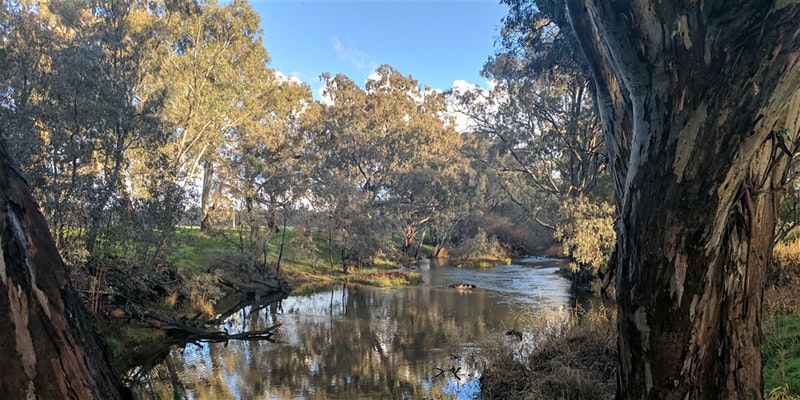
The round table event will allow community members to nominate their important biodiversity assets (photo by North Central CMA)
More about this event, from the North Central CMA website:
eBird learning tool: a different approach
Posted on 6 February, 2020 by Jess
Being new to bird watching can be a daunting and exciting experience for many, with plenty of birds seemingly having similar appearances and attributes. Thankfully there are many excellent books, guides, smartphone apps and community groups that can assist with the learning of how to identify birds in your region. But we all know that practice, practice, practice is the key to getting familiar with our incredible birdlife in the field and learning from experienced bird-watchers is a great opportunity in our region (see Birdlife Castlemaine’s monthly birdwalk). To the beginner, it can very hard to tell similar species apart, such as the variety of Lorikeets in our region pictured below. Can you recognize who is who?

Photo: Geoff Park

Photo: eBird

Photo: eBird
However, if you cannot get out into the field as often as you like, or cannot access locations to practice your bird spotting skills, there is another way to improve your skills on our local species. We’d like to introduce you to a great learning assistant: eBird Photo and Quiz
Each custom quiz presents you with 20 birds that occur at a date and location of your choosing, pulled from millions of photos and sounds added to the Macaulay Library by eBirders around the world. Guess the species—and don’t worry if you’re wrong—this challenging quiz is for your own fun and learning. After each guess, you’ll rate the photo or sound for its quality, helping curate the Macaulay Library so it is more useful for you and for science. It can be quite a challenge, but we do enjoy that you can choose any location in the world and any date, and get a different mix of birds for every quiz. Sure, it is not as good as being in the field with an expert to guide you, but it could be the next best thing. It is particularly enjoyable to listen to the sounds that go with each bird.
Give it a try, and see how many you can guess correctly.
There is also a useful smartphone app that we highlighted in a previous blog, that we find very useful: Ask Merlin, what is that bird.

Can anyone guess this local beauty? Photo: Ebird
You are invited! Join us for the Landcare Link-up – 29 February 2020
Posted on 6 February, 2020 by Asha
Are you interested in learning more about our local Landcare/Friends groups? Maybe you want to get involved in environmental volunteering, meet like-minded people, show your support, or just want to know what Landcarers have been up to? Come along and join local volunteers at the February Landcare Link-up at the Castlemaine Uniting Church Hall.
This is the third annual Link-up dedicated to sharing the stories of Landcarers from the Mount Alexander region and highlighting some of the key projects and achievements. This year Landcarers are keen to invite the broader community and stakeholders along to be part of the journey and learn from the various groups in our region. The Link-up is always a casual and fun affair, with stories from a variety of groups and plenty of time for chatting over hot drinks and snacks.
To read about the Sharing Stories Landcare Link-up in 2019, please click here.
When: Saturday 29 February 2020, 4:00-7:00 pm
Where: Castlemaine Uniting Church Hall, 24 Lyttleton St, Castlemaine Victoria, Australia.
RSVP: by February 24 2020 to asha@connectingcountry.org.au or call (03) 5472 1594
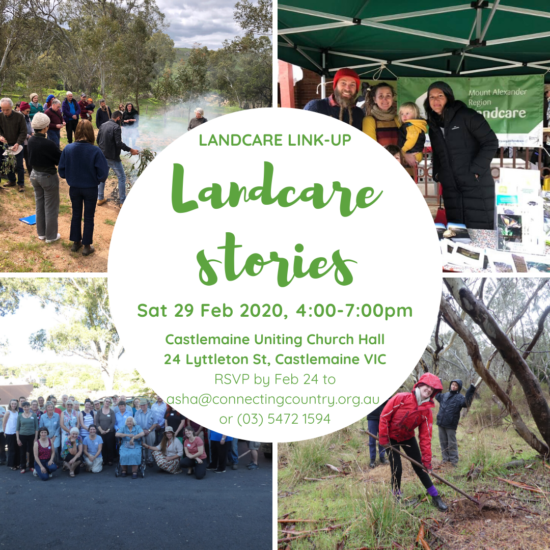
Click here to download the invitation for the Landcare Link-up.
Become a Connecting Country Member: Join us on our landscape restoration journey
Posted on 6 February, 2020 by Ivan
We have noticed many of our supporters are not currently members of Connecting Country. The support we offer is not exclusive to our members, but we would love to sign up some new people and increase our membership in 2020. By being a member, you are showing your support for Connecting Country, and assisting us to achieve our aims and objectives. Membership provides insurance cover when you attend our events and activities or volunteer with us, and also allows you to vote at our Annual General Meeting and have a say on our future direction.
We currently have 250 valued members and would be thrilled to increase our membership to over 300 members this year. More members will assist us when applying for grants and presenting to potential funding bodies.
Membership is free, and needs to be renewed annually. Applications from first time members are submitted to the Committee of Management for official approval.
To become a member of Connecting Country for free, and help us on our mission of landscape restoration, please click here.

Connecting Country runs community education events, attracting over 1,000 attendees in the past year (photo by Ivan Carter)
For a quick recap of some of what we do and why it’s important, view the following video.
How Connecting Country began
In 2007, the Normal Wettenhall Foundation (now Wettenhall Environment Trust) developed a work plan for supporting community-led landscape restoration in south-east Australia. The Executive Officer contacted Friends of the Box-Ironbark Forests (Mount Alexander Region), an environment group in Castlemaine, to see if there was interest in working collaboratively across the region on a landscape restoration project. A reference group formed, eventually leading to the creation of Connecting Country.
During 2008, the project produced a Biodiversity Blueprint (click here for details) that identified our assets, the possible threats they face and what future actions we can take. It suggested directions, clarified priorities in landscape restoration and helped reconcile cultural, agricultural and natural values.
In 2009, Connecting Country worked in partnership with the North Central Catchment Management Authority to implement a program across the local landscape with a specific focus on the threatened Brush-tailed Phascogale (Tuan) and its Yellow Box Woodland habitat.
Since 2012, we have implemented programs related to local Landcare support, habitat connectivity and pest plant and animal management. We have supported development of local action plans, habitat enhancement for woodland birds, community skills training in environmental management and biodiversity monitoring. For more information on our current projects click here.
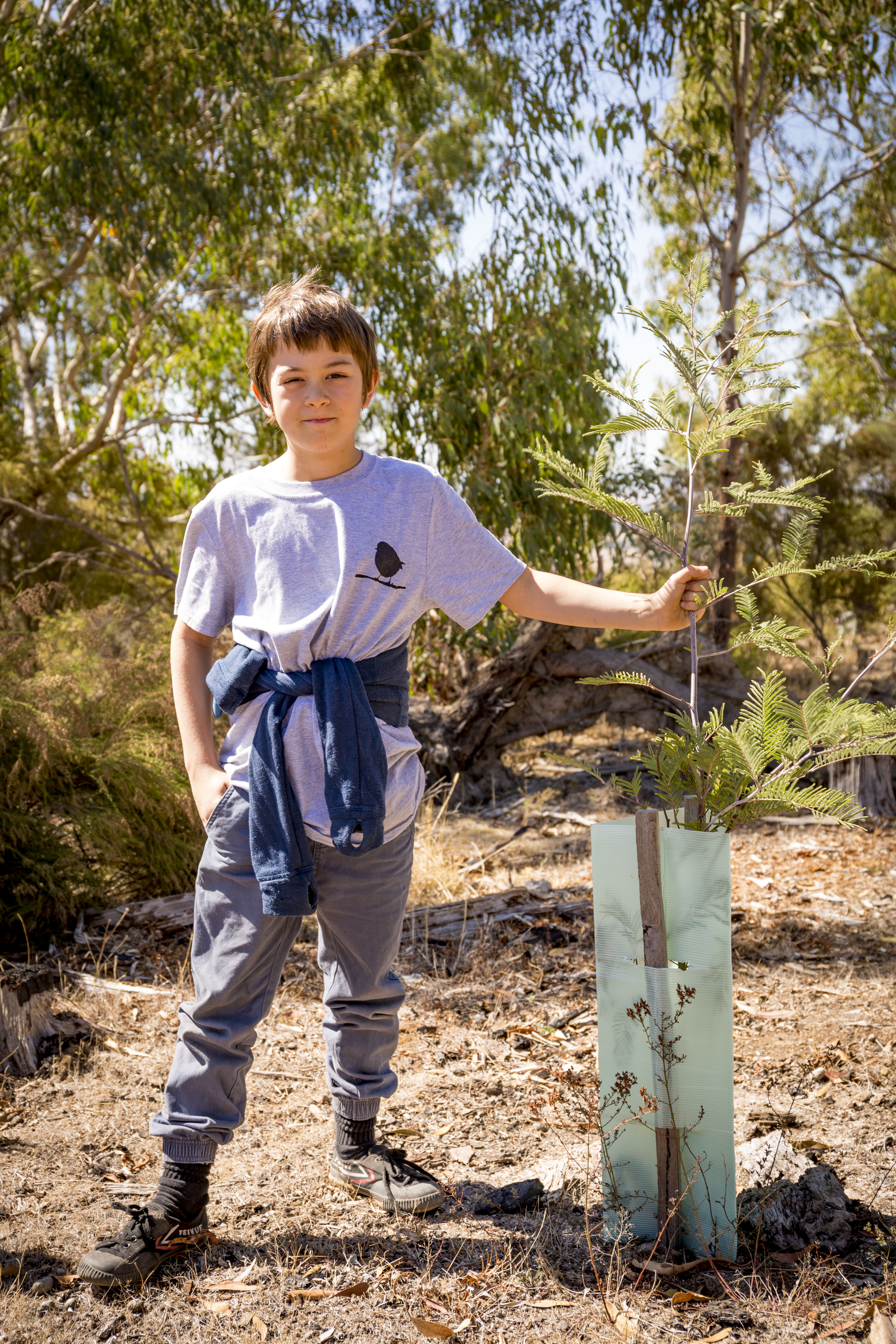
Ted Macarthy with a revegetated Acacia (photo by Leonie van Eyk)
Rabbit Buster Workshop – 16 February 2020
Posted on 4 February, 2020 by Asha
Are you a property owner or Landcare member wanting to manage rabbits? Wondering what to do next?
Barkers Creek Landcare & Wildlife Group are hosting a workshop and demonstration day as part of the annual Rabbit Buster Month campaign, with support from Connecting Country, Agriculture Victoria, and North Central Catchment Management Authority (NCCMA).
The session will cover:
- Best practice rabbit management- presented by Agriculture Victoria’s Leading Biosecurity Officer, Jessica Seidel.
- Integrated rabbit management.
- Case studies from local Landcare groups and land managers.
- Rabbit management demonstration by Jarrod Coote (field site visit).
Click here to download the flyer with more information about the workshop and how to register.
Why manage rabbits?
Rabbits have been significant pests in Australia since they were released near Geelong, Victoria in 1860. Rabbits are one of Australia’s most serious pest animals and typically:
- Destroy pasture, crops and plant communities, impacting on agriculture and the environment;
- Cause soil erosion and associated sedimentation of waterways;
- Compete with native fauna for food and habitat.
For more information and resources about rabbit management, click here.
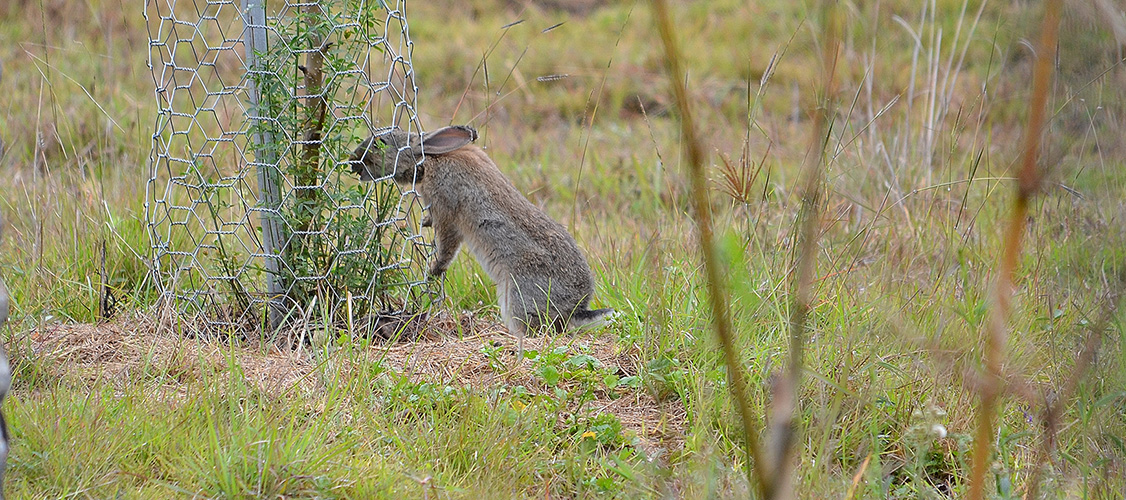
Rabbits can impact native vegetation, revegetation, and pastures alike. Photo: Pest Smart CRC
A massive thank you for your generous donations
Posted on 30 January, 2020 by Ivan
It’s been two months since we launched our first campaign seeking your contributions to Connecting Country, so it is a good time to update our subscribers and members on progress to date.
Thank you!
Firstly and most importantly, we would like to thank you all for being part of the Connecting Country community, joining with many others in supporting our shared vision for landscape restoration across the Mount Alexander region. The valuable work we do couldn’t happen without people like you – whether it’s volunteering time to help with wildlife monitoring, joining our education events, or participating in our on-ground projects – making our vision a reality is only possible with community support.
Our first-ever ‘support us’ campaign was prompted by a major decline in the funding available to community groups like Connecting Country. We know that with the combination of our track record of ten years of successful landscape restoration, great plans for the future, and lots of persistence, we can secure funding for some projects from governments and grantmakers. But we also know that lots of small, on-ground projects are not enough to keep us thriving and focused on long-term plans that go well beyond short-term funding opportunities.
Donation update
Since our request for help in December 2019, we’ve received a total of $3,370 in donations from our generous Connecting Country supporters, as well as another amazing donation of $5,000 from a local landholder family specifically to support our 2020 bird monitoring program. One marvelous anonymous supporter chose to donate $1,000 to Connecting Country, rather than worthy bush fire appeals, because they believe the work we do now will help everyone into the future. Some of our extraordinary supporters have chosen to make a regular monthly donation.
This has warmed our hearts and lightened our outlook for 2020 and beyond. Your support will allow us to continue restoring the landscape, monitoring change and educating the community on best practice sustainable land management. We are thrilled to see your support in all forms – financial, volunteering or other – and feel very special to have such a strong connection to our community.
What’s next
We should all be proud of what we’ve achieved. However, there’s still more to do. With your support, 2020 will see us continue to help landholders with on-ground actions, prepare for climate change, maintain our commitment to long-term monitoring, and deliver events that inform, educate and inspire.

photo by Connecting Country

photo by Connecting Country

Photo: Connecting Country

Sweet Bursaria festival 2019 (photo by Ivan Carter)

Photo: Connecting Country

Photo: Gen Kay

photo by Gen Kay

photo by Connecting Country
If you have not already donated but would like to, we are continuing our campaign and still welcome your contributions. Donating is easy – just use our secure online service (click here) or download our form if you’d prefer cheque or cash (click here). All donations to Connecting Country are tax deductible.
Thanks again for your support for Connecting Country. It is much appreciated.
Connecting Country committee and staff
Meet the team: who’s who in the Connecting Country zoo?
Posted on 30 January, 2020 by Frances
We thought it might be nice for our friends and supporters to get to know the team at Connecting Country, in case you don’t already. Over the coming blogs we will feature each member of our dedicated Connecting Country staff team, including a little about their interests and why they joined Connecting Country.
Here is an overview of our current staff and when you’ll usually find them in the office.
- Frances Howe – Director (Monday to Thursday)
- Asha Bannon – Landcare Facilitator (Monday to Thursday)
- Jacqui Slingo – Landscape Restoration Coordinator (Monday to Thursday)
- Bonnie Humphreys – Landscape Restoration Coordinator (Mondays and Thursdays)
- Ivan Carter – Engagement Coordinator (Tuesdays and Thursdays)
- Jess Lawton – Monitoring Coordinator (Mondays and Tuesdays)
We also want to let you know that our wonderful Asha Bannon will be taking extended leave from mid-March to September 2020. During this time, the very capable Jacqui Slingo will take over as Landcare Facilitator, while local expert Bonnie Humphreys takes the lead as Landscape Restoration Coordinator.

The team at Connecting Country, minus Ivan Carter, who is pictured below with Jess Lawton. Photos: Heather Barrett and Tanya Loos
Trust for Nature: covenanting for conservation
Posted on 30 January, 2020 by Ivan
Have you ever wondered about conservation covenants and how are they applied? Did you know that we have already lost 80% of our biodiversity on private land in Victoria? We recently caught up with Senior Conservation Officer at Trust for Nature, Kirsten Hutchison, to learn more about this important conservation measure and what it means for landowners across our biodiverse nation. Here is a summary of the questions we asked Kirsten, which we hope will assist landowners in our region better understand covenants and the work Trust for Nature do in Victoria. Kirsten has been with Trust for Nature for nearly a decade and based out of the Castlemaine Office.
What is the concept of conservation covenanting properties?
Conservation covenants are voluntary. They are agreements on property titles that enable private landholders to protect nature forever, even after the property changes hands. Conservation covenants are set up for free—costs are covered so there is no cost to the landholder—and they are one of the most important things a landholder can do to Victoria’s environment.
Why should a landowner consider covenanting a property?
Since 1835, 66% of Victoria’s native habitat has been cleared. This has been most acute on private land, where 80% of biodiversity has been lost. Around 60% of land in Victoria is currently privately owned. Victoria is the most intensively settled and cleared state in Australia so it’s critical that we protect what’s left. This makes private land protection vital if we’re going to save Victoria’s threatened species and ecosystems. National and state parks are simply not enough.
Across the state, more than 1,450 private landholders have protected threatened woodlands, wetlands and grasslands with conservation covenants. These places are home to some of Victoria’s most threatened species such as the Helmeted Honeyeater and Plains-wanderer.
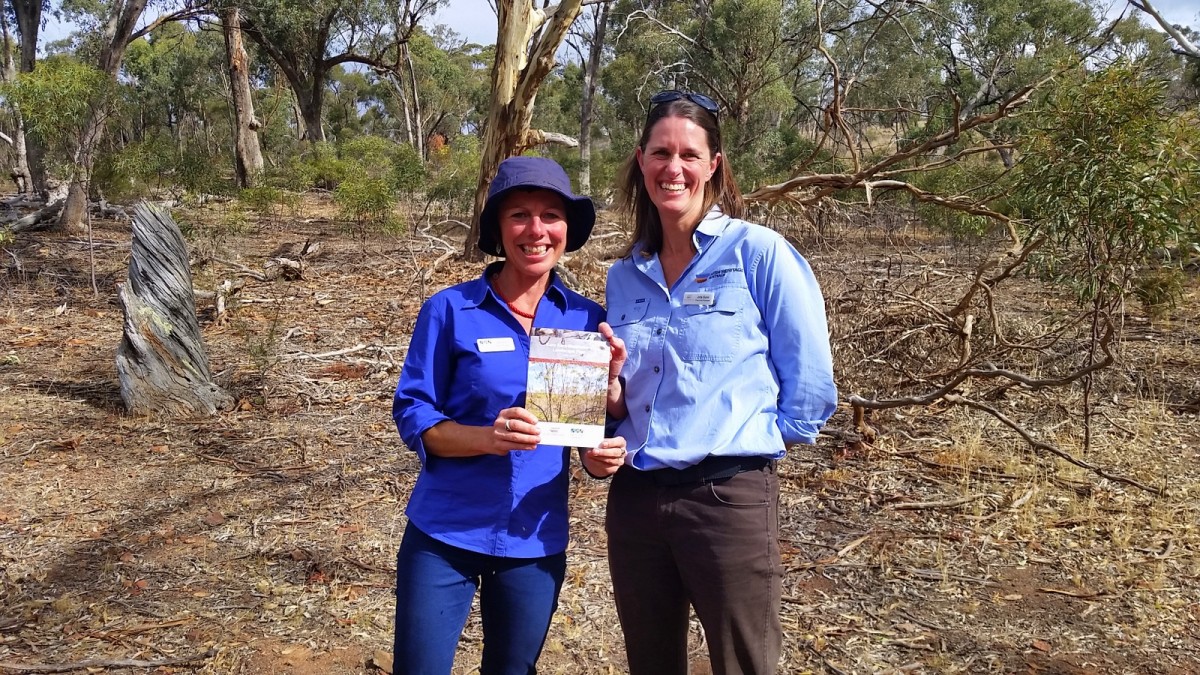
Kirsten Hutchison from Trust for Nature and Jody Gunn at Bush Heritage Australia, on Bush Heritage’s Nardoo Hills Reservem which has Trust for Nature conservation covenant on it. Photo: Bush Heritage Australia.
What are the criteria for covenanting a property?
Generally a property needs to be at least 10 ha in size, have good connectivity and contain high quality remnant native vegetation. Priority is given to properties that have threatened species and vegetation types present on them. Trust for Nature is guided by its Statewide Conservation Plan which identifies 12 priority landscapes across Victoria that will make the greatest contribution towards conservation on private land. The plan also identifies 148 native plants and 88 wildlife species to target for conservation on private land.
Who do I contact about discussing conservation covenants?
Contact Trust for Nature Head Office in Melbourne on (03) 8631 5888 and they can direct you to the appropriate regional staff member. In North Central Victoria you can contact Kirsten Hutchison (Senior Conservation Officer) on 0459 168 865.
What are the restrictions on covenanted properties?
A standard covenant generally does not permit:
- Native vegetation removal.
- Introduction of any non-indigenous vegetation.
- Subdivision.
- Deterioration in the quality, flow or quantity of water.
- Removal of wood or timber.
- Removal or disturbance of soil or rocks, including cultivation.
- Application of fertiliser.
- Pasture establishment.
- Recreational use of trail bikes and other recreational vehicles.
However, these standard restrictions can be modified in certain circumstances where the Trust is satisfied that the conservation of the land will not be adversely affected, i.e., the Trust can give permission for a temporary variation of the covenant via a ‘Letter of Approval’. Permission granted by a letter of approval is conditional on the upholding of the conservation values of the property.
What are the benefits for biodiversity and our ecosystems?
Together with conservation covenants and reserves, we have protected more than 100,000 hectares across Victoria. This provides safe places for native animals and plants forever and helps to protect some of Victoria’s most threatened species such as the Helmeted Honeyeater, Growling Grass Frog and Red-tailed Black Cockatoo. We also work with partner organisations such as Zoos Victoria and the Royal Botanic Gardens which rely on covenanted land for the safe release of plants and animals from captive breeding programs.
The Trust’s stewardship program provides ongoing support to landholders with a conservation covenant. The aim of the program is to ensure that all significant areas covenanted by the Trust are managed to maintain and enhance (where possible) the conservation values by preventing and controlling any threats to the biodiversity of a site. The program does this by providing the following services to landowners:
- Practical assistance: A site management plan is prepared for each proposed covenant in consultation with the landowner during the initial covenanting process.
- Technical advice: The Trust sources and provides technical advice to ensure landowners have access to up-to-date conservation related land management advice.
- Education: The Trust provides resources to enable landowners to improve their knowledge about managing and monitoring their covenanted properties. This is achieved through field days, information sheets, developing flora and fauna monitoring programs and one-on-one contact with landowners.
- Financial assistance: The Trust provides information on financial assistance that may be available from time to time for covenanters, including incentive grants for conservation activities (such as fencing, pest plant and animal control, and revegetation), rate rebate schemes with local councils, and tax concessions for the protection of covenanted properties.

Protecting and enhancing biodiversity on private land has public benefits to ecosystems and sustainable landscapes. The landowner named this paddock ‘Kirsten’s Paddock’ as a tribute to her efforts in protecting this important Plains-wanderer habitat. (Photo by Kirsten Hutchison)
Trust for Nature – some general facts:
- TfN are a not-for-profit Victorian conservation organisation and are one of Australia’s oldest conservation organisations, established by an Act of the Victorian Parliament in 1972.
- Together with conservation covenants and reserves, has protected more than 102,000 hectares across Victoria.
- Trust for Nature has registered more than 1,459 conservation covenants since 1986
- Trust for Nature owns 42 nature reserves across Victoria, including the iconic Neds Corner Station, a 30,000 hectare property near Mildura that was once part of the Kidman empire.
- Trust for Nature uses a revolving fund to buy and sell private land with high conservation values. They protect these properties with conservation covenants then on-sell them to new owners.
Watch the following video for an overview of Trust for Nature’s valuable work.