

Bird of the Month: Rainbow Lorikeet
Posted on 17 August, 2026 by Hadley Cole
Bird of the Month is a partnership between Connecting Country and BirdLife Castlemaine District. Each month we take a closer look at a special local bird species . Thanks always to the brilliant Jane Rusden and Damian Kelly for these wonderful articles and fabulous photos.
This months article is written by Damian Kelly.
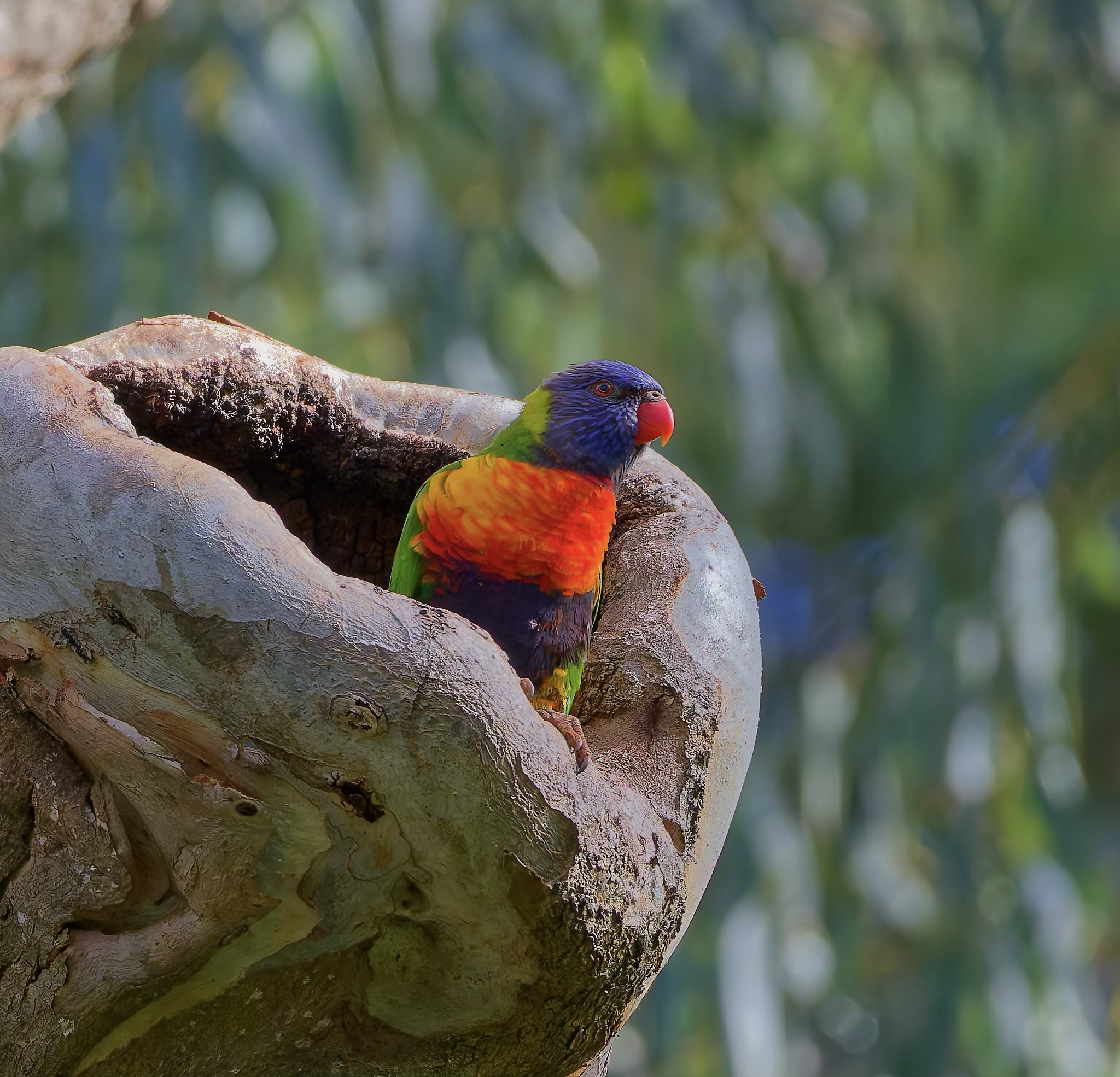
When we moved to Castlemaine over 15 years ago, sightings of Rainbow Lorikeets were few and far between. Now they are everywhere – just the other day I observed more than 40 in the Botanical Gardens, some of whom were aggressively hassling Long-billed Corellas and Sulphur-crested Cockatoos for access to nesting hollows in the Red Gums along the creek.This is the defining feature of Rainbow Lorikeets – they can be very aggressive and will take on larger birds. In the past this species was considered to have a diet of nectar, pollen, fruit and sometimes insects. However, ecologists in Queensland have discovered that they also eat meat when available. It is not uncommon for people to feed Magpies with meat and Rainbow Lorikeets are happy to aggressively take food away from other species.
More recent research has shown that other parrots such as Scaly-breasted Lorikeets and Sulphur-crested Cocka-toos will also take meat when when available. And this is not an isolated instance – as further research has shown that the practice is widespread ranging from Queensland down the coast all the way down the coast to South Australia.
Unlike some parrots, the Rainbow Lorikeet, a bit like honeyeaters, has a brush-tipped tongue that allows them to harvest nectar and pollen. With such a varied diet available to them it is no wonder they have extended their range substantially.
Like a lot of ill-fated projects in the past to introduce species into new habitats, Rainbow Lorikeets were introduced into Western Australia in the 1960’s. Alas it did not go well and there are now flocks in the 10’s of thousands and their damage to fruit crops is significant. Impact on the local native species is also significant, especially in terms of nesting hollows. Needless to say they are now a declared pest in Western Australia.
Their normal range includes northern an eastern Australia as well as islands to our north including Papua New Guinea. An adaptable bird, they nest in hollows but can be quite versatile with successful nests recorded not only in tree hollows, but also the dense tops of palm trees as well as rocky outcrops and holes at the base of trees.
If you have ever been in parts o Melbourne you will be well aware that the Rainbow Lorikeet is a communal rooster. They also prefer to roost near bright areas of artificial light like shopping centres and sports ovals presumably for predator awareness.
Breeding generally occurs from August to January and 1-3 eggs are usually laid. A pair can raise up to three broods in a season which is why they can quickly increase population size in favourable conditions.
Photo by Damian Kelly.


Leave a Reply