

Bring our local bush into your garden!
Posted on 11 November, 2019 by Jacqui
This Sunday 17 November 2019, Maldon Urban Landcare Inc. is holding a talk about wildlife friendly gardening using local provenance plants. Jacqui Slingo, Connecting Country’s Landscape Restoration Coordinator, will talk about the benefits of using local provenance plants in your garden, including opportunities to get up close with our local plants and animals, reducing maintenance, input costs and water usage.
Jacqui has worked at Connecting Country since 2018 and is inspired by the commitment of local groups and individuals in restoring the health of local habitats for people, landscapes and wildlife.
Frances Cincotta, from Newstead Natives, will have both local and non-local native plants for sale during the afternoon.
The talk is being held this Sunday 17 November 2019 at 2.30 pm, followed by afternoon tea, in the Maldon Community Centre, Francis St, Maldon, Victoria.
For more information contact Bev Phillips from Maldon Urban Landcare on 0407 770 350 or maldonurbanlandcare@gmail.com

Eltham Copper Butterfly talk in Castlemaine – Friday 8 November 2019
Posted on 7 November, 2019 by Frances
Castlemaine and Bendigo host the largest known area of Eltham Copper Butterfly (ECB) habitat in the world. Given the global decline in insects, it is critical that we protect our Australian species such as the endangered Eltham Copper Butterfly.
Local ecologists Elaine Bayes and Karl Just are guest speakers at the November meeting of the Castlemaine Field Naturalists Club. They will discuss the current distribution of ECB, the amazing relationship ECB has with Notoncus ants and the host plant Sweet Bursaria, and the local butterfly monitoring program. There has been little research on the central Victorian populations of ECB over the last decade. Elaine, Karl, and Julie Radford are trying to change this by leading the community in searching for new ECB populations and mapping colonies so we can protect them from planned burns and other threats.

The beauty of the Eltham Copper Butterfly (photo by Elaine Bayes)
Upcoming opportunities for the local community to be involved in studying and saving this species will be provided. Monitoring ECB also provides a great excuse to walk through our stunning bushlands over the summer months when ECB are flying and mating.
The monthly Castlemaine Field Naturalists Club meeting will start at 7.30 pm on 8 November 2019. This month the meeting will be held in the chapel behind the Uniting Church on Lyttleton St, Castlemaine VIC (next door to the Castlemaine Art Museum). All members are all encouraged to attend and, as always, visitors are also very welcome. There is no cost for entry and no need for bookings.
If you are interested in helping Karl and Elaine with the monitoring of this amazing local butterfly over November and December 2019, please click here
Platypus survey in Campbells Creek
Posted on 7 November, 2019 by Ivan
Our partners and good friends at Friends of Campbells Creek Landcare Group have arranged for the Australian Platypus Conservancy (APC) to conduct a Platypus survey at six locations along Campbells Creek, Victoria, in mid-November 2019.
The survey has been funded by Coliban Water. The survey will commence on the evening of Friday 15 November 2019 (depending on appropriate weather conditions), and finish early on Saturday morning. The APC team will be based at the Campbells Creek Community Centre. The first inspection of the nets will be at around 10 pm and continue throughout the night, approximately every two hours.
On Saturday morning at around 7.30 am, the results of the survey will be discussed at the Campbells Creek Community Centre (45 Elizabeth St, Campbells Creek VIC). Interested community members are welcome to join in and see the results. Tea and coffee will be available. In 2020 the APC team will return to conduct a citizen science workshop to present information on the biology and conservation considerations of Platypus and Rakali (native water rat), followed by a practical session on Campbells Creek. We will keep you informed of this event.
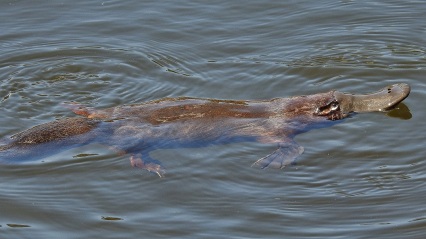
The platypus has a streamlined body and a superficially duck-like bill (photo: APC)
For more information about Friends of Campbells Creek Landcare Group and the Platypus project, please click here.
For more information about the Australian Platypus Conservancy (APC) and the survey methods, please click here.
Free disposal of Wheel Cactus at Maldon Transfer Station
Posted on 30 October, 2019 by Ivan
Here is an update from the Tarrangower Cactus Control Group regarding the disposal of the invasive plant Wheel Catcus (Opuntia robusta) in the Mount Alexander region of central Victoria.
Thanks to renewed funding from Mount Alexander Shire Council, Wheel Cactus plants can again be disposed of FREE at the Maldon Transfer Station. This is a great incentive to dig up Wheel Cactus plants while they’re still small and before they’ve started producing fruit and seeds. Hopefully it will also encourage everyone to remove any outlying plants they see starting to grow in new areas.
Small Wheel Cacti are really easy to dig up because they are very shallow-rooted plants. To help, digging hoes and buckets can be borrowed from the Tarrangower Cactus Control Group. Digging up small plants also reduces the need for the chemical herbicides required when plants are left to grow to maturity.
Alas, there is a limit of one trailer load per property each financial year, because the funding is limited and Wheel Cactus infestations are so widespread across so many properties. However, if you do have more Wheel Cactus plants you’d like to dig up, an alternative solution is to dig a big hole on your property, and dump and bury the weeds on site (also saving you the time, effort and cost of carting to the tip).
What is Wheel Cactus?
A plant native to Mexico, this cactus (Opuntia robusta) is most commonly called Wheel Cactus in Australia. It was probably introduced into our country as a hardy garden plant. This cactus species has a distinct blue-green colour and large, flat, round pads with many short and long spines. The plant is erect and can grow to 3 m tall. It has yellow flowers and dark red fruit in spring-summer, each containing approximately 500 seeds that are spread by animals and water.
This weed is widely established in central Victoria, western New South Wales, and south-eastern and eastern South Australia. It particularly likes to grow on granite outcrops, but also infests woodlands and pastures.
For more information on Wheel Cactus and how to control this invasive species, please click here
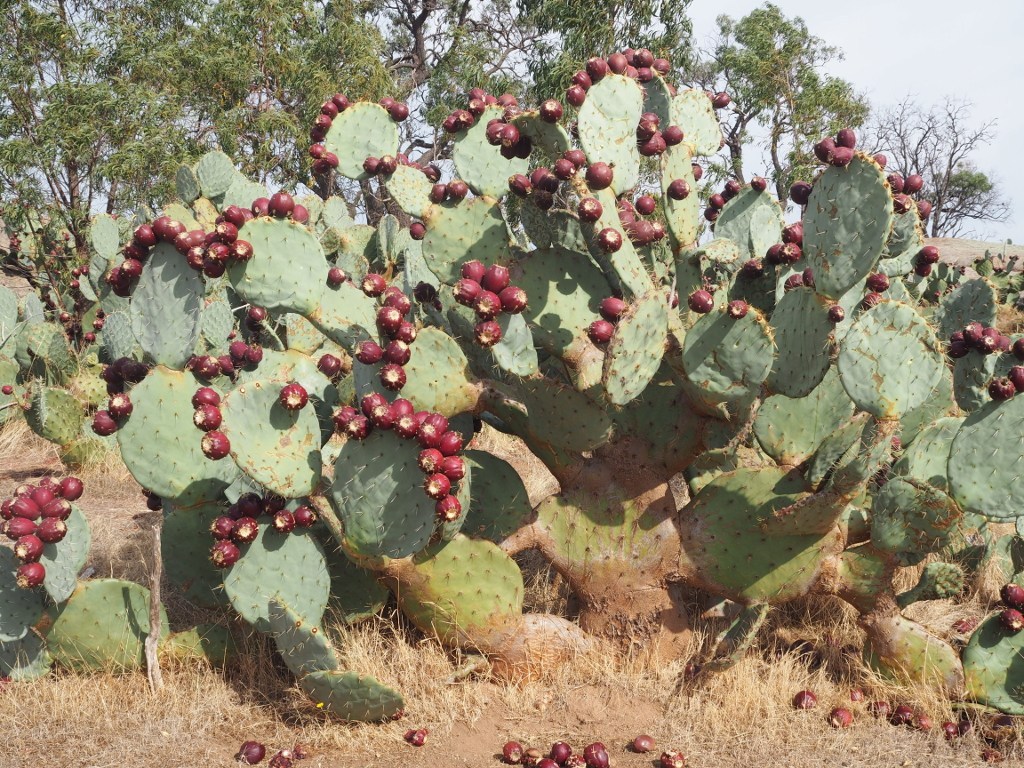
A large fruiting wheel catcus plant (photo: Tarrangower Cactus Control Group)
Seek and discover
Posted on 30 October, 2019 by Ivan
Have you ever wondered what that mysterious plant might be and don’t have the knowledge or time to consult with a botanical encyclopedia? Meet Seek!
The Seek app is an online social network for nature enthusiasts and is part of an ongoing attempt to involve ordinary people in citizen science projects. Similar to Shazam – an app that allows you to identify music from audio recordings – the Seek app allows you to identify plants and animals from your photos by harnessing image recognition technology. It is still in the early stages of learning many of the native species from this region, but learns from each experience it is exposed to.
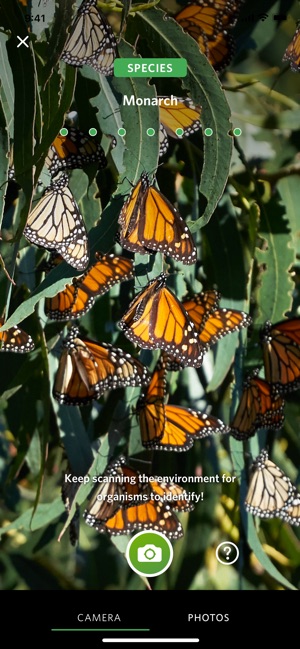
The Seek app enables you to take photos of nature and have complex articifical intelligence attempt to identify them. Photo: I-Naturalist
The beauty of this app is that it encourages curious adventurers to become engaged with the wildlife around them. Fun and educational for kids and adults alike, users can earn badges while they learn about each new species they photograph.
We tried this app around Castlemaine in central Victoria to identify plants (and chickens in the community garden adjacent to our office – red jungle fowl, tick!), and found its ability to identify plants depended on the camera’s ability to focus. Moving the camera around at different angles (without taking a photo), helped it recognise exotic plants to genus level. It performed better at identifying exotic species, which is useful if you want to identify weeds. At this point in Seek’s development, it didn’t succeed at identifying any plants to species level. We recommend patience and a good field guide, as we found the app incorrectly identified an Early Black Wattle (Acacia decurrens – native to NSW and a weedy invader of bushland in central Victoria), as Silver Wattle (Acacia dealbata), (Acacia dealbata – a locally indigenous species.
With further development, this could be a powerful app for anyone learning to identify weeds and local native species, and also for recording observations in the landscape. Seek draws from existing data collected from wildlife observations on iNaturalist, in combination with artificial intelligence and neural network technologies. Once downloaded, users are provided with lists of commonly recorded plants, insects, birds and other animals in their area. When a new photo is uploaded, the app’s artificial intelligence analyses the photo to find a match, adds it to the user’s collection, and provides a summary of information from Wikipedia.
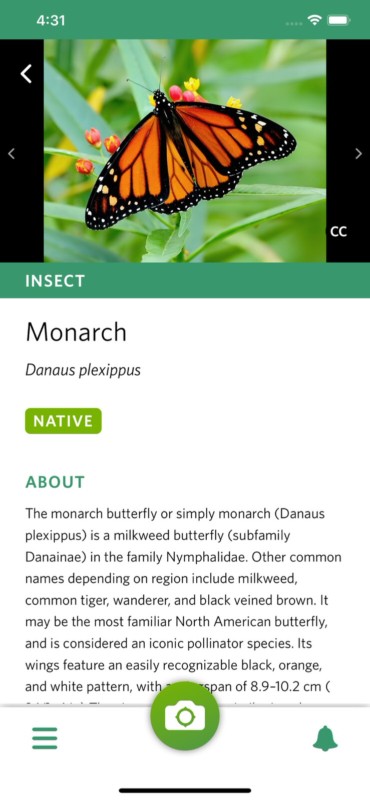
The app software currently recognises 30,000 species, and will continue to improve with further use. The app’s co-founder Scott Loarie explains, ‘The only way we can improve our modeling of species is to get more data, and to do that we need more people outside taking pictures’.
The Seek app doesn’t require any registration to use and doesn’t collect any user data by default, though location data is used to show you the plants and animals in your area. Alternatviely, if an app is not for you, you might be interested to have a look at the Flora of Australia website
You can read more about the Seek app, and to download it for free – click here.
Eltham Copper Butterfly events 2019
Posted on 28 October, 2019 by Frances
Confused about all the exciting things happening with Eltham Copper Butterfly (ECB) around Castlemaine at the moment?
We’re delighted that Castlemaine’s local populations of this threatened butterfly are getting the attention they deserve. Here is a summary of events prepared with help from local ecologist and ECB guru, Elaine Bayes of Rakali Ecological Consulting.
- If you would like to help protect Eltham Copper Butterflies or would simply like a purpose while walking out in the bush, then come and join us in finding where ECB are so that they can be protected from threats.
- If you are just curious and want to learn more about Eltham Copper Butterflies then come along to the Butterfly Celebration Day, ECB monitoring education session or Castlemaine Field Naturalist talk.
- If you would like to become an Eltham Copper Butterfly Monitor and carry out searches either with our group or on your own, then join us on the ECB Monitor Training Events, so that you can learn how to contribute to conservation of the amazing Eltham Copper Butterfly.
2019 Eltham Copper Butterfly events around Castlemaine
| Date | Activity | Further information |
| Friday 8 November 2019 7.30 – 9.00 pm |
Castlemaine Field Naturalists Club talk on ECB with Elaine Bayes Hear general information on ECB biology and monitoring |
Castlemaine Field Naturalists Club click here |
| Saturday 9 November 2019 1.30 – 4.00 pm |
Field trip to Kalimina Park with Castlemaine Field Naturalists Club See ECB habitat and learn method of ECB search |
Castlemaine Field Naturalists Club click here |
| Saturday 16 November 2019 12.00 – 4.00 pm |
ECB monitor training – introduction Receive training day on how to monitor ECB |
Connecting Country click here |
| Sunday 17 November 2019 1.00 – 3.00 pm |
Butterfly Celebration Day at Castlemaine Botanical Gardens Attend family event with art and music and ECB habitat tours |
Castlemaine Landcare Group click here |
| Sunday 1 December 2019 12.00 – 4.00 pm |
ECB monitor training – practical Carry out ECB searches as a group |
Connecting Country Bookings not required For more information click here |
| Sunday 15 December 2019 12.00 – 4.00 pm |
ECB monitor training – practical Carry out ECB searches as a group |
Connecting Country Bookings not required For more information click here |
| Saturday 28 December 2019 12.00 – 4.00 pm |
ECB monitor training – practical Carry out ECB searches as a group |
Connecting Country Bookings not required For more information click here |
Trained ECB Monitors are also invited to join Karl Just and Elaine Bayes on their searches throughout November and December. The following dates are scheduled but may change depending on the weather – contact elaine@rakali.com.au if you would like to be kept updated:
- Friday 15 November 2019
- Friday 29 November 2019
- Thursday 19 December 2019
- Friday 20 December 2019
- Friday 27 December 2019
This year’s events are supported by the Wettenhall Environment Trust and Mount Alexander Shire Council.
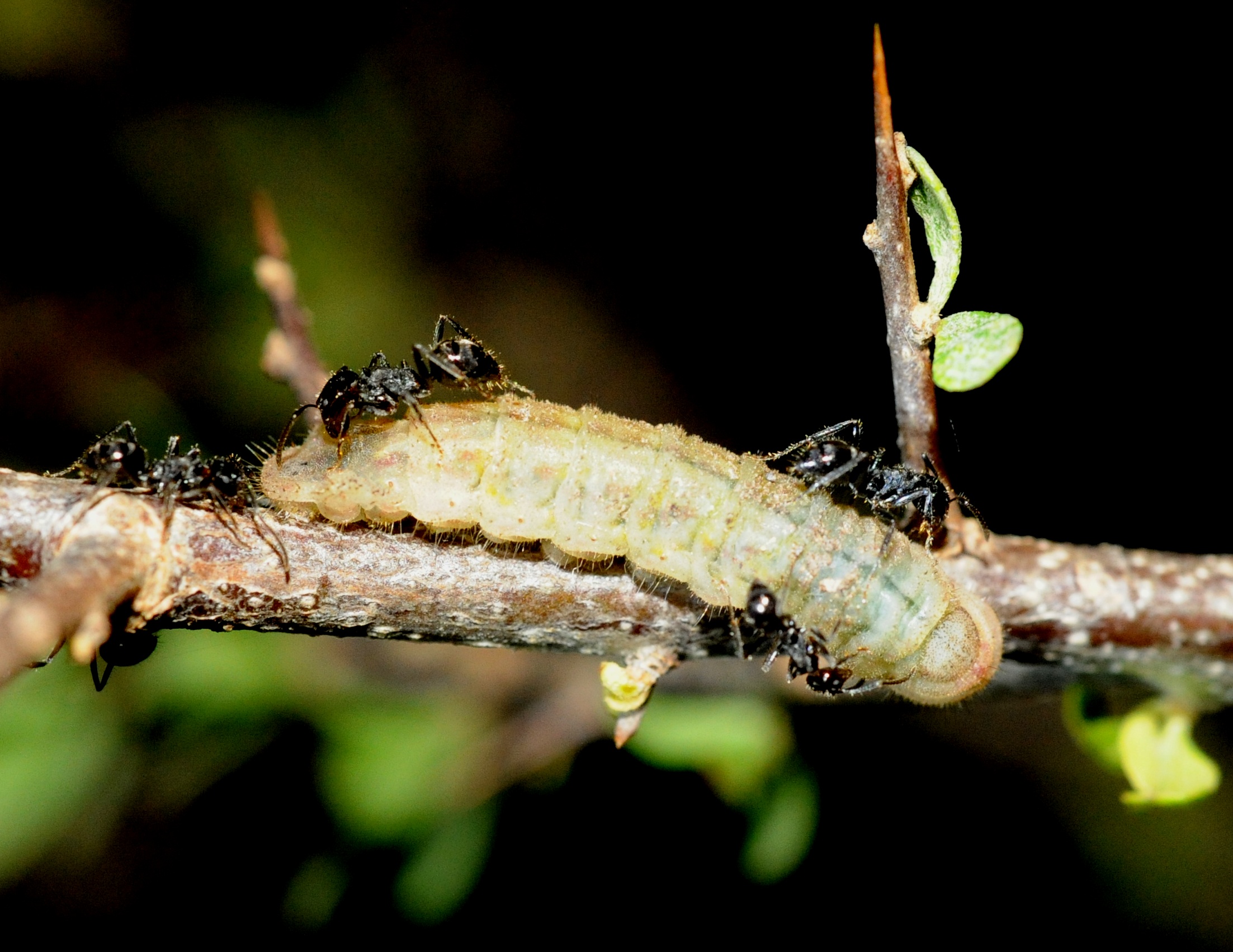


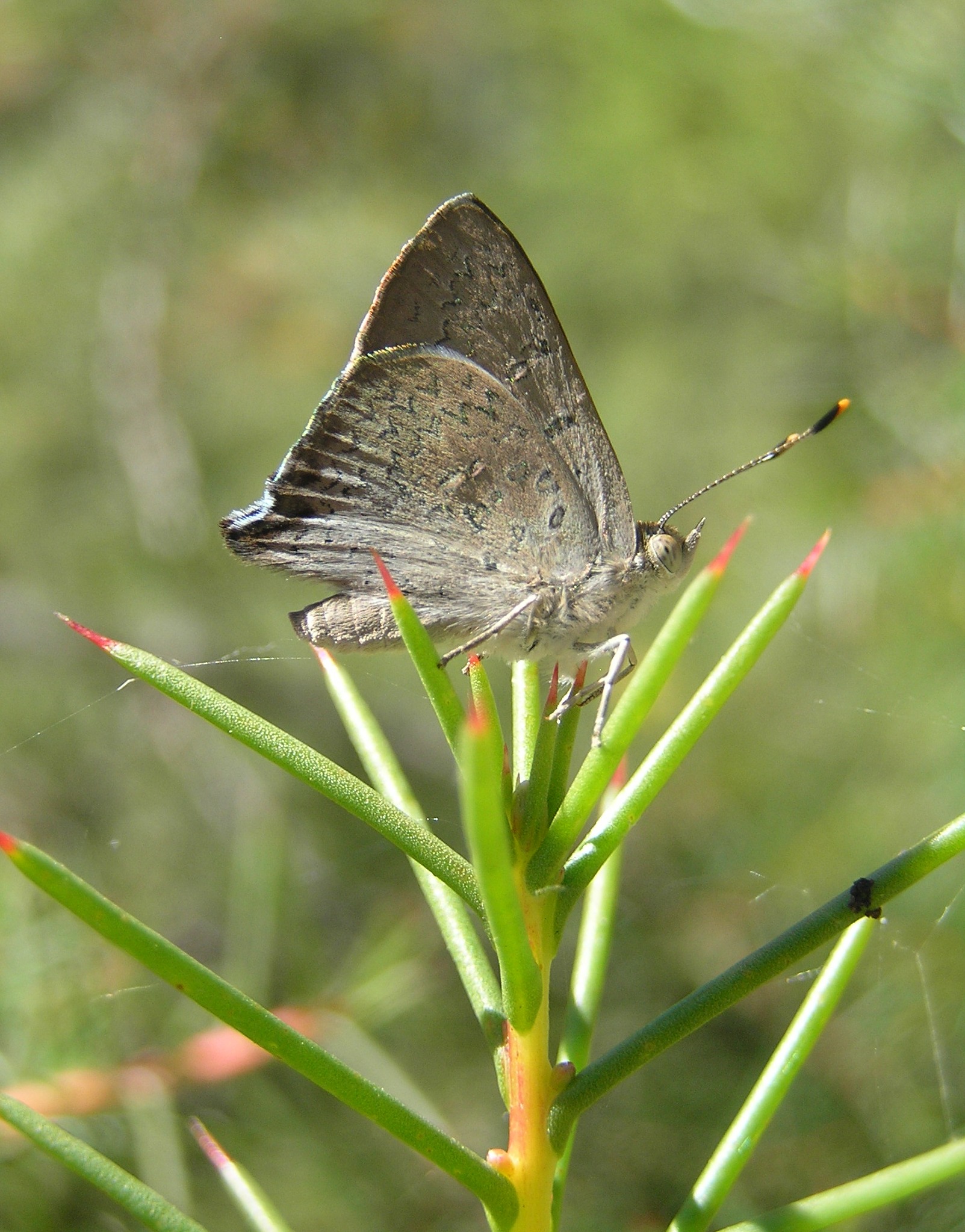

The Eltham Copper Butterfly is a small and attractive butterfly with bright copper coloring on the tops of its wings visible during the summer flight season (photo: Elaine Bayes)

Butterfly Celebration Day – 17 November 2019
Posted on 28 October, 2019 by Frances
Bring a picnic and help celebrate the special story of our local Eltham Copper Butterfly, and the Notoncus ants and Sweet Bursaria plants that make magic in our own backyards!
When: 1.00 – 3.00 pm on Sunday 17 November 2019
Where: Castlemaine Botanical Gardens, Downes Rd, Castlemaine VIC
Further information: click here
With funding support from Mount Alexander Shire Council, Castlemaine Landcare Group has sent choreographer Vanessa Case and musician Andy Rigby to work with local primary school students to tell this story in movement and music.
Butterfly Celebration Day will include a Welcome to Country and the Meeting Place, local musicians, community choirs and a preschool storytelling and craft workshop by Rose Demaria. Other local environmental groups will also be there. The community can go on a guided tour of the Butterflie’s habitat, which can be booked to avoid disapointment by clicking here
Connecting Country will be having a stall all day at the event, and will be giving away some Sweet Bursaria plants to early visitors. We will also have information on woodland birds, local plants and education events.

Birdlife Castlemaine November bird walk – 2 November 2019
Posted on 24 October, 2019 by Ivan
You’re invited to join our partners Birdlife Castlemaine on their next bird walk on 2 November 2019 at Muckleford Forest VIC. Here are the details.
We begin our walk in a beautiful gully full of woodland birds. This is a Key Biodiversity Area. Eastern Yellow Robin, Little Lorikeet, Diamond Firetail, Rose Robin and Brown Treecreeper are all nesting in this area, along with with many parrots and honeyeaters. We will walk beside a creek, then uphill to a drier ridge where we should also see a variety of native plants. Later we will travel 1.5 km by car along the South German Track to a dam where we are likely to hear Crested Bellbird see White-browed Babbler and many cuckoos. We may have time for a morning tea at the cars before travelling to the dam.
All ages and levels of experience welcome. This is an easy walk with gentle slopes with mine shafts and a creek nearby, covering approx 4 km, finishing around midday. Leaders are Sue and Peter Boekel. Please note that there are no toilets available.
Location and directions: Travel west from Castlemaine for about 15 km along Pyrenees Hwy (B180), towards Newstead VIC. Turn right down the unsealed Mia Mia Rd – please travel slowly and see how many birds you can spy. After 1.5 m, turn left into Mia Mia Track and in 100 m, two Jacky Winters should be on your right. Travel slowly for 1.5 km and pass South German Track on your right, then in 50 m turn next left up Sullivans Track where we will park on the verge. If required, copy these GPS coordinates into Google Maps search field: -37.0806347, 144.0753035.
When: Saturday 2 November 2019. Meet at Sullivans Track, Muckleford Forest at 9.00 am, or to carpool from Castlemaine meet at 8.30 am outside Castlemaine Community House (former Continuing Ed building), 30 Templeton St, Castlemaine VIC.
Bring: water, snacks, binoculars, hat, sunscreen, sturdy shoes, long pants during snake season, and other weather-appropriate gear.
Important information about walks: Walks will be cancelled if the temperature is forecast to be 35 degrees or more during the walk period, severe weather warnings are forecast, and/or if the day has been declared a Total Fire Ban.
Questions: If you have questions about our walks program, you can email us at castlemaine@birdlife.org.au, or call Judy Hopley (0425 768 559) or Asha Bannon (0418 428 721).
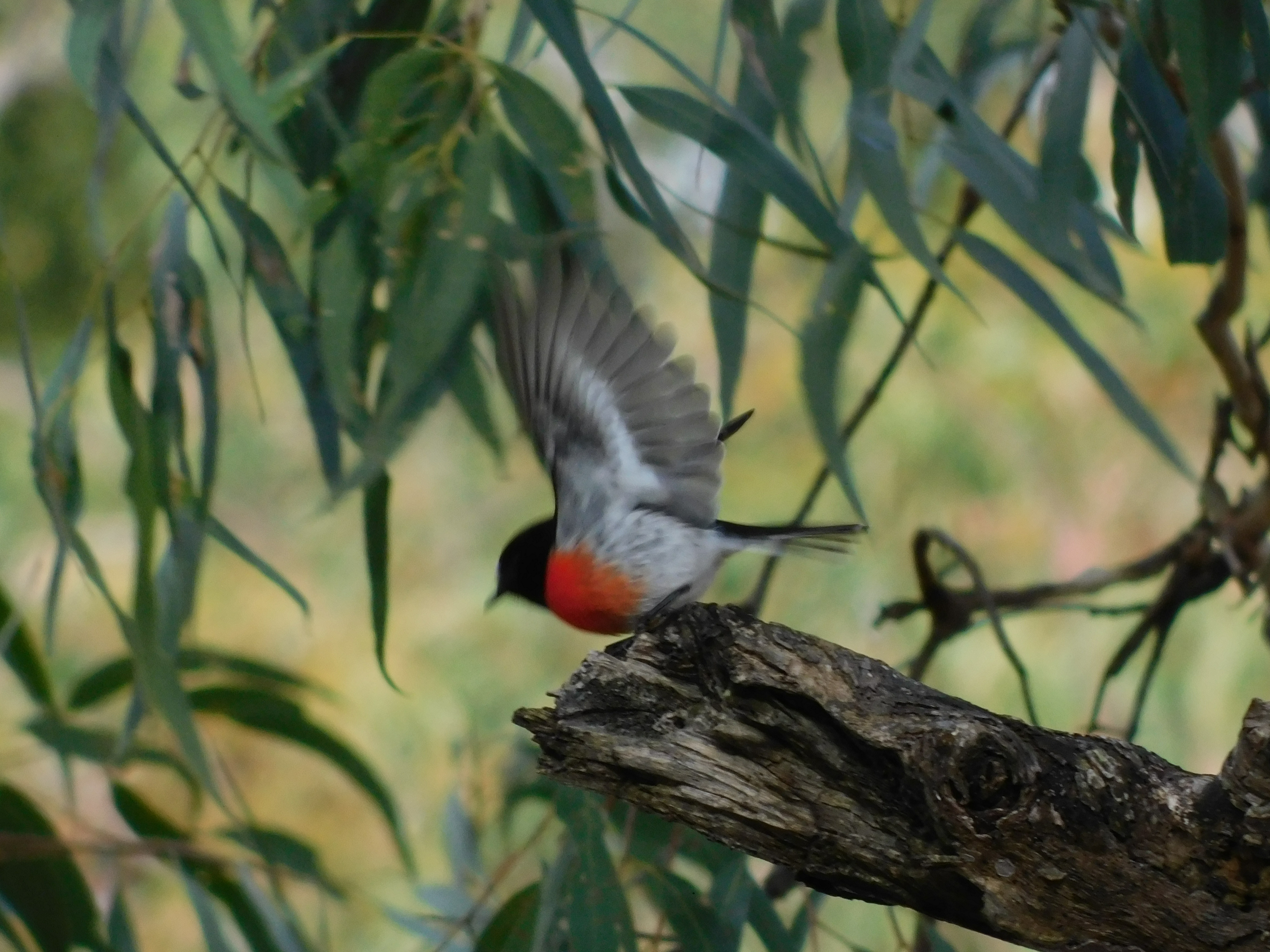
Action shot of a Scarlet Robin on a dead branch (photo by Bonnie Humphreys)
October Wheel Cactus Community Field Day – 27 October 2019
Posted on 24 October, 2019 by Ivan
Tarrangower Cactus Control Group and Parks Victoria will hold their next Community Field Day on Sunday 27 October 2019, with the group keen to get some new Cactus Warriors on board.
- Where: Treloars Rd, Tarrangower, VIC. Follow the signs along Watersons Rd.
- When: 10.30 am to 12.30 pm on Sunday 27 October 2019.
Come and join the Cactus Warriors and Parks Victoria for a morning in the fresh air and learn how best to destroy Wheel Cactus. The location is at a property in Treloars Rd, around the corner from Watersons Rd. The route will be well signposted. The morning’s activities finish with a delicious BBQ lunch and friendly chat. The event is family friendly but children must be accompanied by a parent at all times.
For more information on the infamous Cactus Warriors – click here.
Check out the poster below for a location map or visit www.cactuswarriors.org and subscribe for a monthly field day reminder.

Where is that weed heading?
Posted on 24 October, 2019 by Ivan
A new web-based tool developed by Macquarie University in collaboration with the NSW Office of Environment and Heritage is helping tackle the problem of weeds. It can be used by anyone but is particularly useful for land managers to help identify which weeds pose the greatest threat on their land.
Weed Futures is a web-based decision-support tool that anyone can use to find out information for over 500 weed species. The information available is a comprehensive assessment of potential weed threats for regions of interest under current and predicted future climates. It also rates weed species that are not yet invasive as having low, medium or high potential for establishment and expansion now and in the future. This tool is ideal to assist land managers in identifying those species for which detailed weed risk assessment and management are needed.
Weeds damage our environment, economy, biodiversity, threatened species and our public land. So much so that 18% of key threatening processes listed across the country are weed related. Collectively, these threats affect 54% of all threatened species and communities. To make matters worse, the interaction between weeds and other threats, such as climate change, only exacerbate the problem and can increase the invasive potential of weeds.

Weeds are often garden plants that escaped into the landscape (photo by Ivan Carter)
To tackle this pervasive issue, experts from Macquarie University, NSW Office of Environment and Heritage and others worked together through the NSW Adaptation Research Hub – Biodiversity Node to come up with some solutions. This work resulted in Weed Futures.
The Weed Futures tool can be used by anyone, but is particularly valuable to decision-makers, councils, government authorities, weeds officers, bush care groups and researchers. Weed Futures fills a significant knowledge gap about the potential distribution of weed species, an important factor in determining a weed’s risk.
Connecting Country will be using the Weed Futures mapping tool to assess the risk of many localised invasive species into the future, under a changing climate. Interestingly, the website gives predictions of potential distributions into 2035 and 2065, under a variety of climate change scenarios.
By using an informed evidence-based approach to decision-making, weed threats can be prioritised and efforts targeted to areas where the greatest benefit can be achieved. With the help of tools such as this, the combined effort of land managers and decision-makers can best target effort to reduce the impact of weeds on our environment and hopefully create a brighter future for our threatened species.

Predicted suitable habitat of Blanket Weed (Galenia pubescens) by 2065 (image by Weed Futures)
Connecting Country’s new factsheets for landholders
Posted on 24 October, 2019 by Ivan
Landholders and managers now have access to four new factsheets from Connecting Country. The factsheets are tailored to suit the needs of the Mount Alexander region of central Victoria, and include local information about invasive species management and creating habitat for our unique biodiversity.
The four factsheets clear and practical information about:
- Weed control.
- Nestboxes for wildlife.
- Invasive pest animals.
- Revegetation planting with tubestock.
The advantage of these factsheets is they were developed and produced specifically for our region’s landscape, biodiversity and local conditions. They cover invasive animals that you are likely to see in this region and give an overview of the landowner responsibilities for invasive animals and plants. Managing invasive species is an important step to restoring our local habitat and biodiversity. Invasive species was listed as the number two threat for threatened species, with only habitat loss having a larger impact on our threatened species.
These factsheets were made possible by funding from the North Central Catchment Management Authority, as part of our project called ‘Prickly plants for wildlife on small properties’. Through this project we’ve helped numerous local landholders with smaller areas of remnant vegetation to protect and improve habitat on their land. We’ve supported landholders with on-ground actions such as revegetation planting, weed and rabbit control, and nestbox installation, as well as delivering three popular community education events.
A lot of people contact Connecting Country regarding how to best revegetate the landscape using native species in tubestock. There are many factors to consider when using this technique, such as when to plant, how to prepare the soil, what to plant, and how to protect your plantings. The new revegetation planting factsheet covers all these topics and more to help you give your precious native plants the best start in life.
To view the four factsheets – click here
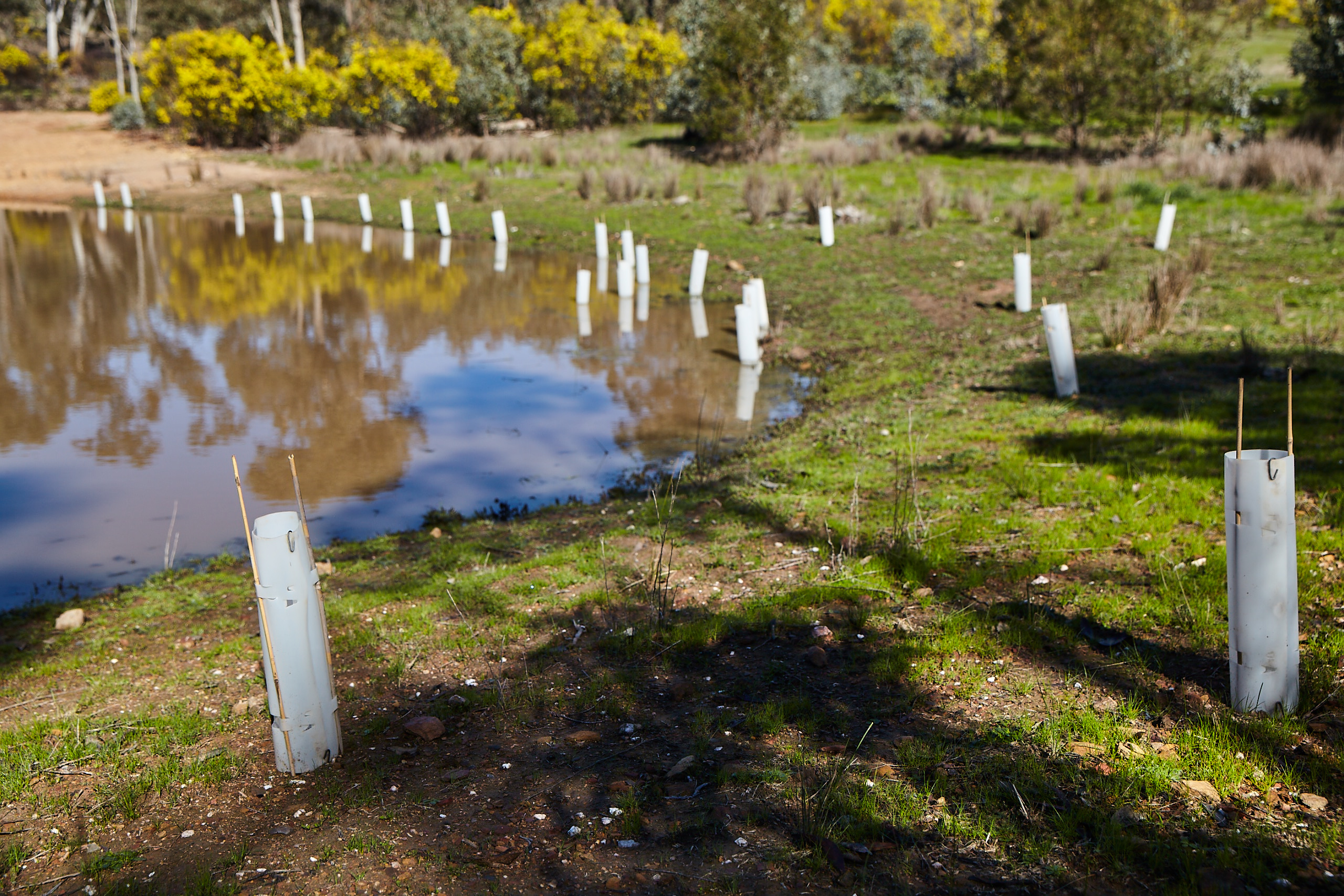
Following best practice will give your tubestock planting the best chance of long-term success (photo by Ivan Carter)
‘Hearing our place’ with Andrew Skeoch – Connecting Country AGM 2019
Posted on 17 October, 2019 by Asha

Andrew Skeoch listening to nature (photo from Listening Earth website)
All are warmly invited to the Connecting Country 2019 Annual General Meeting, where guest speaker Andrew Skeoch will speak about ‘Hearing our place’ in nature.
Frances Howe, Connecting Country Director, says ‘Andrew Skeoch is an educator, naturalist, environmental thinker and one of Australia’s best-known nature sound recordists. From his bush home near Newstead, he has journeyed over the last 25 years to remote locations in Asia, India, America, Europe, Africa and the Pacific in search of some of our planet’s most beautiful and fascinating sounds.
Combining this field experience with a deep curiosity, Andrew explores the crucial role of sound and communication in nature and evolution. He weaves the latest scientific understandings into a fascinating celebration of the natural soundscape around us.
His intriguing presentation will focus on our box ironbark birdsong and natural soundscapes, and will have you appreciating our local bushlands from an entirely fresh perspective.’
The AGM will include a brief presentation from staff and committee members about Connecting Country’s achievements over the last decade, to allow supporters old and new to hear what Connecting Country does and our plans for the coming year.

Crimson Spider Orchid (photo from Connecting Country archives)
This free event is at 4.00 – 6.00 pm on Saturday 16 November 2019 at Campbells Creek Community Centre (45 Elizabeth St, Campbells Creek VIC).
Afternoon tea will be provided from 3.30 pm.
Please RSVP online (click here) by 13 November 2019 for catering purposes. If you have any questions, please email asha@connectingcountry.org.au or call (03) 5472 1594.
- Click here to download the flier including agenda.
- Click here to download a committee nomination form.
- Click here to download a membership application.
Become a butterfly monitor and help protect a threatened species – updated
Posted on 17 October, 2019 by Frances
Castlemaine’s Kalimna Park is home to the largest remaining population of the threatened Eltham Copper Butterfly in the world. However, we don’t know how many butterflies there currently are, and its entirely possible that other, undiscovered populations exist around the Castlemaine area.
Local ecologists Elaine Bayes and Karl Just will be running four Eltham Copper Butterfly monitoring sessions around Castlemaine VIC over November and December 2019, when the adult butterflies are out and about. The aim is to support interested community members to learn how to monitor with expert guidance, conduct more monitoring and (hopefully) discover new populations.

Eltham Copper Butterfly perched on flowering Sweet Bursaria (photo by Elaine Bayes)
This is a fantastic opportunity to get out in the bush, learn more about your local environment, and collect some really important data to help protect this beautiful threatened species. You might even discover a new population of this special butterfly!
Everyone is invited to get involved. Monitoring isn’t difficult but you will need:
- A reasonable level of physical fitness, as monitoring involves walking off-track through the bush, often in warm weather.
- A positive attitude and willingness to learn.
- Ability to read maps, follow simple procedures and record sightings.
- Please bring water, a hat and suitable clothing, and snacks to keep you going.
Monitoring dates and locations are:
- 12-4 pm Saturday 16 November 2019. Location: Kalimna Park Rotunda, Kalimna Tourist Road, Castlemaine – click here for map.
- 12-4 pm Sunday 1 December 2019. Location: Water tank on Hunter Track, top end of Hunter Street, Castlemaine – click here for map.
- 12-4 pm Sunday 15 December 2019. Location: Parking spot just north of where golf course intersects with Kalimna Tourist Road, Castlemaine – click here for map.
- 12-4 pm Saturday 28 December 2019. Location: Corner of Vanstan Road and Lawson Parade, behind Castlemaine Secondary College, Castlemaine – click here for map.
You don’t need to attend all these events to become a monitor. Once you understand the monitoring method and feel confident you can identify an Eltham Copper Butterfly, you’re welcome to do your own monitoring and report sightings.
If you’d like to get involved in Eltham Copper Butterfly monitoring, please just come along to a monitoring event, or for further information contact Ivan at Connecting Country (ivan@connectingcountry.org.au).
Our small endangered butterfly pulls a big crowd
Posted on 17 October, 2019 by Ivan
Our Eltham Copper Butterfly education event was a delightful success over the past weekend, with an enthusiastic crowd of 40 people attending to learn about this unique and threatened butterfly. The event was held at the Tea Room in the Castlemaine Botanical Gardens (Castlemaine VIC) and included a guided walk with local experts Elaine Bayes and Karl Just, exploring the native woodlands north of the gardens. Karl and Elaine delivered an informative and engaging presentation on the fascinating biology of the Eltham Copper Butterfly and its symbiotic relationship with Notoncus ant species. It was warming to hear Elaine’s enthusiasm about the mating cycles of this butterfly and her excitement that more populations may exist around our region, and could be discovered during monitoring over the next few months.
The Eltham Copper Butterfly is a small and attractive butterfly with bright copper colouring on the tops of its wings visible during the summer flight season.
Some interesting butterfly facts:
- This unusual species due has a close symbiotic association with a group of ants from the genus Notoncus and the shrub Sweet Bursaria (Bursaria spinosa).
- Adult butterflies lay their eggs on the roots and stems of Sweet Bursaria. Once the eggs hatch, the ants guard the caterpillars (providing protection from predators), ushering the larvae to and from the ant nest at the base of the shrub, to feed on the Sweet Bursaria leaves at night. In return the ants feed on the sugar secretions exuded from the body of the caterpillar.
- The butterfly prefers open flight paths and receiving direct sunlight. It likes vegetation with an open middle and understorey.
Karl and Elaine will be conducting Eltham Copper Butterfly monitoring sessions around Castlemaine over November and December 2019. We encourage interested people to come along, learn how to monitor and get involved with protecting this special butterfly.
If you’d like to get involved in monitoring please see our relevant blog post (click here) or contact Ivan at Connecting Country (ivan@connectingcountry.org.au)
Here are some photos from our recent event from Ivan Carter, and some lovely Eltham Copper Butterfly photos from Elaine Bayes:

A citizen science event in 2019 attracted a strong crowd and interest in the Eltham Copper Butterfly (photo: Frances Howe)


The Eltham Copper Butterfly is a small and attractive butterfly with bright copper coloring on the tops of its wings visible during the summer flight season (photo: Elaine Bayes)
Aussie Backyard Bird Count: 21-27 October 2019
Posted on 17 October, 2019 by Ivan
There’s only one week to go until the Aussie Backyard Bird Count begins. Have you registered yet?
By participating in the Aussie Backyard Bird Count, you will be helping BirdLife Australia find out about the birds that live where people live. This is especially important because even common bird species are strong indicators of the health of the environment. Think of birds as a barometer for nature.

Dusky Woodswallows at Mia Mia near Newstead VIC (photo by Geoff Park)
And if that’s not incentive enough, there are some exciting prizes on offer. With thanks to our generous supporters, you could win — a pair of Swarovski binoculars, a copy of ‘Thirteen Ways to Look at Birds’ or a Gang-gang Cockatoo pin badge. Simply submit a bird count to BirdLife from 21-27 October 2019 to be in the running!
If you have any questions about the Aussie Backyard Bird Count, please head to the FAQ page below, where you’ll find information about registering, participating and troubleshooting.
Get ready to count!
Gardens and Birds of the Macedon Ranges – 24 October 2019
Posted on 17 October, 2019 by Frances
Rosemary Davies: Gardens and Birds of the Macedon Ranges – Castlemaine
Castlemaine Library is lucky enough to be hosting well-known garden author and ABC radio garden talkback personality of 35 years, Rosemary Davies. She will share insights into her latest book on gardens and birds in the Macedon Ranges as well as giving advice about your garden and landscape aspirations.
When: Thursday 24 October 2019 from 5:30 to 6:30 pm
Where: Phee Broadway Theatre – Castlemaine Library, 212 Barker St, Castlemaine, VIC
Bookings required: click here
Do you have a spare rabbit bait station? – we need your help
Posted on 9 October, 2019 by Asha
Over the years Connecting Country has distributed free rabbit bait stations for landholders to use. For more information about what these look like and how they work, click here. These days we are working with less funding and no longer have a supply of bait stations. We hope to source more funding soon. However, in the meantime there is still a need out there!

We have had requests from local landholders and Landcare groups who are struggling with rabbits and need bait stations. We hope to coordinate a rotation system where spare bait stations can be returned to our depot and then be distributed to those who need them.
If you live in the Mount Alexander region and have a bait station that you no longer need, please let us know by emailing info@connectingcountry.org.au or calling (03) 5472 1594.
Bird walk at Castlemaine Botanical Gardens – Sunday 20 October 2019
Posted on 9 October, 2019 by Ivan
BirdLife Castlemaine’s next monthly bird walk will be in the beautiful Castlemaine Botanical Gardens.
Local bird legend Tanya Loos will lead an afternoon walk for Bird Week, the same week as the Aussie Backyard Bird Count. Bring your binoculars, and if you have a smartphone, come with your Aussie Backyard Bird Count App already downloaded and ready to go. Beginners and families welcome. We will do a count together to get you all set up for the Bird Count!
When: 3.00 pm on Sunday 20 October 2019
Where: Meet outside the Tea Room in Castlemaine Botanical Gardens, Downes Rd, Castlemaine VIC.
Bring: Water, snacks, binoculars, hat, sunscreen, sturdy shoes, long pants during snake season, and other weather-appropriate gear.
Walks will be cancelled if the temperature is forecast to be 35 degrees or more during the walk period, severe weather warnings are forecast, and/or if the day has been declared a Total Fire Ban.
Questions?: If you have questions about BirdLife Castlemaine’s walks program, you can email them at castlemaine@birdlife.org.au, or call Judy Hopley (0425 768 559) or Asha Bannon (0418 428 721).

Flame Robin enjoying some morning sun (Photo by Bonnie Humphreys)
Community trained in early invaders
Posted on 9 October, 2019 by Ivan
The Weeds at the Early Stage of Invasion (WESI) Project, together with Connecting Country, had a strong turnout for their training event last Thursday 3 October 2019 in Newstead VIC. The education event, part of our Habitat Health Check project, focused on identifying environmental weeds that are not yet established in our region, but have the potential to grow their distribution.
The session targeted identification of some early-invader environmental weeds relevant to the Mount Alexander region, including Asparagus fern (Asparagus scandens), White Spanish Broom (Cytisus multiflorus), Broad kernel Espartillo (Achnatherum caudata), Dropping Tree-Pear (Opuntia monacantha), Buffel Grass (Cenchrus ciliaris) and Old Man’s Beard (Clematis vitalba).
Early invaders are plants that have naturalised and started to spread. When spread has just begun, such plants are localised and generally encountered only by chance. Coordinated management intervention (i.e., eradication or containment) is feasible at this stage, due to their highly restricted distributions.
The training did an excellent job in alerting all attendees to the threats of many common garden varieties that can escape under the right conditions and impact surrounding landscapes. All 30 participants learned how to identify these plants, how to record and photograph them, and how to treat and survey the area.
The session also provided samples of another 25 plants that are invasive plants in our region, with attendees getting a chance to get up close and personal to the specimens and learn how to identify them from look-a-likes. Kate Blood and Bianca Gold, from the WESI-DEWLP team, showed passion and precision throughout the day and enlightened all who attended in the emerging threats to the regions biodiversity and agriculture. It was heartening to see attendees from the Mount Alexander Shire Council, Coliban Water, Parks Victoria, Landmate, North Central Catchment Management Authority, and many Landcare and community groups from across our region.
The WESI Project focuses on high risk invasive species at the early stage of invasion that threaten biodiversity. The WESI project works mainly with Department of Environment, Land, Water and Planning (DELWP) and Parks Victoria staff looking after public land and biodiversity across Victoria, but also trains community groups and landowners in identifying early invaders.
For more information on the WESI training, please click here. If you would like to be involved in Connecting Country’s monitoring program, please click here.
Here are some photos from the training by Ivan Carter (Connecting Country) and Kate Blood (DELWP).

Photo: Connecting Country

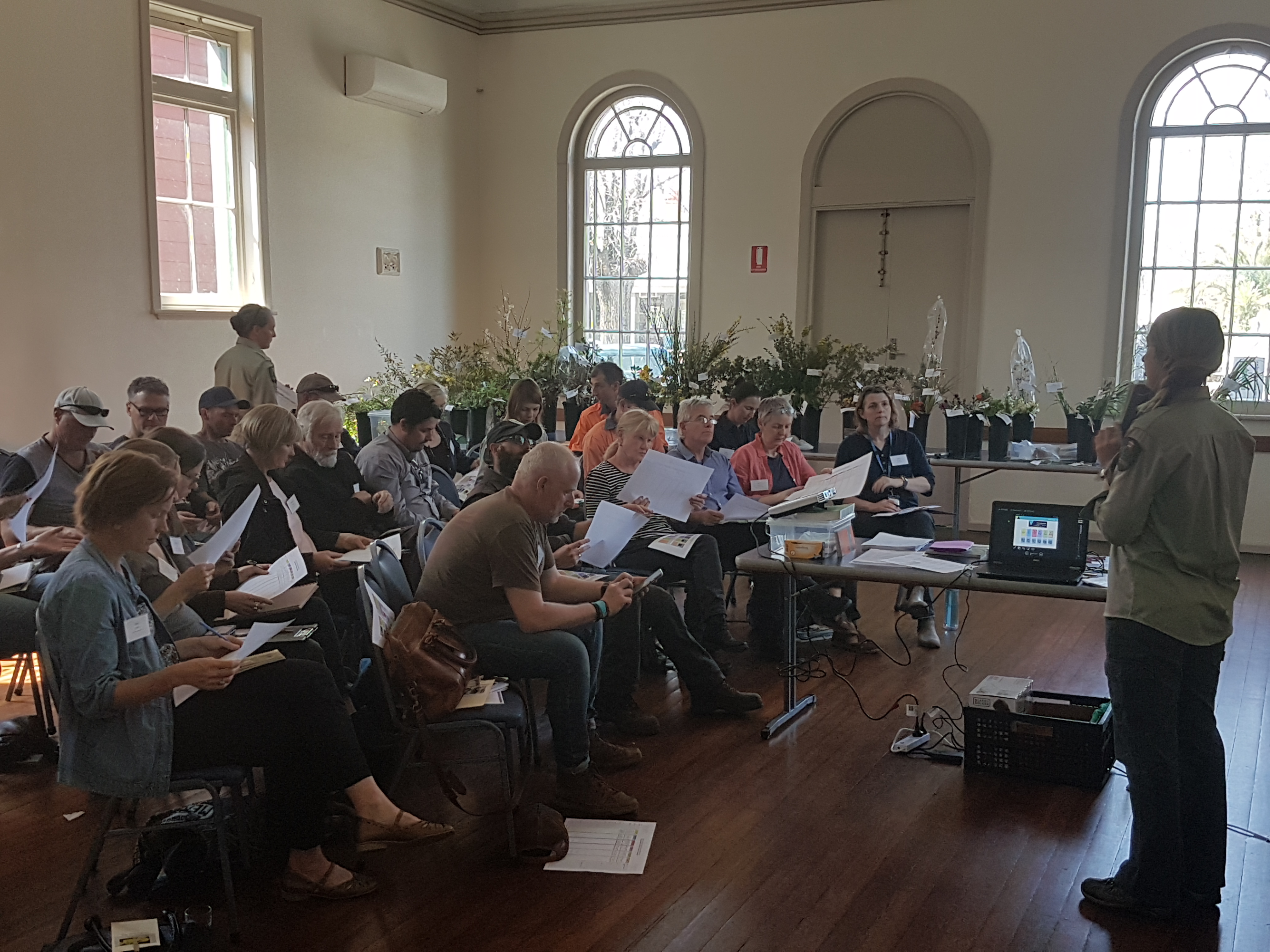


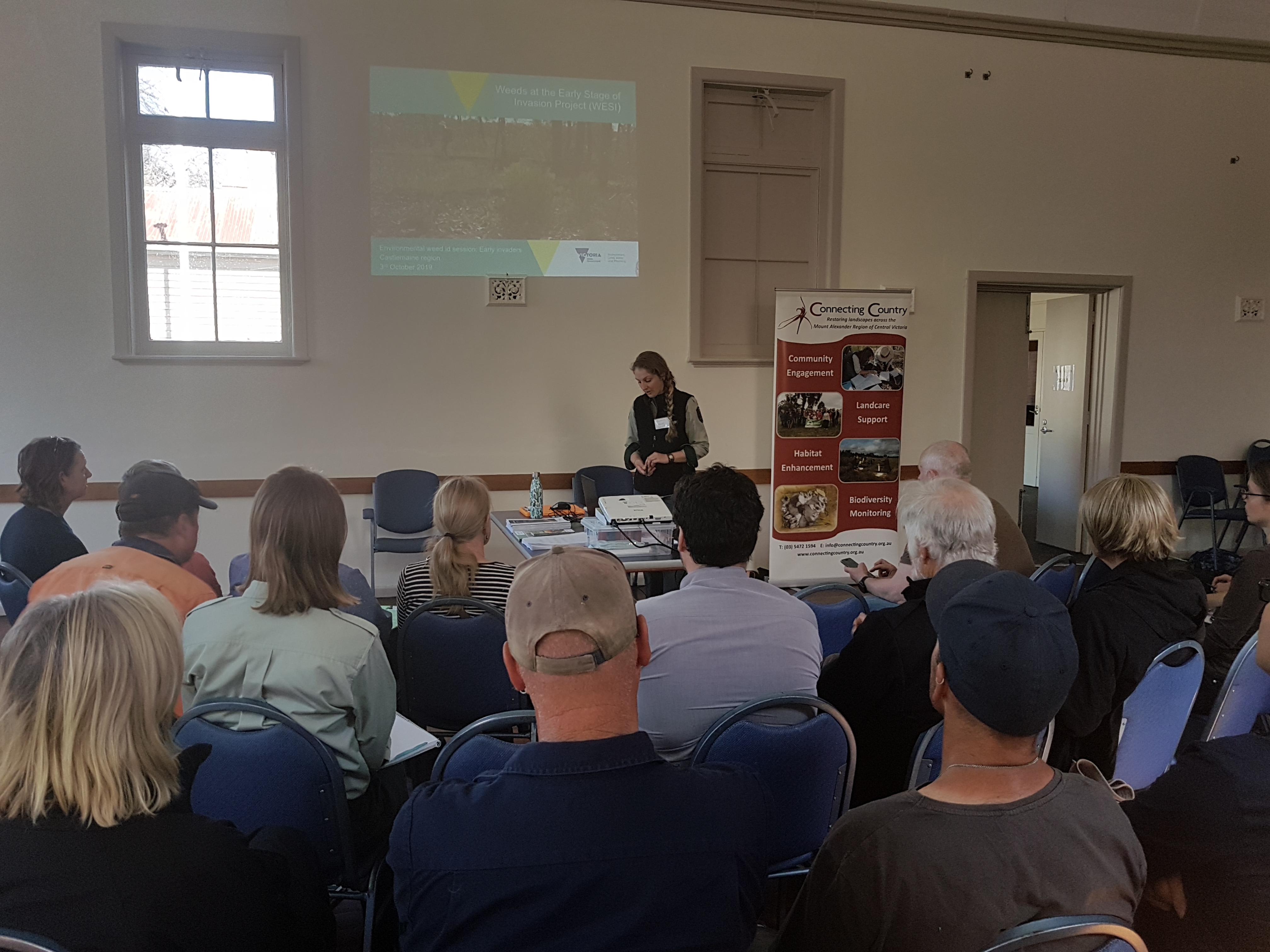


photo by Connecting Country
Reminder: Meet Castlemaine’s endangered butterfly – Saturday 12 October 2019
Posted on 8 October, 2019 by Ivan
Last chance to book for this Saturdays wonderful event! We still have some spaces available – all welcome. Come along and learn about our very special local butterfly. See details below.
Click here to make a booking.
Did you know Central Victoria is home to the largest known population of the endangered Eltham Copper Butterfly in the world?!

Enjoy these beautiful pictures of the Eltham Copper Butterfly taken by Elaine Bayes.
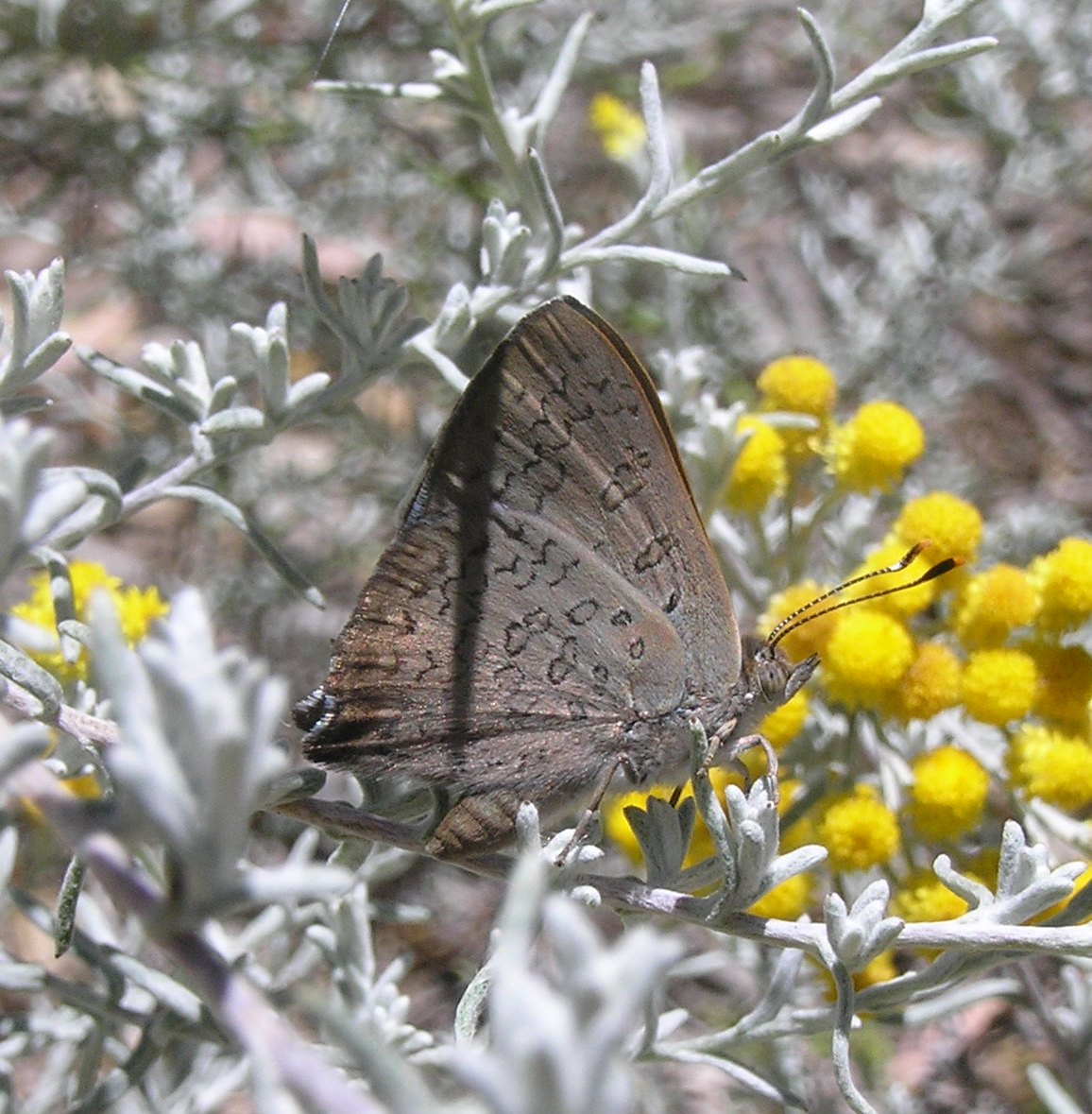
Photos: Elaine Bayes


