
Now is the time to find needle grasses & volunteer opportunity in Castlemaine!
Posted on 19 November, 2020 by Ivan
Needle grasses, and in particular, Chilean Needle Grass (Nassella neesiana), are now in full seed and are becoming a serious pasture and environmental weed in our region. They are very invasive and form dense infestations in pastures, bushland and roadsides. They can tolerate drought and will seed prolifically, including self-pollinated seed in the stem and base of the plant, giving them great potential to spread and over-run existing vegetation. It has been estimated that the potential distribution for Chilean Needle Grass alone exceeds 40 million hectares across Australia.

A large, dense infestation of Texas needle grass near Malmsbury Photo Connecting Country
One of the biggest challenges facing the successful treatment of needle grasses is identifying infestations before they become large and dominating in the landscape. Thankfully, a local community champion recently produced an information sheet on how to differentiate invasive needle and native grasses, titled ‘Distinguishing between needle grasses and native grasses‘. The information sheet has useful photographs and identifying features of needle grasses, and compares these features to a variety of native grasses including spear grasses (Austrostipa species), wallaby grasses (Rytidosperma species) and native tussock grass (Poa labillardieri). Non-native grasses covered include Chilean, Texas and Cane Needle Grass (all members of Nassella genus), and the closely related Espartillo (Amelichloa caudata).

Landowners learning the finer points of needle grass identification at a field day. Photo Connecting Country
Please watch this video on how to identify Chilean Needle Grass, it is from New Zealand but highlights the important points of identifying this invasive grass. Click here
Another helpful information sheet, ‘What to do if you find needle grass’ details first-hand experience of how best to manage these grassy weeds and prevent further spread.
Volunteer opportunity in Castlemaine!
If you would to learn more about Needle Grasses and would like to attend a working bee please contact Margaret Panter on 5470 5072 (7am-7pm). Margaret is holding a socially-distanced working bee in the Castlemaine Botanic Gardens in the next few days, and as needed in the next couple of months. No experience necessary, and volunteers can attend as their availability allows.
Weed management after fire webinar series starts 25 November 2020
Posted on 19 November, 2020 by Jacqui

Jump on and register for this opportunity to learn all about weed management after bushfire, delivered by the Weeds at Early Stages of Invasion (WESI) team and a wealth of expert collaborators. There are four free webinars in total, with each delivering a wealth of knowledge and useful information. It is vital to get on top of weeds after fire, as they usually are the first plants to immerge and have a blank canvas to invade and dominate in the years to come.
Weed management after fire webinar series
After bushfire, our ecosystems are at their most vulnerable to weed invasion. Help us support indigenous flora and fauna by managing weeds in bushfire affected areas.
This webinar* series focuses on sharing practical knowledge so everyone can contribute to bushfire recovery.
Time:
Four webinars on the below dates all from 10:30 am to 12:15 pm.
Dates:
Webinar 1: Wednesday 25 November 2020 – Overview weed management after fire.
Webinar 2: Wednesday 2 December 2020 – Prioritisation of weeds after fire.
Webinar 3: Wednesday 9 December 2020 – Collaborative projects – weed management after fire.
Webinar 4: Wednesday 16 December 2020 – Weed identification and recording after fire.
For more information and to register for these free webinars: CLICK HERE

Collaborators:
- State Wide Integrated Flora and Fauna Teams (SWIFFT)
- Department of Environment, Land, Water and Planning (DELWP) including:
- Weeds at the Early Stage of Invasion (WESI)
- Bushfire Biodiversity Response and Recovery (BBRR)
- Natural Environment Program (NEP)
- Connecting Communities Program (CCP)
- Weeds and Pests on Public Land (WPPL)
- Parks Victoria
- East Gippsland Catchment Management Authority (EGCMA)
- Weed Society of Victoria (WSV)
- Gunaikurnai Land and Waters Aboriginal Corporation (GLaWAC)
- Landcare Victoria
- Trust for Nature
- Regional Roads Victoria
- Department of Jobs, Precincts and Regions (DJPR)
- Australian Association of Bush Regenerators (AABR)
- Foundation for National Parks & Wildlife (FNPW)
* These webinars are funded by the Victorian Government’s $22.5 million Bushfire Biodiversity Response and Recovery program. For more information on the BBRR program, visit www.wildlife.vic.gov.au/home/biodiversity-bushfire-response-and-recovery
How to build a microbat box
Posted on 12 November, 2020 by Frances
Since beginning our nest box program back in 2010, Connecting Country has installed over 450 boxes on private and public land across the Mount Alexander region. The nest boxes were designed specifically for use by the threatened Brush-tailed Phascogale (also known as the Tuan), which is a nocturnal hollow-dependent marsupial native to our area.
The nest boxes provide supplementary habitat for the Tuans and other native animals such as the Sugar Glider. It is anticipated that providing additional nesting sites, albeit artificial, will lead to an increase in local Tuan populations and distribution. The nest boxes were located across the landscape systematically so we can examine some of the factors that influence their use.
We recently discovered a great article from the creative folk at Milkwood regarding how to build a microbat box, which is similar to a nestbox. Milkwood point out that ‘Microbats are worth encouraging into your garden. Not only are they delightful to watch on dusk – they gobble thousands of mosquitoes, moths and other garden pests each and every night. A single microbat can eat up to 1,200 mosquitoes and small insects in an hour – which has earned them the well-deserved reputation of being nature’s mosquito busters.’
To enjoy the full article on Milkwood’s website – click here
For more information on Connecting Country’s nest box program – click here
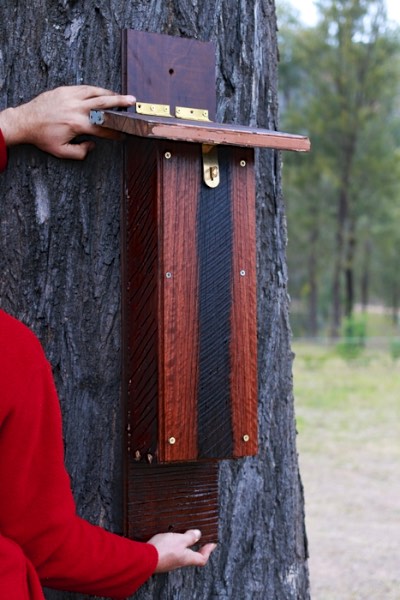
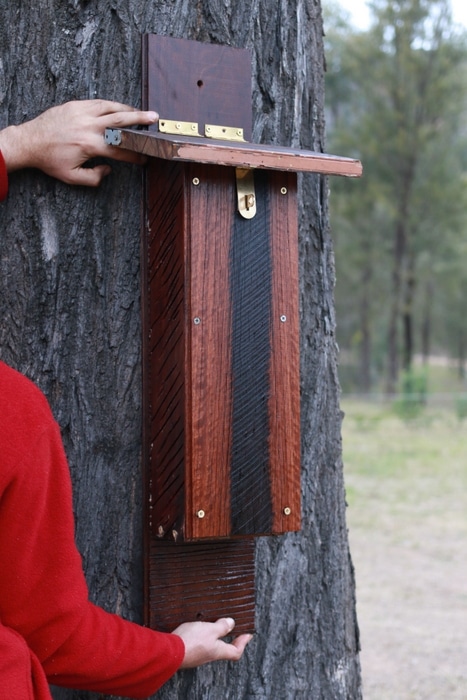
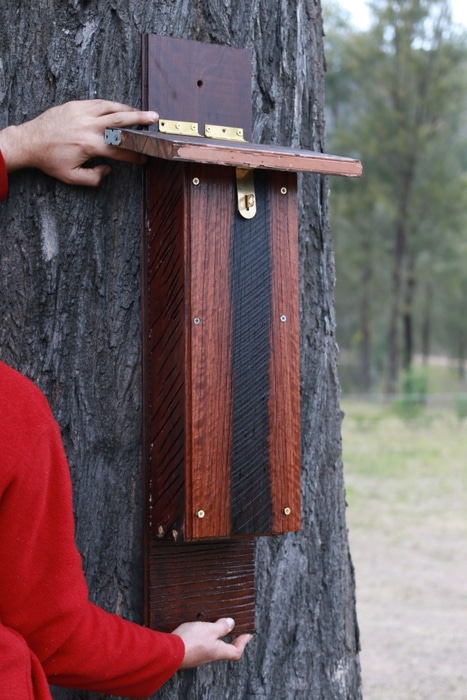
Mount your bat box on a tree, pole or building – high enough to prevent vandalism and protect the bats from predators and floods (photo: Milkwood)
NAIDOC Week 2020
Posted on 12 November, 2020 by Ivan
Always was, Always will be is the designated theme for NAIDOC Week 2020, which is being celebrated across the country from 8-11 November 2020. The acronym NAIDOC stands for National Aborigines and Islanders Day Observance Committee. Each year, NAIDOC Week gives our community the opportunity to celebrate and acknowledge the history, culture and achievements of Aboriginal and Torres Strait Islanders. This year’s theme reminds us that Aboriginal and Torres Strait Islander people have occupied and cared for this land for over 65,000 years, and that their cultures have been recognised as the oldest living cultures in the world.
On a local level, this week presents the opportunity for the community to delve into the history and connections to the land of Indigenous Australians. In our part of Central Victoria, the land we stand upon is that of the Dja Dja Wurrung Nation, who had practised their sustainable land management practices for many centuries. For more information about the Dja Dja Wurrung clan, and their history, cultural practices, current projects and media – click here.
It has been exciting to see the Dja Dja Wurrung Clans Aboriginal Corporation working in partnership with local interest groups, adjoining residents, Djarra community members, and state and local government agencies, to further connect people with nature and protect and improve biodiversity at two key sites:
- Kalimna Park within Castlemaine Diggings National Heritage Park.
- Wildflower Drive area of Greater Bendigo National Park.
For more information about NAIDOC week, and all the events across our many nations, please click on the image below.

Landholder revegetation attracts new birds
Posted on 12 November, 2020 by Frances
We received a lovely message from some local landholders, Mark and Jan Dunn. They’ve made a huge effort to restore habitat on their property near Faraday, in Central Victoria. It’s always heartening to hear about how the hard work of revegetation is really making a difference for our local wildlife.
Here is their story:
Hi Connecting Country
During a recent short stay at our Faraday property (on a bushfire mitigation permit from the Shire), we were delighted to see a bird we haven’t sighted before.
We have owned this 22 acre block for 15 years and in the early years we invested heavily in a major revegetation project. It is now so very satisfying to walk the paddocks and observe many different birds visiting and nesting in the trees and shrubs we planted. They love the habitat we have helped to create – all natives of local provenance.
What bird did we see you ask? This Owlet Nightjar was happy to observe us for quite a while after being disturbed from its quiet dark roost in the shed.
Description:
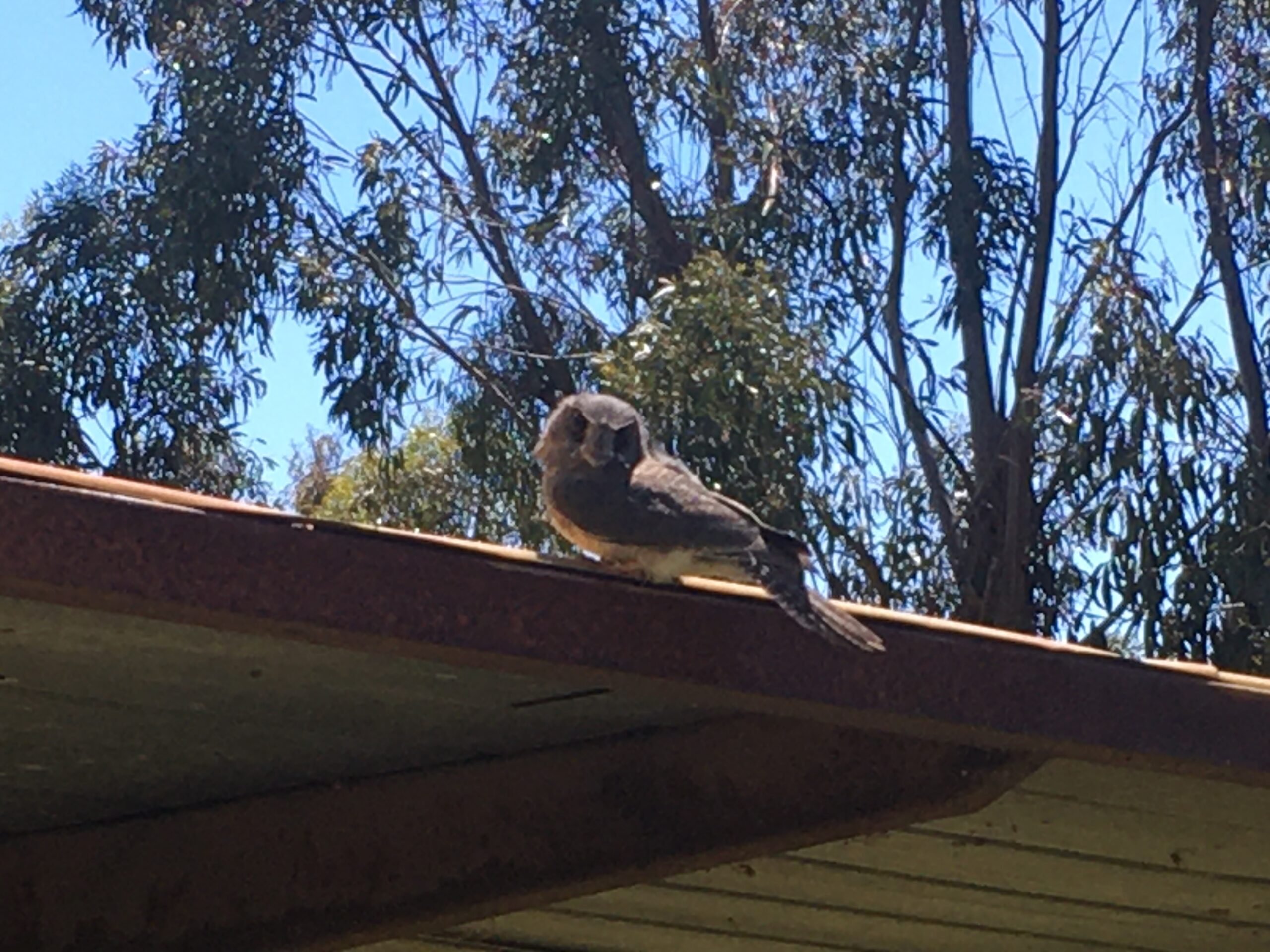
Australian Owlet-nightjar at Faraday (photo: Mark and Jan Dunn)
‘The Australian Owlet-nightjar is the smallest of the nocturnal birds (night birds) found in Australia. Its large brown eyes are non-reflective when exposed to a torch or spotlight (other nocturnal birds give a red reflection). The Owlet-nightjar has two different plumage colourations: russet-brown (rufous), and the more common grey.
In both forms the birds are paler below, and are faintly barred with black. There are two wide black stripes that extend over the head from the top of the eyes, and meet on the back of the neck.
The rufous form is restricted to the female birds, which, even in the grey form, tend to be more rufous-tinged than the males. Young Owlet-nightjars resemble adults, but have less distinct black markings.’
What a delightful little Aussie feathered friend – and how lucky we felt to see it.
Kind regards
Mark & Jan
Survey update from Walking Together – Balak Kalik Manya
Posted on 4 November, 2020 by Ivan
Harley Douglas, Project Manager with Dja Dja Wurrung Clans Aboriginal Corporation, provided an update on results from their community survey and workshops conducted for the Castlemaine and Bendigo communities (Central Victoria) during 2020. The visitor experience and use survey formed part of the Walking Together- Balak Kalik Manya Project, a four-year project committed to writing site-specific management plans for two sites within Dja Dja Wurrung Country: Kalimna Park (Castlemaine) and Wildflower Drive (Bendigo).
To view Harley’s presentation summarising results from the community survey – click here
There were some interesting findings from the surveys. The highest priorities for management actions within the parks were weed management, revegetation and nest box installation, closely followed by cultural burning. The least positive aspects for Kalimna Park were reported to be weed/environmental impact, rubbish and tracks/signage.
Q14: What management actions do you think should be prioritised for Kalimna Park and Wildflower Drive?

Please see the following summary regarding the community consultation, courtesy of Harley.
The visitor experience and use survey was powered by SurveyMonkey and the data collected was collated through the assistance of Parks Victoria’s Social Science Officer. From the 172 responses received, a summary report has been created merging the data into bar graphs, pie charts and other valuable graphics that quickly summarise demographics and usage of the parks.
Djaara community workshops were facilitated remotely to allow for the current COVID-19 restrictions. Two, two-hour sessions were held over Zoom for interested Djaara members to have input into the values, threats, issues, and opportunities associated with both parks. Djaara members workshopped ideas relating to Dja Dja Wurrung’s Goals as listed in ‘Dhelkunya Dja- Dja Dja Wurrung Country Plan 2014-2034.’ The information gathered from our members will be used to develop management strategies, actions, and recommendations.
Issues and opportunities that we discussed in both Djaara and Community workshops:
- Vehicle access and misuse
- Weeds – Onground management
- Cultural heritage (protection of existing and creation of new)
- Illegal firewood collection
- Rubbish dumping
- Track creation/ Illegal track creation
- Cultural burning
- Story telling
- Predators (cats, dogs, foxes)
- Threatened species (Eltham Copper Butterfly, Pink-tailed Worm-lizard, Tuan)
- Signage
- Loop walks
- Djaara employment
- Prospecting
- Creating open space
- Education
- Visitor areas
- Carparking
- Djaara employment
- Community ownership
Like our Djaara members workshops, broader community workshops were facilitated over Zoom due to COVID-19 as well. We held back-to-back sessions with Castlemaine community members one night, and then the Bendigo community members the following night. In total, we had 38 members of the community participate: 26 in Castlemaine, 12 in Bendigo. We worked through a PowerPoint presentation allowing community the opportunity to speak to threats or values from their perspective. We had some productive conversations that may have got carried away and deviated from the original topic, but all very worthwhile information that will help inform our management plans. The idea of facilitating a large community forum online with many differing opinions and views frightened me, but everybody involved was very respectful of each other’s thoughts and opinions- so I just wanted to thank everybody for making the sessions run as smoothly as possible and contributing valuable information that can only come from members of the community.
So, where to from here? Now that we have received input from Djaara members and community members, we have begun drafting our management plans. We are aiming to have a draft version of our management plans available for public comment at the end of November 2020.
Harley Douglas
Project Manager- Dja Dja Wurrung Enterprises Trading as Djandak
Ten ways to improve the natural assets on a farm
Posted on 4 November, 2020 by Asha
Sustainable Farms (an initiative of the Australian National University) has launched their excellent new booklet, ‘Ten ways to improve the natural assets on a farm’. The booklet highlights ten discrete projects that farmers and other landholders can do to improve the health of the natural assets – such as dams, shelterbelts or riparian areas – on their properties. We are particularly excited about the extensive scientific research that has gone into this publication, which gives enough detail, but is also engaging and relatable to the average landholder. Each of the ten actions are achievable and relevant to sustainable farming, and improving farm health, biodiversity and productivity.
The booklet highlights how one small change on a farm could create new habitat for native animals and lead to increased stock productivity. The publication is underpinned by 20 years of long-term research into biodiversity on farms. It represents a long-term collaboration between farmers implementing on-ground management practices, and ANU ecologists supporting the farmers’ observations with science.
To read the booklet online and for more information – click here
‘Let’s Pivot’ program supports community
Posted on 4 November, 2020 by Asha
The Mount Alexander region of Central Victoria is blessed with a highly engaged community, an abundance of active community groups and above average levels of volunteering.
The ‘Let’s Pivot’ program supports local community leaders, groups and individuals to change their strategy without changing their vision. It empowers participants to share knowledge, successes and strategies to reach their audience and achieve their aims. We are particularly excited about the topics of improving online delivery and improving our connectivity with the community. Please read on for more about the ‘Lets Pivot’ program, including the link to their website. Thanks to Mel from Make a Change Australia for sending us this information to share.
‘Let’s Pivot’ is a new program being delivered across rural and regional Victoria by Make a Change Australia, with the aim of supporting community leaders, organisations, and individuals to change their strategy without changing their vision. The program is for not-for-profits, community groups, leaders, and all the great people who like to make a positive impact. It’s also relevant for anyone not involved in a group or organisation, such as people who are supporting their community in other ways (e.g., helping a neighbour, caring for family members or building community in your street).
If you are looking for support to: adapt services and programs; implement new projects; change approaches and plans; build resilience and strengthen community connections; improve online delivery; gain inspiration and ideas; be part of an encouraging network; or simply find out what others are doing… then ‘Let’s Pivot is for you’! Sign up to receive inspiration, information, digital connectivity, adaptation ideas, and real time support to wherever you work best! The program consists of eight info mailers, a series of facilitated Zoom discussions based on peer-to-peer knowledge, a Facebook group, and an Impact Hub packed full of local resources and deep-dive issues.
To subscribe to ‘Let’s Pivot’ updates – click here
To visit their website for more information – click here

Gorse task force develop virtual field day
Posted on 4 November, 2020 by Ivan
You don’t have to go far around our region to see the menace that is the invasive plant Gorse (Ulex Europaeus). It has established in the disturbed sites around our parks and reserves, as well as roadsides and large tracts of private land. Gorse is one of Australia’s worst agricultural and environmental weeds. It infests valuable pastoral land and significantly reduces land values. It’s a haven for rabbits, foxes and feral cats, it clogs waterways and it prevents regeneration of native plants.
During 2019-20 Connecting Country partnered with Taradale Landcare to coordinate a community-driven gorse control project in Taradale in Central Victoria, funded through the Victorian Gorse Taskforce. This resulted in successful treatments of some large tracts of gorse. Tackling gorse takes effort – but doing nothing means it just gets worse. The Taradale area demonstrates a prime example of how bad gorse can get in a short period of time.

Gorse can form dense spiny thickets, with seeds lasting up to 30 years in the soil (photo: Gorse Task Force)
The Victorian Gorse Taskforce (VGT) is a community group that leads the education and extension for gorse management across private and public land. They source funding from across government for community-led activities to reduce gorse in local areas. These groups provide information, financial and practical support to landowners managing gorse and are helping reduce gorse across the Victorian landscape.
The Victorian Gorse Taskforce has recently developed a useful virtual demonstration field day presentation. It gives an excellent overview about the organisation, the main components of a gorse management plan, effective control methods and who can assist in your gorse control efforts. It contains great video footage of how to conduct treatments and control methods, which we thought would be useful for our community.
Please view the virtual field day video below, courtesy of the Victorian Gorse Taskforce.
Citizen scientists: keep your eyes peeled for Bogong Moths!
Posted on 29 October, 2020 by Jess
The Bogong Moth is a primary food source for the adorable (albeit not local) little marsupial, the Mountain Pygmy Possum. (We recommend googling photos of these little guys if you’re having a bad day!) Unfortunately, moth numbers have crashed in recent years, with flow on effects for the Mountain Pygmy Possum. To read more – click here
However, community members can help scientists understand what’s happening by reporting Bogong Moth sightings. To learn how to identify a Bogong Moth – click here
Associate Professor John Morgan from the Research Centre for Applied Alpine Ecology at La Trobe University says:
‘If you’re out in the field over the coming months and you see Bogong Moths, I’d really appreciate you uploading your observations (locality of sighting, with photo so we can get a positive ID).
There is incredibly poor data on where moths migrate from and where they return to. All Bogong Moths spend winter in the soil as larvae on the lowland plains (we think) before emerging and migrating to the high peaks to aestivate (avoid the summer heat). They then leave in mid- to late-summer to return to the plains to breed. We’re using citizen science to fill in some of the details but if you look at the data that is coming in, we still seem to be missing the lowland observations (although a bunch have turned up in Melbourne, Sydney and Canberra, attracted by the lights).‘

Bogong Moth (photo: Museums Victoria)
So, keep your eyes peeled, and if you see a small brown moth, take a photo and upload it to the Moth Tracker webpage. We’re sure any observations will be put to good use.
Wanted: experienced bird watchers!
Posted on 29 October, 2020 by Jess
Connecting Country’s bird monitoring program allows us to see if all our hard work restoring habitat is actually making a difference, and to assess the status of our woodland birds in the Mount Alexander region of Central Victoria. Back in 2010, with help from experts, we carefully set up a bird monitoring program at selected locations across the region. Every year we go back to survey theses sites, providing valuable information to guide future decisions.
These days, our surveys are done entirely by volunteers – our community champions.
We’re now looking for more people local to the Mount Alexander area to be part of this program and assist with our bird surveys. We’re particularly looking for people to survey sites in around Harcourt, Sedgwick, Sutton Grange and Taradale areas.
To be involved in this program you will need to:
- Be able to confidently identify bird species in the Mount Alexander area by sight as well as from their call
- Have a reasonable level of fitness and able to traverse rough ground
- Know how to conduct a 2 ha 20 min area search (we can help with this)
- Liaise with private landholders
- Be comfortable navigating to and from survey sites using a GPS on your phone
- Attend an online induction
- Follow safety protocols and adhere to current COVID-19 restrictions
We will support you, and can provide training on conducting surveys and navigation if required. However, having great bird ID skills is essential.
If you’re keen to be involved please email Jess Lawton (Monitoring Coordinator) including a brief description of any experience you have with bird identification and surveys, and a phone number: jess@connectingcountry.org.au
Jess will then get in touch to discuss and provide more information.
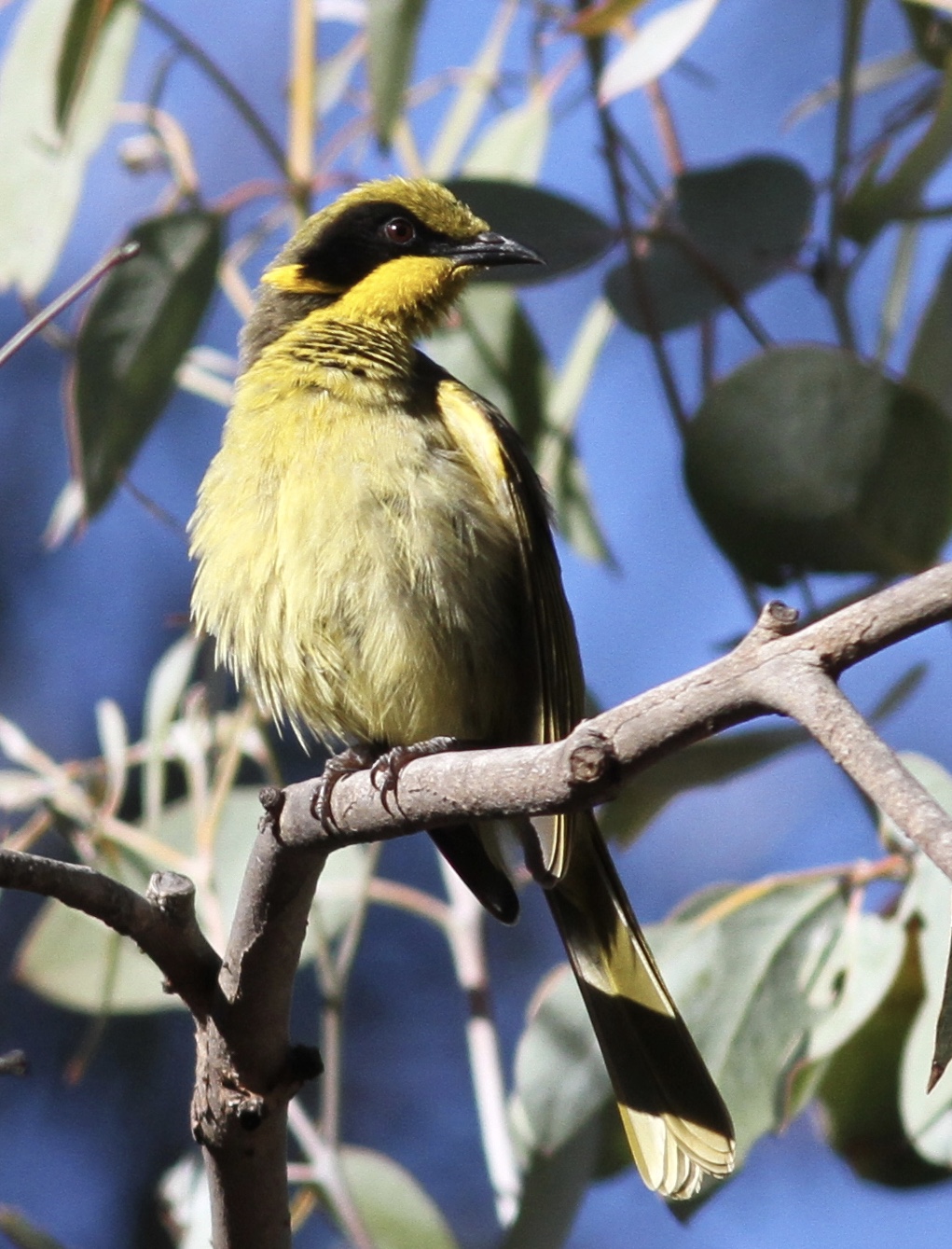
We’re lucky to have lots of beautiful birds in the Mount Alexander region (photo by Jane Rusden)
Prickly plants for wildlife and community: Campaspe Valley Landcare
Posted on 29 October, 2020 by Jacqui
With support from the Albert and Barbara Tucker Foundation, Connecting Country partnered with local Landcare groups during 2020 to protect and enhance habitat on public land. Our ‘Prickly plants for wildlife and community’ project involved four Landcare groups across the Mount Alexander region of Central Victoria. Campaspe Valley Landcare is one of these groups and has done an amazing job to get their project completed, despite the need to adapt activities to COVID-19 restrictions. We hope you enjoy this article written by Barbara James of Campaspe Valley Landcare about their group and their recent planting.
Campaspe Valley Landcare (CVL) operates to the north of Kyneton, within the area between the lower reaches of the Coliban and Campaspe Rivers leading to Lake Eppalock in Central Victoria. Our group has members that live within four Shires including Mount Alexander, Macedon Ranges, Mitchell and the City of Greater Bendigo. The group’s main focus is eradicating weeds, revegetation, and identifying and surveying for indigenous plant species. Newcomers can gain advice on issues of biodiversity on their properties. CVL can help landowners access appropriate information such as whole farm planning courses and the latest weed eradication methods.
For more information about Campaspe Valley Landcare, or to get in touch please – click here
As part of the Prickly plants for wildlife and community project in 2020, Campaspe Valley Landcare received 300 prickly plants that were planted mostly on a block of public land in Barfold. The block is situated on the corner of School Rd and Dallistons Rd, and is managed by the Department of Environment Land Water and Planning (DELWP). This land contains part of Back Creek, which has been a group focus for several years for gorse and other weed eradication.

Campaspe Valley Landcare planted and guarded 300 prickly plants in 2020 as part of the Prickly plants for wildlife and community project
The current project will build on previous CVL work along Back Creek which encouraged participation in various publicly funded programs. This has included Victorian Gorse Taskforce (VGT), and DELWP programs, which provided $3,700 towards weed control and planting during 2015-2016, and $1,500 in 2017 as part of a Good Neighbour Grant. Our group has continued to employ a contractor to spray gorse, and we have also purchased and planted native understorey species ourselves.
Kangaroos and other animals have been problematic, as well as a few years of drought, so we have tried various methods of guarding over the years. Prickly plants seemed like a very good idea for survival, helped by the taller guards provided by Connecting Country via the grant.

The prickly plants were a mix of locally indigenous species selected for their form and flowers to provide habitat resources
Planting out was difficult due to COVID-19 restrictions, but we managed to do it in a COVID-safe way, and are pleased a wetter spring this year did help. Due to the problems with group planting and COVID-19, some other roadside planting sites in our area were supplemented by the plants provided through this project. We are hopeful that they will have a better survival rate due to their bristly nature, the taller guards, double stakes and a wetter spring and Summer. Thank you to Albert and Barbara Tucker Foundation and Connecting Country!
Barbara James
Campaspe Valley Landcare
Bird of the month: Southern whiteface
Posted on 29 October, 2020 by Ivan
Welcome to our eighth Bird of the month, a partnership between Connecting Country and BirdLife Castlemaine District. Each month we’re taking a close look at one special local bird species. We’re excited to join forces to deliver you a different bird each month, seasonally adjusted, and welcome suggestions from the community. We are lucky to have the talented and charismatic Jane Rusden from BirdLife Castlemaine District writing about our next bird of the month, with assistance from the brilliant Damian Kelly .
Southern Whiteface (Aphelocephala leucopsis)
I could gush on and on about Southern Whiteface. In my opinion they are one of the cutest tiny balls of fluff birds around. A tiny bird with its distinctive white face, which gives it the most loveable expression, I get very excited when I’m lucky enough to find them. Actually it was Damian Kelly who found them at Muckleford Station recently, and his totally gorgeous photos became the impetus this month’s focus bird. OK that’s enough carry on, let’s look at who they really are.
I couldn’t say they are uncommon, but they are not common in Central Victoria either. I’ve found Southern Whiteface in paddocks with bush nearby, providing them with plenty of foraging opportunities, turning over leaf litter looking for insects and the occasional seed. You may also see them in low shrubs, as was the case when Damian took these gorgeous photos, and on fence posts. They move around in parties of up to about eight birds, sometimes in a mixed flock with other insectivores.
As is often the case with birds, not a lot is known about their breeding, movements or general behaviour. However, they are most likely resident in Central Victoria as they can be found all year round. We are on the southern end of their range, which is generally drier areas of Victoria, NSW, and parts of SA and WA.
Quite an adaptable bird, they will utilise manmade structures such as the verandah of an old house, and renovate Zebra Finch and Welcome Swallow nests, as well as Kingfisher tunnels. Nests come in various shapes and sizes, usually domed with a side entrance, and bulky with twigs, grasses, wool and even bits of tufty rubbish.

Endemic to Australia, the Southern Whiteface is a small passerine found in arid regions across the southern half of the Australian mainland (photo Damian Kelly)
Despite their diminutive size Southern Whitefaces are pretty easy to approach, but not always easy to see as their plumage is short on colour. Mostly you see their grey-brown back and dark tail, but with a closer look you’ll see their pale belly and pretty, almost heart-shaped, white face with a dark stubby bill and white eye ring. They can be mistaken for Thornbills and Weebills, because they are Similar in size and colour, though stouter. At only 12.5 grams, they are tiny.
They are also known as ‘squeakers’ – how crazy cute is that? If you listen to them calling, you’ll see why.
Listen to their call – click here
A big thank you to contributors to this edition of Bird of the Month – Jane Rusden and Damian Kelly – for their amazing knowledge and skills.
Greater and Squirrel Glider Symposium: 27-28 October 2020
Posted on 21 October, 2020 by Ivan
Our colleagues at Biolinks Alliance have put together a very impressive lineup for their Greater and Squirrel Glider Symposium, happening online this year. The event’s full title is’Greater and Squirrel Glider Symposium Leaping into Action: Sharing practical and scientific knowledge for Glider conservation’. This two-week online forum will focus on sharing information and improving collaborative and strategic approaches to conservation of Greater Gliders and Squirrel Gliders.
Connecting Country is a member of the Biolinks Alliance, a group that aims to build partnerships and capacity so that the significant momentum for community-driven conservation on public and private land in central Victoria is supported, coordinated and amplified.
Our very own Monitoring Coordinator, Jess Lawton will feature in the lineup of experts for the workshop titled ‘Squirrel Glider citizen science, community engagement and data quality workshop‘. Jess is fast becoming an expert in the practical application of citizen science and ecological monitoring programs.
Please read on for more information on this action-packed symposium, including booking details.
About this event
The threat of species extinction requires the sharing and application of the best knowledge and conservation strategy. Flagship species like the Greater Glider and Squirrel Glider are already fomenting collaboration and increased action. The recent fires raised the urgency of the challenge as well as many questions on what the best course of action is in a rapidly changing climate and more frequent catastrophic events.
Biolinks Alliance, with Wombat Forestcare, Strathbogie Ranges CMN and the Great Eastern Ranges, is holding an online digital symposium that will bring together researchers and conservation practitioners working in Victoria and New South Wales. This two-week online forum will focus on sharing information and improving collaborative and strategic approaches to conservation of Greater Gliders and Squirrel Gliders.
A series of digital video assets will be available at the commencement of the symposium, followed by several days of live panel discussions, keynotes, Q&A’s and workshops. The program will cover:
- State of play – impact of drought and recent fires
- New research – approaches and findings
- Lessons from the ground – survey, monitoring, habitat protection, restoration and enhancement; community action
- Planning for collaboration and increased strategic action
Symposium location: online via the Zoom platform – click here to book
Keynote presentations by leading research scientists:
- ‘Predicting habitat suitability for greater glider (Petauroides volans) using remote sensing: implications for conservation planning‘ keynote presented by PhD. candidate Benjamin Wagner
- ‘Conservation Planning in Dynamic Environments‘ keynote presented by Associate Professor Craig Nitschke
- ‘Examining changes in Greater Gliders population from several large-scale, long-term studies includes empirical analyses that quantify the impacts of various drivers of change‘ keynote presented by Professor David Lindenmayer
- ‘Temporal changes in populations of arboreal marsupials, including gliders in the Grassy Box-gum woodlands of southern Australia over the past 22+ years based on a series of long-term observational studies and experiments‘ keynote presented by Professor David Lindenmayer
- ‘Overlooked driver of decline–the influence of temperature on food intake in arboreal folivores‘ keynote presented by Dr Kara Youngentob
- ‘Maximising learning opportunities while replacing tree hollows for wildlife‘ keynote originally presented by Dr Rodney Van Der Ree as part of the 2019 TreeNet conference
- ‘Connecting habitat across roads‘ keynote originally presented by Dr Rodney Van Der Ree as part of the 2019 TreeNet conference
- ‘Squirrel Gliders: Nest box use and population monitoring‘ keynote presented by Associate Professor Ross Goldingay
Greater Glider ‘State of Play’ live panel discussion – Tuesday 27 October 2020
- Gregg Borschmann (Facilitator)
- Professor David Lindenmayer Australian National University
- Ed Hill GECO
- Dr Teresa Eyre Queensland Herbarium
- Dr Jenny Nelson Arthur Rylah Institute
Squirrel Glider ‘State of Play’ live panel discussion -Wednesday 28 October 2020
- Gregg Borschmann (Facilitator)
- Dr Mason Crane NSW Biodiversity Conservation Trust
- Dr Rodney van Der Ree University of Melbourne & WSP Australia
- Associate Professor Ross Goldingay Southern Cross University
- Jerry Alexander DELWP
Bookings: online via the Zoom platform – click here to book
What I learned with beginner birdwatchers
Posted on 21 October, 2020 by Jess
We received this lovely report from Lou Citroen, one of our eleven experienced volunteer bird watchers who led a small group walk at one of Connecting Country’s group bird survey sites for our ‘Birdwatching for Beginners’ event on 17 October 2020. The 46 available spots for this field session booked out incredibly fast – a reflection of the strong level of interest in local birds within our community. To view the theory session from this event, presented online by Damian Kelly – click here
Dear Jess,
I wanted to thank you and Frances for all the work you have put into what turned out to be a resoundingly successful Birdwatching for Beginners day! You must also have contacts in High places as the weather turned out to be just perfect after a rainy start of the day!!
I thoroughly enjoyed the webinar. The Webinar is such boon and useful communication tool especially in these COVID times!
I found Damian’s presentation really informative, and useful. It reinforces for me that it doesn’t matter how many years you do birdwatching, there is always something to learn from others; a lifelong learning process that is so enjoyable. I loved Damian’s relaxed and chatty style. The participants in my group also enjoyed it greatly. As concerns my particular group, we had a really fun and leisurely hour and a half on site with Carmen, Kate and Julia.
They were a lovely chatty group! Thankfully they all found the directions to the spot helpful (phew). It was fabulous to have Frances there, not just as first aider, but as great company and to help fill in some of the details about this site.
After introductions and the short safety talk, the group were delighted with the bird identification brochures Frances handed out. The brochures were indeed helpful in identifying a few of the birds we saw … or were looking for!

Group members learned an important bird watching skill: how to use binoculars (photo by Frances Howe)
With her keen eye, Carmen spotted a Galah nesting hollow (and another disused one), Julia eventually spotted one (of three!) Olive-backed Oriole, I showed them the White-winged Chough nest that Liz and I had spotted on the ‘reconnaissance mission’ … plus a few Choughs. A loud Rufous Whistler remained elusive. A beautiful raptor flew overhead but sadly remained unidentified (I still have trouble with identification of a number of raptors). There were quite a few Crimson Rosellas and Red Wattlebirds about and we heard one or two Yellow Thornbills, but spotting a male and female Superb Fairy-wren at close range was a treat for all.
Here are some of the bird species Lou’s group detected on their walk (photos by Geoff Park):

White-winged Chough

Olive-backed Oriole

Galah

Superb Fairy-wren
As my hearing is still pretty good, I explained to the group that, a little differently from Damian’s approach, in addition to visual cues I place a fair amount of importance on learning to recognise bird calls. I was able to show them that, while calls are unique to each bird (apart from the mimics that Damian pointed out) many have a little repertoire of calls to be aware of. The Crimson Rosella showed off with three.
At the end of the walk, all three were thrilled when Frances gave them all a copy of Damian’s book (click here). It was clearly a lovely surprise for them and a nice way to end our little excursion.
As I said to Frances afterwards, I think this was great success; an eye-opener (no pun intended) that there is such an interest in birds in our community. The three in our group were great to meet and clearly enjoyed the time. I had a ball! By about 3 pm we were all done and on our way home.
Thank you for the mountain of planning and coordinating behind the scenes to make it such a success!
Warmest wishes,
Lou
It was our pleasure Lou! We’re so glad your group had such a wonderful time. Receiving messages like this really warms our hearts and makes all that behind-the-scenes admin work worthwhile. We hope this is the beginning of an exciting bird watching journey for Carman, Kate and Julia, and all our participants.
This event was supported by the Australian Government’s Communities for the Environment Program.
‘Birdwatching for beginners’ engages the next generation of birders
Posted on 21 October, 2020 by Ivan
Our popular ‘Birdwatching for beginners’ event last weekend (Saturday 17 October 2020) had 282 people register for the theory session in the morning and we quickly ‘sold out’ of free tickets for the practical afternoon session. The event proved once again that community interest in birds and bird watching is gathering momentum, creating a new generation of bird watchers. The event aimed to attract new bird watchers and bird survey volunteers, and get people out enjoying and exploring the natural assets we are blessed with in Central Victoria. We’re thrilled to have such a positive response and see the enthusiasm of the participants, who were mostly from the Mount Alexander region and surrounding areas.
Local author and bird enthusiast Damian Kelly presented an overview and introduction to bird watching in the morning session, covering a range of topics and tips to get people skilled-up for bird watching. Damian is the author of the terrific ‘Castlemaine Bird Walks’ book. Damian wooed the audience with some outstanding bird photos, mostly from his own garden in central Castlemaine. He provided practical suggestions on how to get to know birds and where to start looking for birds in our region. He also responded to participants’ questions, answering important questions about binoculars, birding groups and bird calls, before heading off to mentor a practical session near Castlemaine. It was a busy day for our community birding champion!
The afternoon practical session involved a team of 4-5 beginners teaming up with an experienced local birdwatcher to go bird watching at some of Connecting Country’s bird survey sites on public land across our region. We ‘sold’ all 45 allocated tickets for this event with a long waiting list. People were keen to take this excellent opportunity to visit some great bird watching sites, with an experienced mentor to guide attendees through the afternoon. Small groups meant participants had plenty of opportunities to ask questions and learn directly from mentors, while minimising COVID-19 risks.
Feedback from both the morning and afternoon sessions was positive and appreciative, with many participants emailing directly after the event with thanks and requesting recordings of the event. The afternoon practical session was invaluable for the lucky attendees, who got to experience mentoring and an expert guide to the local birds of our survey sites on public land. There were many highlights from the afternoon, including seeing Dusky Woodswallows, Brown Falcons, Olive-backed Orioles, Superb Fairy-wrens, White-plumed Honeyeaters and Welcome Swallows. Several nests were spotted, including the amazing clay nests of the White-winged Chough.
Please enjoy the following photos captured by Ivan Carter, Frances Howe and Asha Bannon during the practical sessions, with birds and new birders sharing together.


Volunteers survey birds in the Mount Alexander area. Photo by Frances Howe


Monthly bird walks can be a healthy stroll with lovely people. The birds are a bonus. Photo: Connecting Country


This event is part of our ‘Community for bush birds’ project supported by the Australian Government under the Communities Environment Program.
A recorded copy of Damian’s presentation is available for download – click here
If you would like to learn more about birds, or have an interest in raptors and/or thornbills, you might like to download the presentations below, from our ‘Tricky Birds of Central Victoria’ event. They are an excellent resource for a little more detail on these bird groups.
- Geoff Park raptor presentation – click here
- Chris Tzaros thornbill presentation – click here
If you enjoyed this event, please consider contributing to Connecting Country’s work. We run entirely from grants and donations, with all donations over $2 being tax deductible.
- To volunteer – please email jess@connectingcountry.org.au
- To donate – please visit connectingcountry.org.au/get-involved/make-a-donation/
Celebrate National Bird Week with Aussie Backyard Bird Count – 19-25 October 2020
Posted on 15 October, 2020 by Ivan
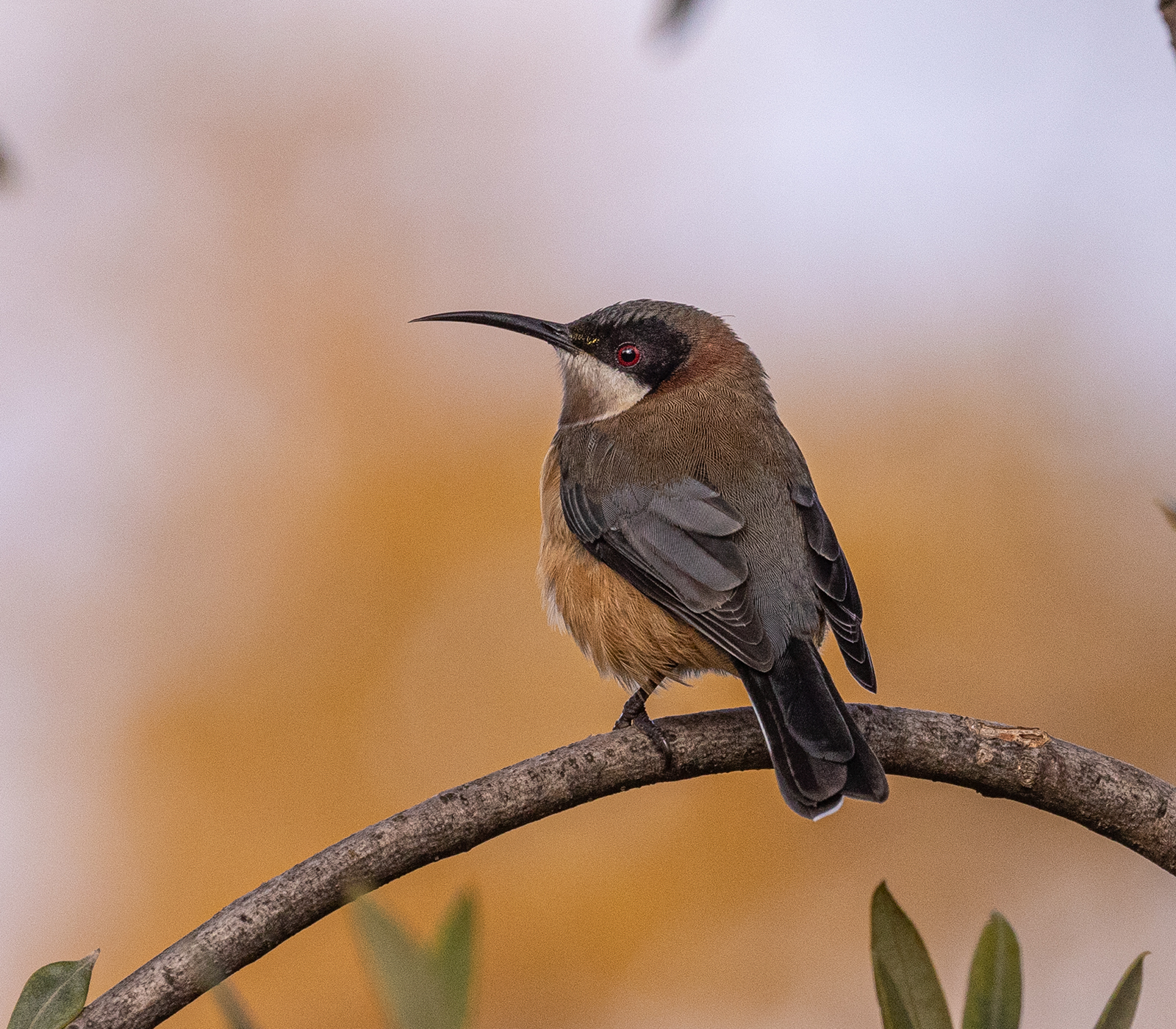
Bird watching is an easily accessible activity that connects us to nature (photo: Geoff Park)
Celebrate National Bird Week with Connecting Country by joining thousands across the country participating in the Aussie Backyard Bird Count. The bird count has been increasingly popular over the past few years, with the past 12 months seeing a surge in bird watching across the country.The next Aussie Backyard Bird Count is on 19-25 October 2020. The Aussie Backyard Bird Count is an activity for all-ages that involves observing and counting the birds that live near you – whether that’s in your garden, the local park, a beach or even your town centre. By recording the birds you’ve seen within a 20 minute period, you will help BirdLife Australia develop an understanding of local birds, while getting to know the wildlife on your doorstep!
Please read on for details from Birdlife Australia about the importance of this annual survey and how to participate.
How do I take part in the Aussie Backyard Bird Count?
To complete the Aussie Backyard Bird Count, spend 20 minutes standing or sitting in one spot and noting down the birds that you see. You will need to count the number of each species you spot within the 20 minute period. For example, you might see 4 Australian Magpies, 2 Rainbow Lorikeets and a Sulphur-Crested Cockatoo. If you can identify birds by their calls, please include these in your count, but if you aren’t sure of a bird without seeing it, please exclude it rather than making a guess. The Aussie Bird Count app has a handy field-guide to help you identify birds. Once you have completed your count, you can submit it in two different ways:
- You can submit your bird count through the online web form (this form won’t be made live until the 14 October)
OR
- You can submit your counts through the free Aussie Bird Count app. The app is available for iPhones and Android smartphones, go to the Google Play or iTunes to download the app for free. If you have the Aussie Bird Count app from previous years don’t delete it, it should update automatically with the newest version. In between event dates, the app operates as a field-guide/bird finder.
Why should I do the backyard bird count?
By participating in the Aussie Backyard Bird Count, you will be helping BirdLife Australia find out about the common species that live where people live. Providing us with a snapshot of Australian birds at the same time each year allows us to look at the trends in our bird communities from year to year. This is important because it’s these more common species that give us the best indication of the health of the environment – think of birds as a barometer for nature!
Why is the bird count in October?
Spring is the season when birds are more lively and visible. They begin nesting, breeding and flocking and generally appear more playful. Thousands of migrant birds return to our shores in spring as well. For these reasons it is also National Bird Week, a tradition that started back in the early 1900s when 28 October was first designated by our predecessor, the Royal Australasian Ornithologists Union, as the first ‘Bird Day’.
What other surveys can I get involved with?
The Aussie Backyard Bird Count only takes place once a year, however BirdLife Australia run other surveys throughout the year that you can take part in. Birds In Backyards runs seasonal surveys that you can join in with, even if you’re not an expert bird-watcher, and there’s lots of info on how to attract more birds to your backyard! Check it out here. You can also register with our Birdata app if you want to take part in more regular bird surveys.
Listening to nature with Andrew Skeoch – 22 October 2020
Posted on 15 October, 2020 by Frances
Local Connecting Country supporter and TEDx talker, Andrew Skeoch, is presenting an online event with the Castlemaine Library on 22 October 2020. Andrew presented at Connecting Country’s AGM 2019, and gave a fascinating and intriguing insight into his deep ecological connection to the landscape and what it means to be part of it. Please read on for details about the event, which is sure to be well attended and worthwhile.
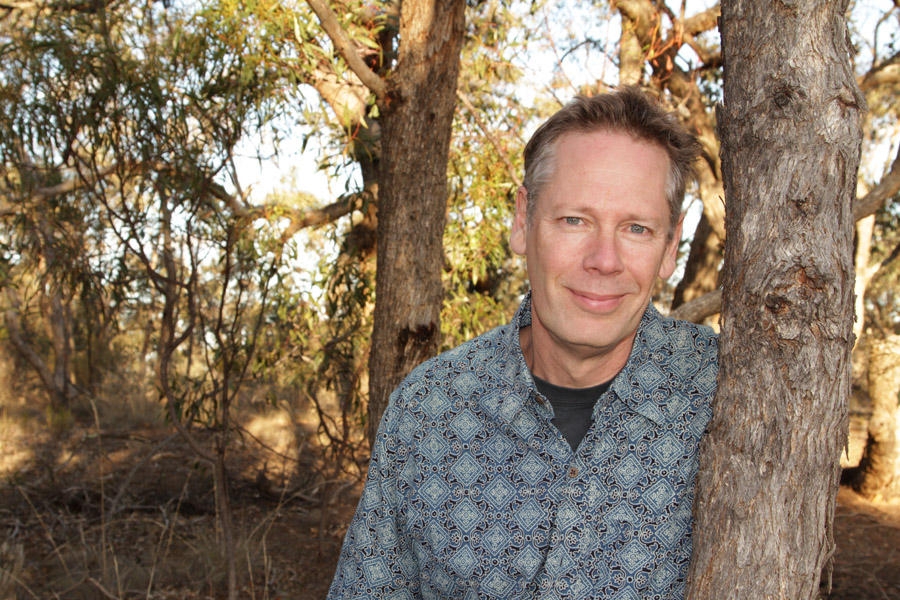
Andrew Skeoch is an educator, naturalist, environmental thinker, and one of Australia’s best-known nature sound recordists (Photo: Andrew Skeoch)
Listening to Nature
Join Andrew Skeoch, educator, naturalist, environmental thinker and one of Australia’s best-known nature sound recordists for a wonderful journey of discovery into the rich acoustic communications of nature. Across an inspiring hour, Andrew profiles listening skills and understandings to make sense of what we hear around us and how to comprehend the languages of the natural world. A reaffirming and timely insight into how nature thrives and adapts ensuring continuity of life.
Enjoyable for all ages.
Join live, or catch up later on YouTube
Thursday 22 October 2020 at 7-8 pm
To book – click here
For further information please contact Castlemaine Library – click here
The importance of fungi with Alison Pouliot
Posted on 15 October, 2020 by Ivan
Longtime Connecting Country friend and collaborator, Alison Pouliot, recently developed an excellent video highlighting the role fungi plays in our ecosystems of central Victoria. Alison has previously delivered workshops for Connecting Country and also has donated an amazing photo library for our website and communication products. She is one of the leading experts in her field of both photography and fungi, and combines the two with precision, passion and wonder.
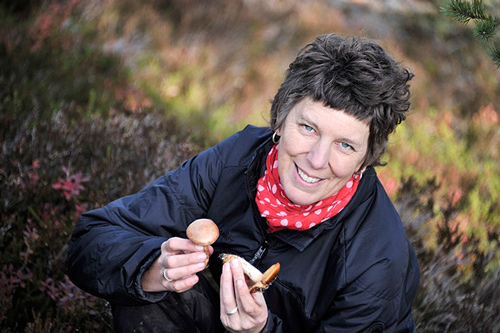
Alison in the field, enjoying what she loves (photo: FOBIF)
Alison is a natural historian and environmental photographer who uses words and images to evoke stories of the living world, as well as the non-living. She is especially interested in forgotten corners and lifeforms -the stuff that slips between the cracks – and aims to convey the extraordinariness of life, both peculiar and familiar. She is rather partial to the fungal and the spineless, as highlighted in the following video.
Alison’s website is an amazing collection of photos, videos and insight – click here
Alison says:
Fungi are fundamentally important organisms. They’re not just some kind of bizarre accessories in the landscape, but rather fungi underpin, pretty much every terrestrial ecosystem, on the planet. Please enjoy the exploration into the Kingdom off Fungi video below, which was mostly filmed around the Daylesford region (Central Victoria) over the past 12 months.
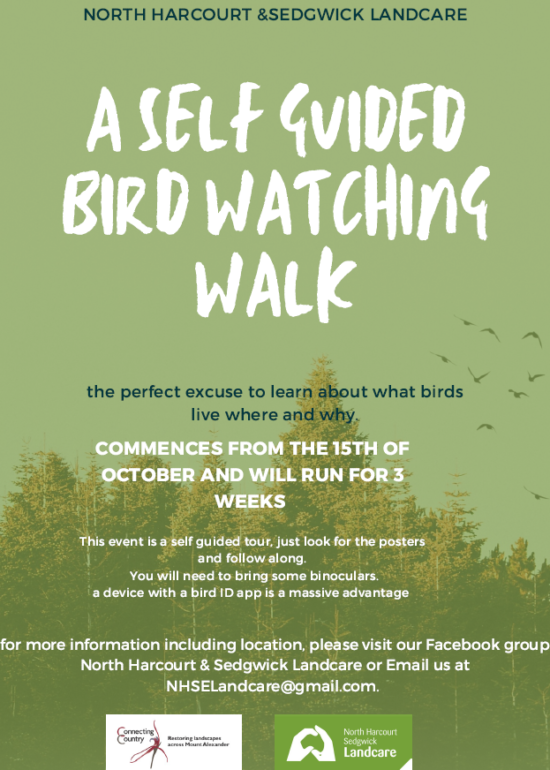
A self-guided bird-watching walk with North Harcourt & Sedgwick Landcare
Posted on 15 October, 2020 by Asha
Take yourself on a self-guided bird-watching walk, organised by North Harcourt & Sedgwick Landcare with support from Connecting Country.
 North Harcourt & Sedgwick Landcare have created this walk as the perfect excuse (if you need one) to go out and learn about what birds live where and why. This event is a self-guided tour in the North Harcourt Sedgwick area of Central Victoria. Just look for the posters and follow along!
The posters will have information about the habitat at different points along the walk and which birds you might see there. It is designed for everyone, from kids to avid bird-watchers. Any time is a good time for bird-watching, but the best times are early in the morning or late in the afternoon.
The walk begins at the intersection of Mandurang S Road, Springs Road, and Bryden Road in Sedgwick and follows the Coliban channel (see map on the right for details). You will need to bring some binoculars, and a device with a bird ID app is a massive advantage. Don’t forget good walking shoes, first aid kit, and some water and snacks. Allow around 20 minutes at each one of the four stations. The entire walk is around 3 km return (allow around 2 hours). The trail has some steep sections so please go at a safe pace. Please stay on the track at all times and, with the weather warming up, be aware of snakes.
When: This event will run from 19 October to approximately 8 November 2020.
To download the poster: click here
For more information about the walk please email NHSELandcare@gmail.com
For more information about North Harcourt & Sedgwick Landcare: click here