

Bird of the month: Rose Robin
Posted on 25 May, 2026 by Hadley Cole
Article by Damian Kelly and Jane Rusden.
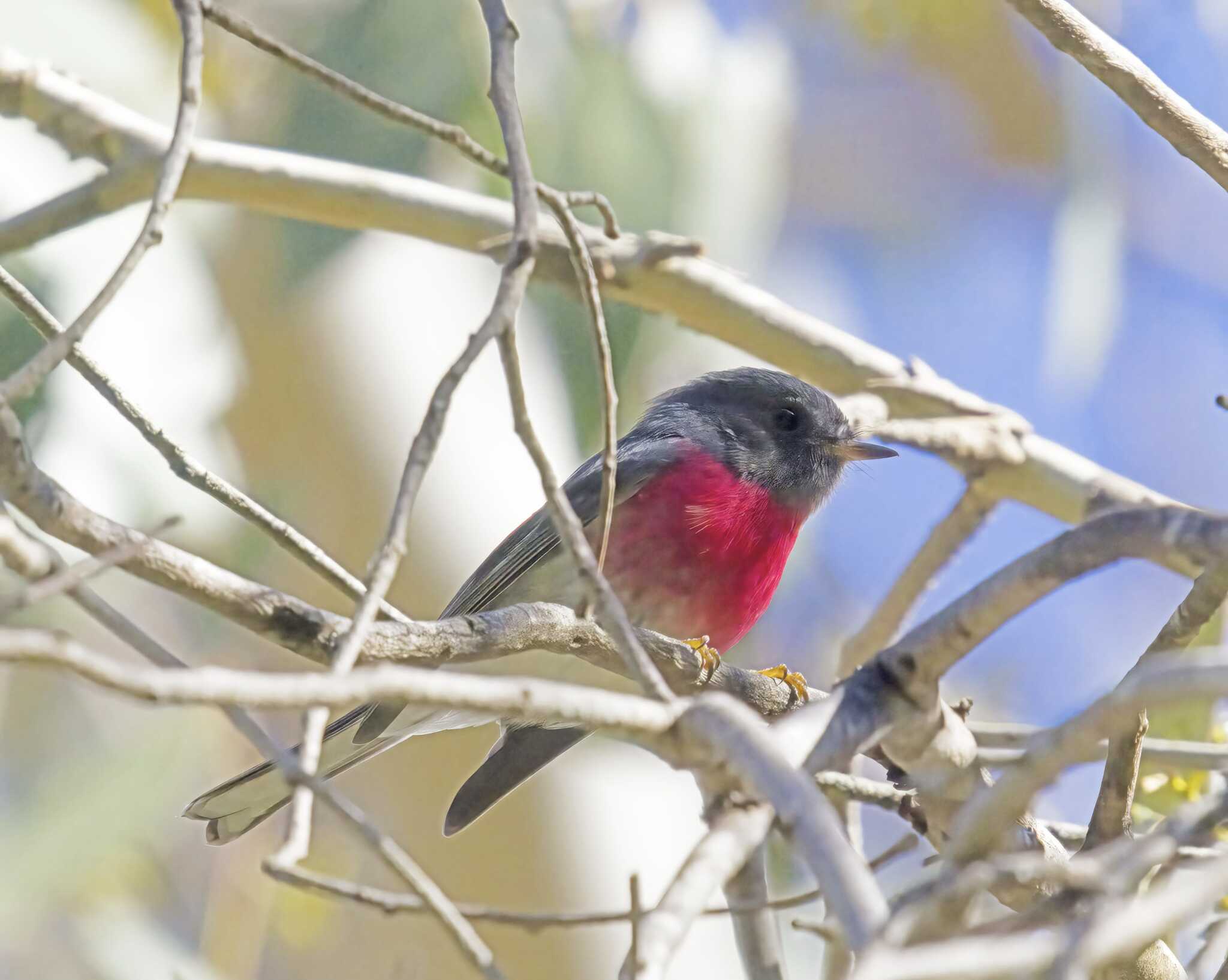
Beautiful rose breasted Red Robin. Photo by Damian Kelly.
When it’s cold and miserable in the depths of a Castlemaine winter, the sighting of a very beautiful Rose Robin is always a joy.
The Rose Robin is one of the the smallest of the Australian Robins. It also differs from most other robins as it is the most arboreal of the group. It prefers to forage for insects in the middle and upper layers of the forest unlike most other robins that often feed low and on the ground. They can be found in wet forests from the Otways all the way up to central Queensland.
It is possible to confuse the Rose Robin with the related Pink Robin at first glance as they can be found in similar habitats. The Rose Robin does not occur in Tasmania but the Pink Robin does. However, they have different shades of pink and the Rose Robin is grey on the head and neck whilst the Pink Robin is black. Pink Robin females have buff wing-bars compared to the whitish bars for the Rose Robin. Both species tend to inhabit similar habitats.
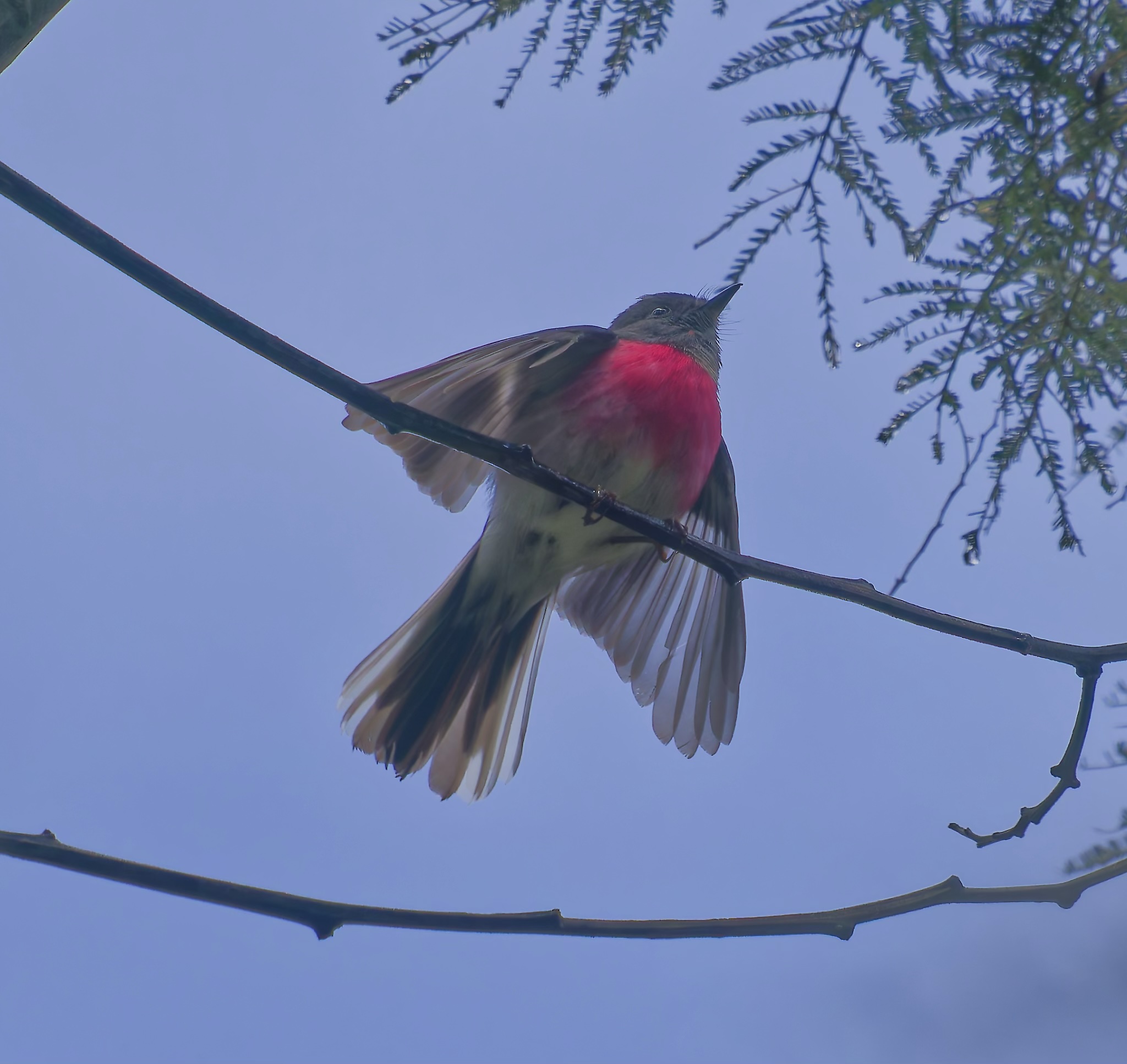
Rose Robin. Photo by Damian Kelly.
Generally breeding occurs between October and January, often in mountain areas. Nests are built by females, but both parents feed the young. Usually nests can be found 20 metres or higher in the tree canopy. The nest is cup-shaped and made of fibres and moss held together with spiders’ web. It is not uncommon for a pair to raise two or three clutches in a season. Close observation has shown that a pair will often return to the same nesting location and often the same tree year after year. Usually 2-3 eggs are laid.
After breeding, mountain populations descend to lower altitudes for the winter months. In cooler weather this species has been recorded around Castlemaine. Food consists of insects and other small arthropods, often caught on the wing. As they tend to inhabit denser tall forests they can be tricky to view. In the field often they can be picked up from their darting movements and trilling call.
The male and female appear quite different – the male has the distinctive rose breast with a dark grey head and neck whilst the female is much browner than the male with only a pale wash of pink on the breast.
Bird of the Month is a partnership between Connecting Country and BirdLife Castlemaine District. Each month we take a close look at one special local bird species. We are blessed to have the brilliant Jane Rusden and Damian Kelly from BirdLife Castlemaine District writing these! We’re excited to join forces to deliver you a different bird each month, seasonally adjusted, and welcome suggestions from the community.


Leave a Reply