

Bird of the Month: Bird predators and their bird prey behaviour
Posted on 19 November, 2026 by Lori
Bird of the Month is a partnership between Connecting Country and BirdLife Castlemaine District. Each month we take a closer look at a special local bird species and bird behaviors . Thanks always to the brilliant Jane Rusden and Damian Kelly for these wonderful articles and fabulous photos.
In the BoxIronbark Forest at this time of year and if your luck is in, you may see the pale face of a Square-tail Kite flying just above the tree canopy in a quartering pattern as they search for prey. What they are looking for are small birds and their nests, insects and occasionally small mammals and lizards. Around Castlemaine this could be predominantly woodland birds like honeyeaters, but also Yellow-footed Antechinus and Jacky Lizards. In response to a threat like this, birds have systems in place to alert each other of the dangerous predator and if it appears hungry and actively hunting, or not.
If you spend any time in the bush you will have experienced the phenomenon where birds are calling and moving about and then suddenly there is are strident calls followed by silence. This is a sure sign that there are predators about. It may be a Brown Goshawk lurking in the undergrowth looking for its next meal or perhaps a Square-tailed Kite skimming across the tree tops in search of a meal.
Much research has been done on this and it has quickly become clear that our birds employ a range of survival strategies that are both species-specific and sometimes quite well co-ordinated between species. Prey species will use distinct calls depending on whether the raptor is actively hunting in flight or just perched and watching. And birds don’t just listen to their own species, but also take on of the danger calls of other species.
Some species, such as Magpies and Noisy Miners are hyper-vigilant and are often the first to call. Other species will respond to these danger calls and head into dense cover.
On the other hand, very small species such as the Brown Thornbill have a behaviour that has been observed across the world in several species: it can mimic the aerial alarm calls to confuse the predator that there is another predator above causing a distraction.
Some potential prey species do not flee, but rather begin aggressive mobbing and swooping the predator. Noisy Miners, Ravens and Magpies will display this behaviour. Research shows that magpies adjust their flight patterns based on the species of raptor present, using a distinct complex tonal alarm call right before initiating aggressive dive-bomb attacks.
Other behaviours include freezing and crouching, changing their profile to avoid detection. Others such as the Dusky Woodswallow have been recorded hanging on the underside of a branch until a raptor moves on.
Examples of the chasing and mobbing behaviour of Little Ravens in the photos – the first a single Little Raven pursuing a Whistling Kite and the second an extreme example of mobbing with more than 30 Ravens mobbing a Wedge-tailed Eagle.
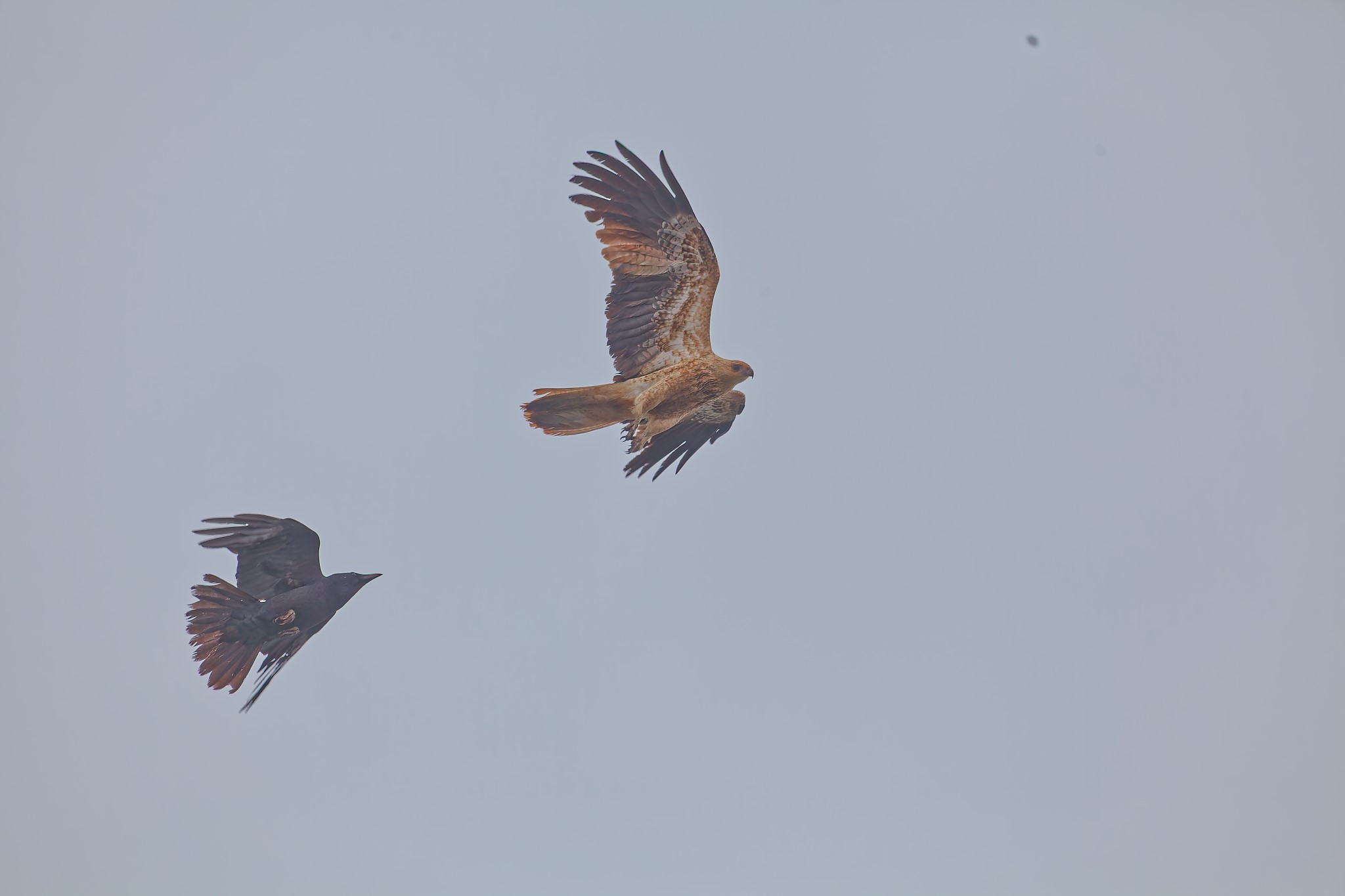
Raven mobbing Wedge tailed Eagle (D Kelly)
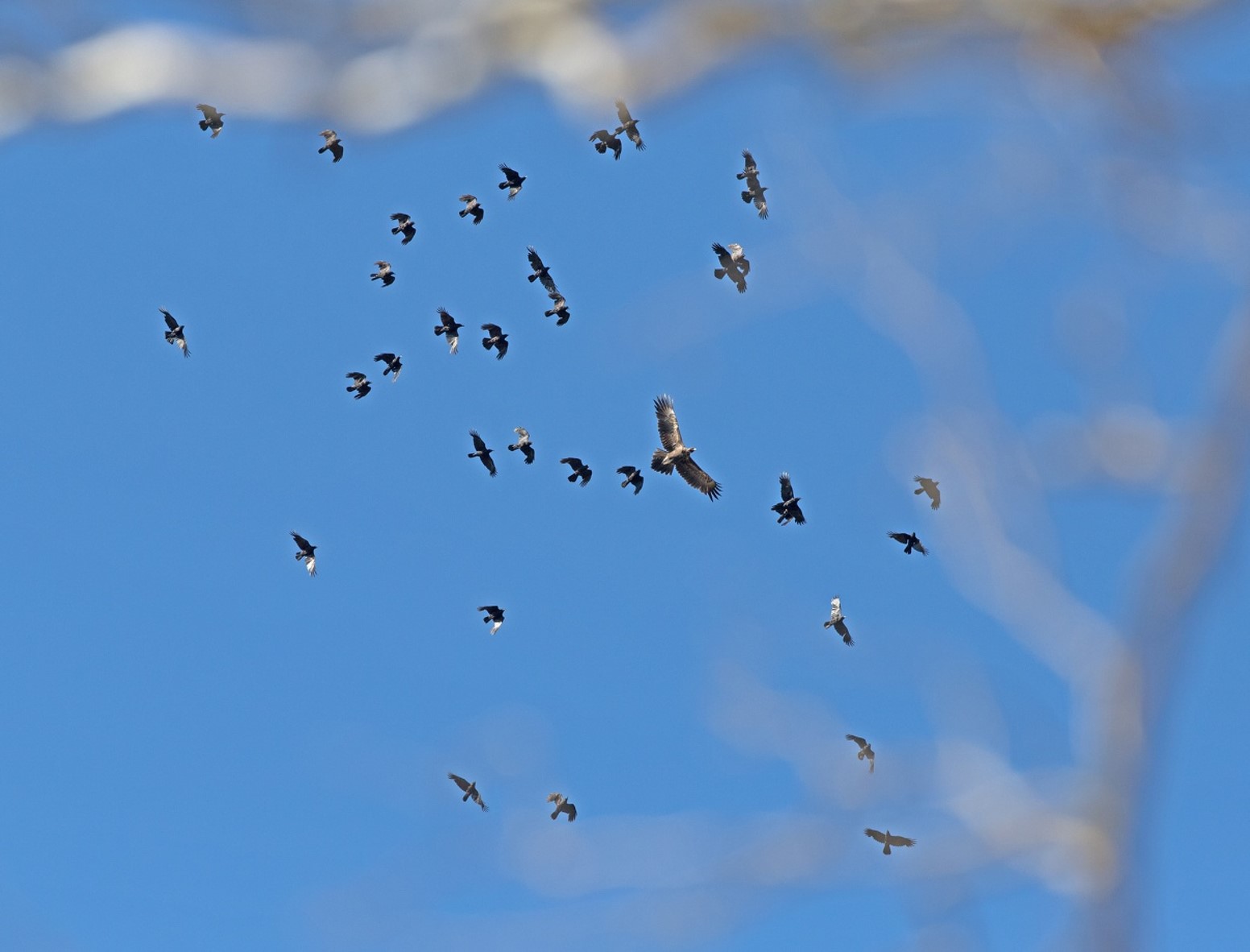
Wedge-tailed Eagle getting mobbed by a huge flock of Ravens. Photo by Damian Kelly
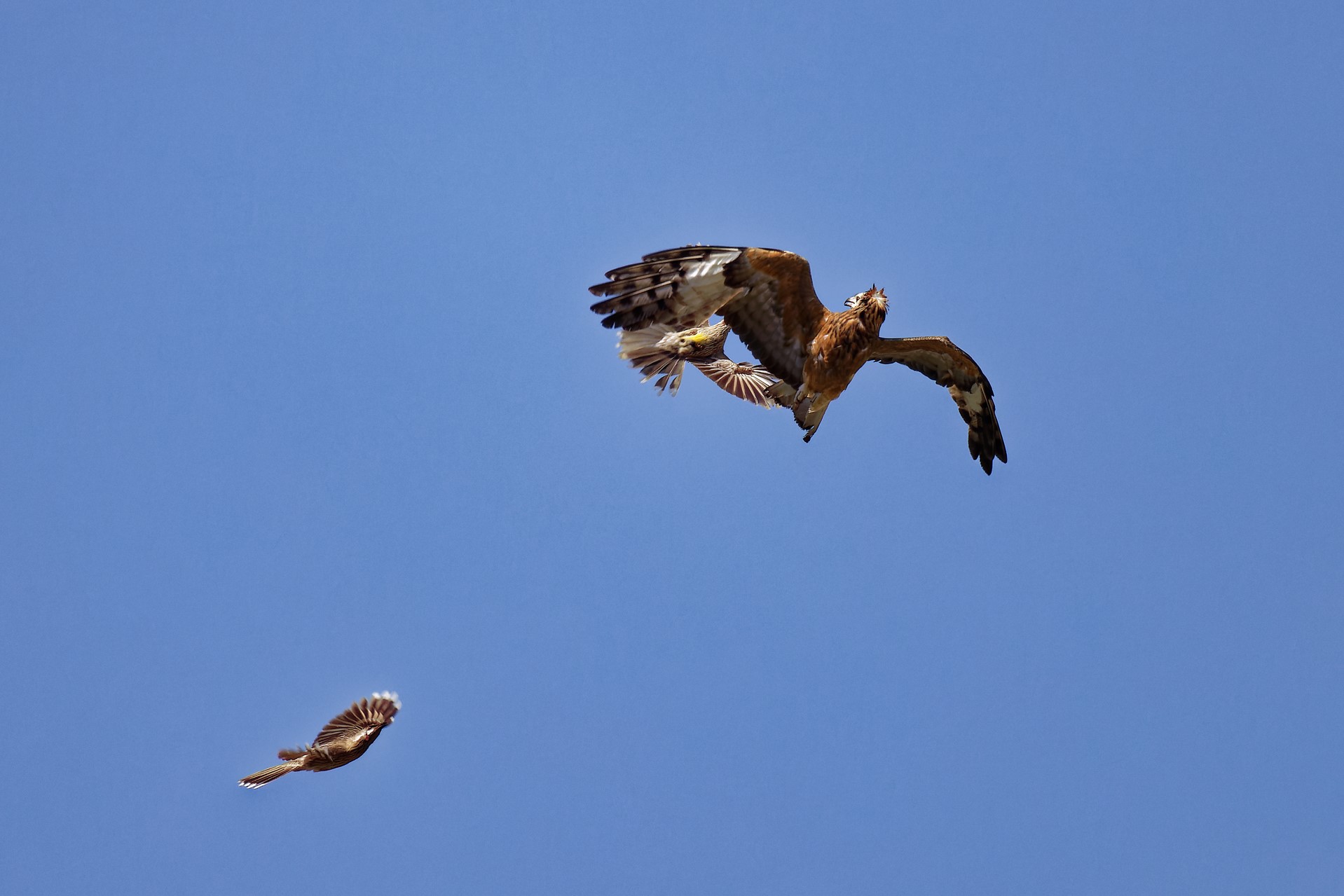
Square-tailed Kite being mobbed by a pair of Red Wattlebirds, photo by Damian Kelly.
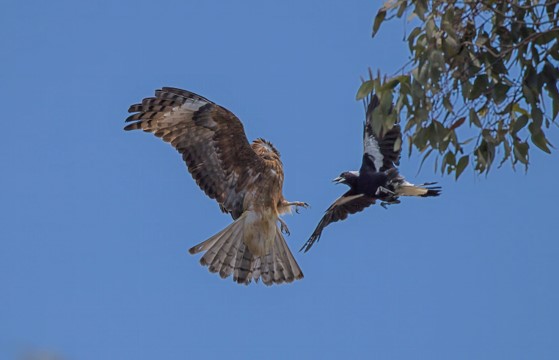
Square-tailed Kite being mobbed by an Australian Magpie. Photo by Damian Kelly.


Leave a Reply