

Bird of the Month: Magpie
Posted on 22 October, 2026 by Hadley Cole
Bird of the Month is a partnership between Connecting Country and BirdLife Castlemaine District. Each month we take a closer look at a special local bird species . Thanks always to the brilliant Jane Rusden and Damian Kelly for these wonderful articles and fabulous photos.
Words written by Damian Kelly, Photo by Jane Rusden.
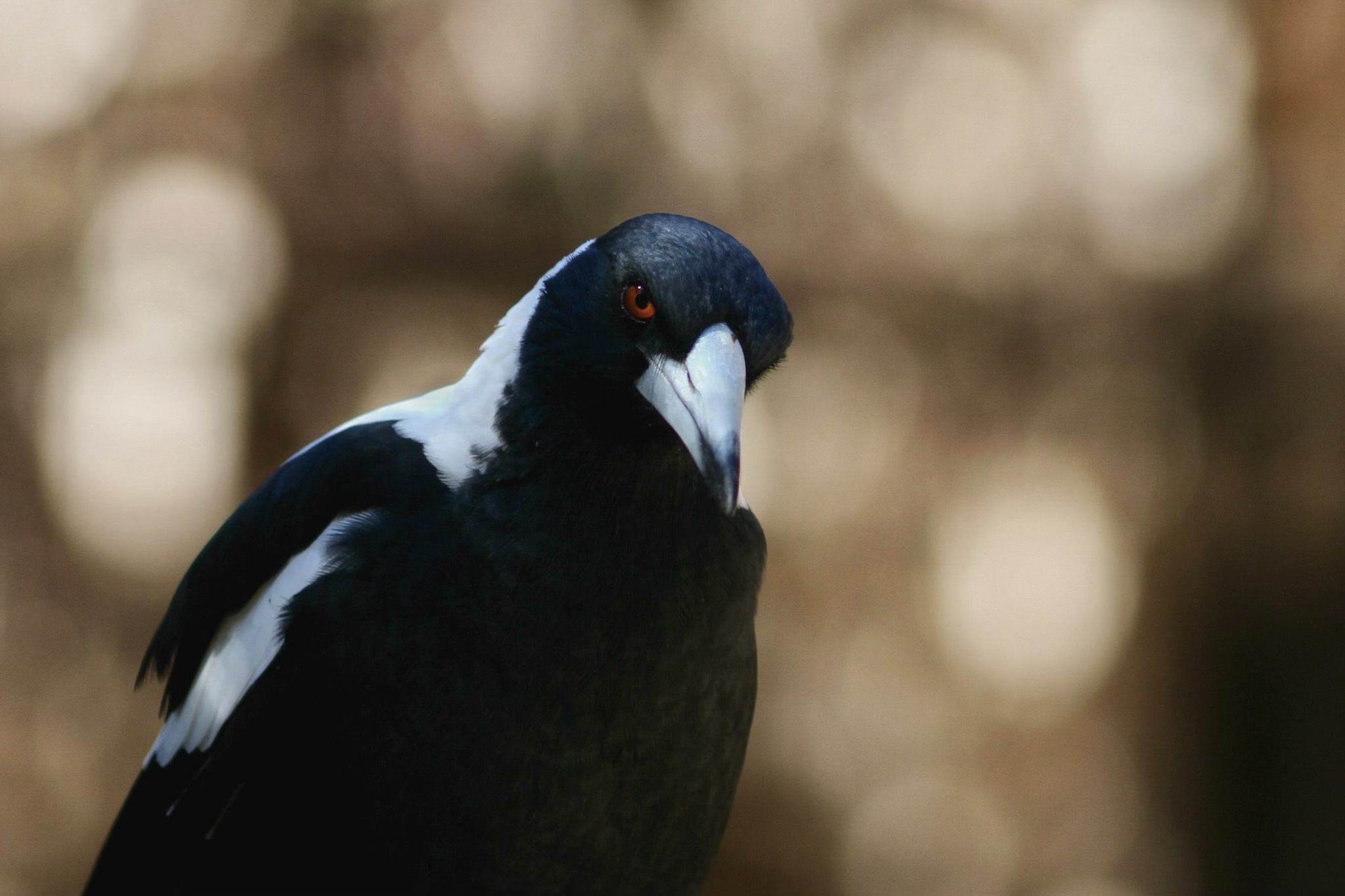
We’ve all felt like we were being watched by a Magpie! Jane Rusden capture this perfectly.
The Magpie has quite a reputation for a variety of different things. On the one hand people enjoy their beautiful calls and have even voted it Australian Bird of the Year in the past. On the other hand it can also have a bad reputation because of the behaviour of some male magpies in attacking people during the breeding season. Recently we were asked about a couple of instances of lone Australian Magpies, because they live in family groups don’t they? Well yes they do … mostly. The questions resulted in an exploration of the literature on Magpie behaviour. It’s an interesting story of family politics and how to make friends or foe of breeding Magpies. Be careful which you choose, they don’t change their minds easily.
Because of the propensity to attack people, quite a bit of research has been done on these birds, particularly by Darryl Jones and his PhD students at Griffith University in Queensland. Let’s start with some background. Magpies live on average 20 years and often occupy the same territory for breeding. They are also very smart. Various tests have shown that a magpie can recognise up to 30 individual faces and will remember them for many years. Nearly all magpie swoopers are male and they only do it during breeding season when young are in the nest, which is about 6 weeks. Out of season they don’t take much notice. And strangely they only attack certain people, cyclists and posties figure high on the list. But if you stop and get off your bike they usually lose interest. Some pedestrians also come in for attack.
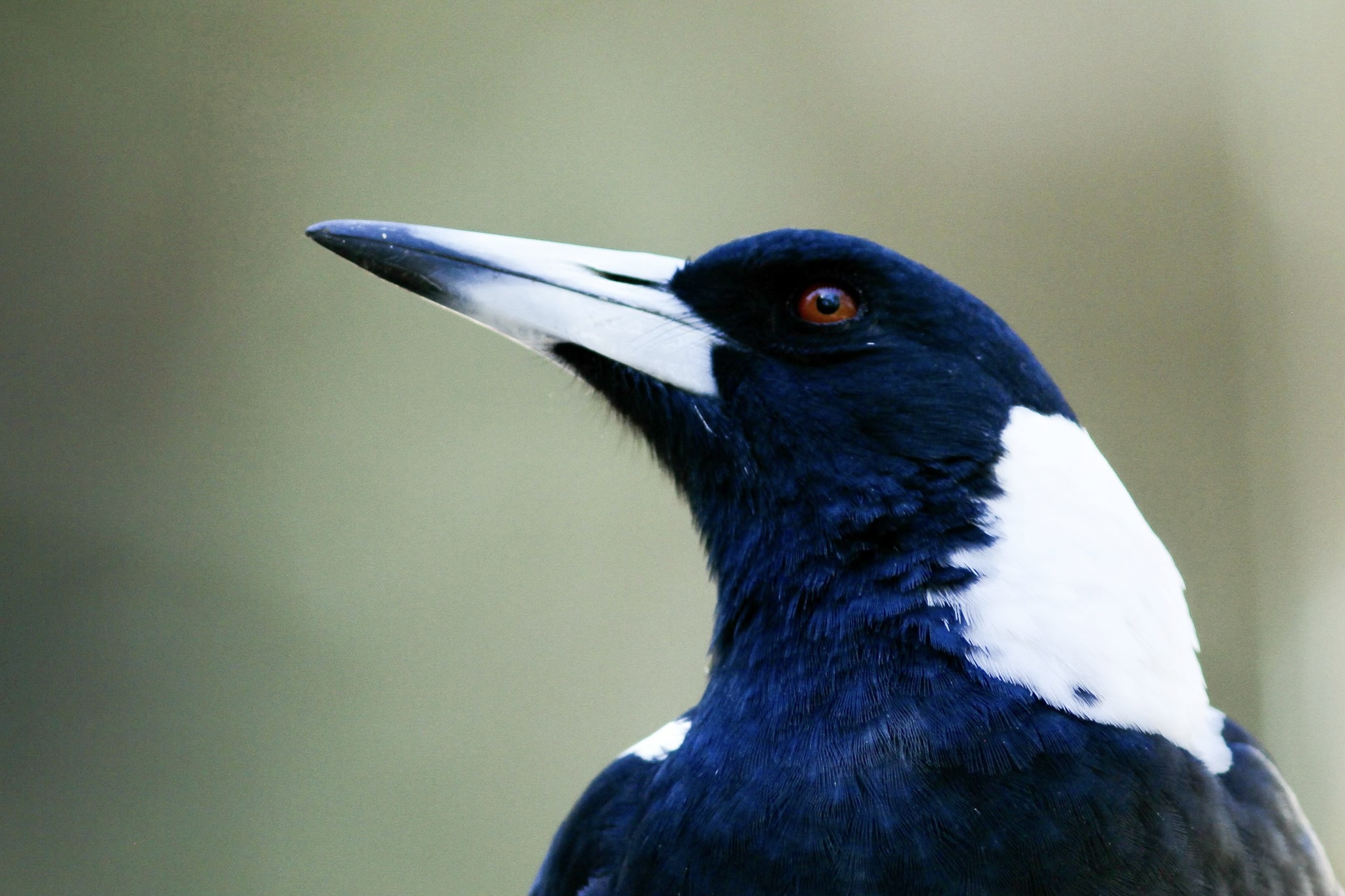
Male White-backed Australian Magpie. Photo by Jane Rusden.
Because of the danger of attacks Darryl and his team are often called out to capture birds and remove them from the area. They quickly leaned that the bird had to be taken at least 30 km away or it would be back. At first they also thought that removing the male would have a bad impact on the female and nestlings. However, they observed that when a male was removed, a local unattached male would soon appear at the nest. More importantly the new male would start to feed the young and be accepted by the female. It seems that there is always a floating populations of males just waiting for their chance and so life goes on. Only about 10% of males are prone to attack humans and generally the new parent is not aggressive.
As to why some people are attacked is still uncertain. One of Darryl’s students decided to behave like a goanna, circling the tree, climbing up slowly, arms out and so on. Very quickly he was the enemy and was attacked relentlessly, but others nearby were not swooped. Fast forward 6 years and this same person had never been back to that site. As soon as he appeared he was attacked. Evidence that a magpie has a long memory. Although there is significant research on the Magpie, there is still a lot to be discovered about them. In the meant time it seems best to make friends not foe with the local Magpies!


Leave a Reply