

Bird of the Month: Australian White Ibis
Posted on 24 September, 2025 by Lori
Written by Damian Kelly and Jane Rusden
You may have heard of the “Bin Chicken”? Otherwise known as the Australian White Ibis (Threskiornis moluccus), a much more sedate and maybe slightly boring name compared to the descriptive and very Aussie title of Bin Chicken! A larger white bodied bird with a black head, neck, bill, tail and legs, that is in fact quite handsome … except when it’s been foraging in a rubbish tip and looking very dirty and disheveled. Oh well, I guess they scrub up well after a rinse in the rain.
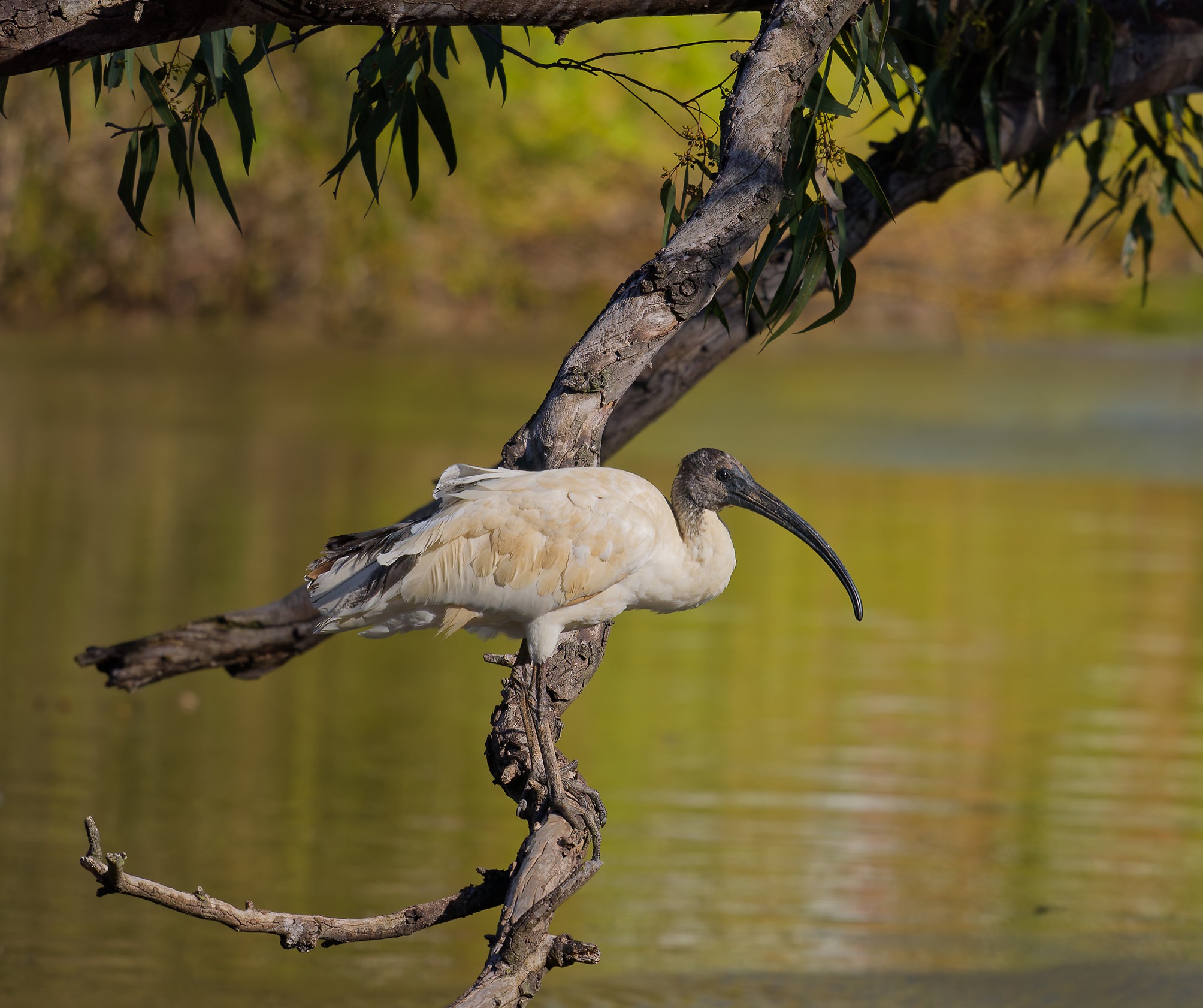
Australian White Ibis at Lake Johanna in the Castlemaine Botanical Gardens.
A widespread species, this Ibis is common across much of eastern and northern Australia, and more recently around Perth. It has proven to be a very adaptable species and as its natural breeding areas have been reduced, it has simply moved into the cities. Here it has adapted to local parks and waterways as well as rubbish dumps. In addition, it has learnt to exploit rubbish bins – hence the name sometimes used of “Bin chicken”.
In the Mount Alexander Shire, the White Ibis can be regularly found in the Botanic Gardens in Castlemaine where we spotted one recently, as well as along waterways foraging for terrestrial and aquatic invertebrates. As a nomadic bird it will move around reacting to floods, dry years and associated food availability. As recently as 1998 the Macquarie Marshes in NSW had up to 11,000 nests recorded. However, White Ibis no longer breed there due to a reduction in habitat and drought and have instead irrupted in many cities and towns around the country.
Unlike closely related species such as the Straw-necked Ibis and Spoonbills, which are not common near human habitation, the White Ibis have adapted to living in close proximity to humans as well as changing their diet to include refuse. This has allowed them to thrive in urban areas and interestingly, like the Corella discussed in a previous Bird of the Month article, human intervention was probably involved. The Taronga Park Zoo in Sydney established free flying flocks in the early 1970s. Similar flocks were established at the Healesville Sanctuary in Victoria, Tidbinbilla in the ACT and Currumbin Wildlife Sanctuary in Queensland. These birds were habituated to humans at these sites and often began breeding there, unlike wild populations that were breeding elsewhere. And the rest is history. Attempts to move them on from Healesville to Sale in Gippsland failed as the birds promptly returned to their old home.
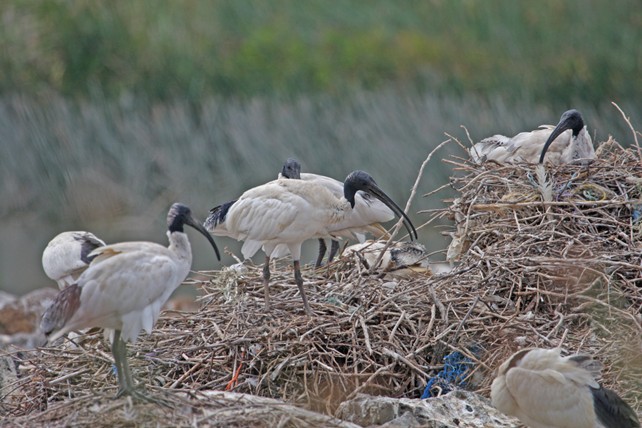
Australian White Ibis nesting at Altona (Damian Kelly)
Breeding usually occurs in spring, but can vary depending on water levels. Nests are a platform of sticks usually near water and often in company with other species such as herons, spoonbills and cormorants. Two to three eggs are laid.
Although some people are not impressed by their behaviour, the White Ibis is on the coat of arms of the City of Griffith (where wild populations are common) and Hunter’s Hill in Sydney which is more likely to have bin chickens. Some of the refuse foraging habits of the White Ibis are a bit grim, but the upside of this species being so comfortable in urban areas, is their foraging method of probing the ground looking for invertebrates, which in turn aerates and improves soil health in our parks, gardens and sports ovals. They are also known as a friend to farmers when large flocks turn up to feast on infestations of pest insects.
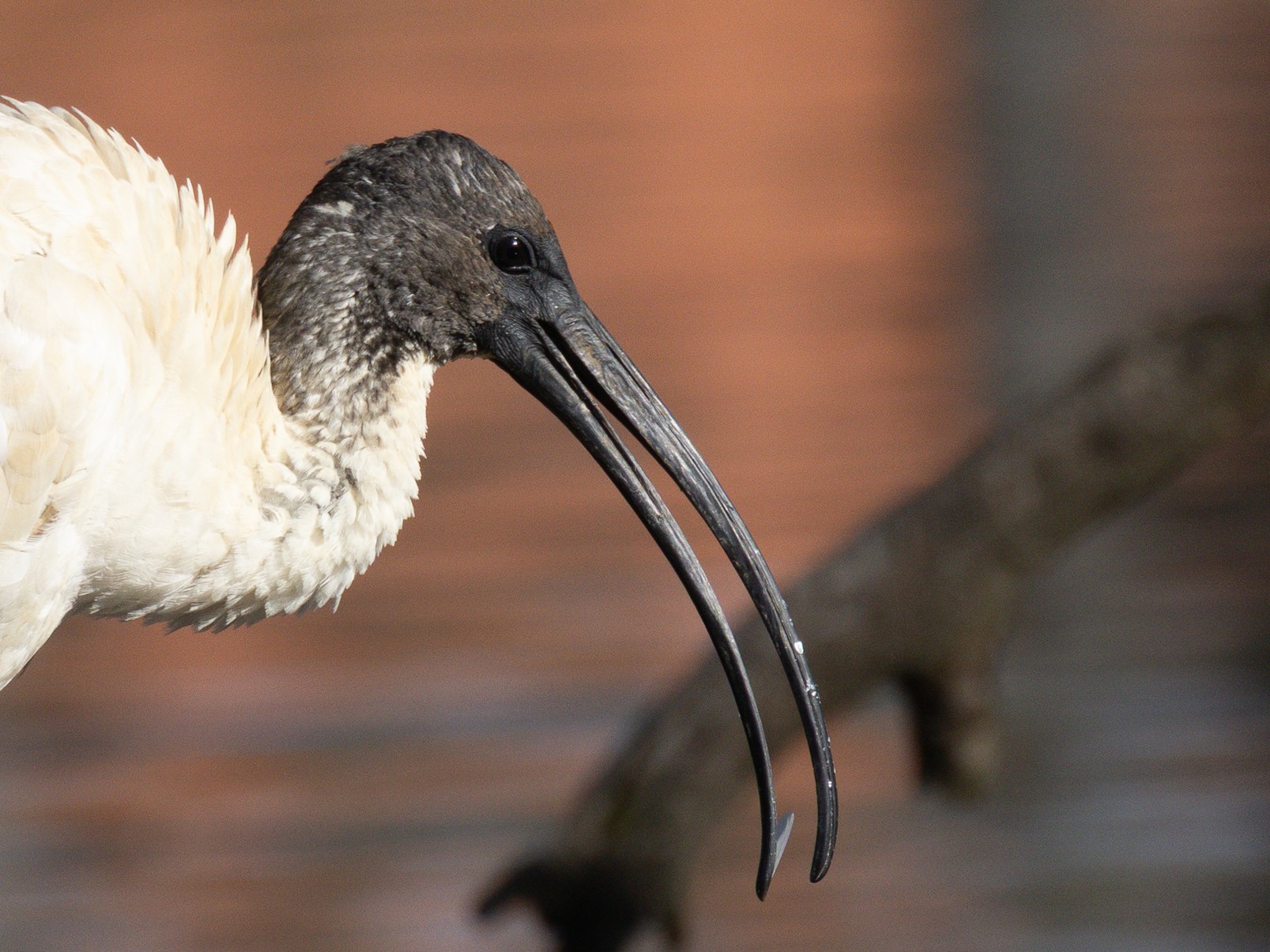
The black head feathers and bill of a White Ibis, including a feather on its bill tip from preening. Photo by Jane Rusden
Bird of the Month is a partnership between Connecting Country and BirdLife Castlemaine District. Each month we take a close look at one special local bird species. We are blessed to have the brilliant Jane Rusden and Damian Kelly from BirdLife Castlemaine District writing these! We’re excited to join forces to deliver you a different bird each month, seasonally adjusted, and welcome suggestions from the community.


Leave a Reply