

Weed guides published thanks to the cactus warriors
Posted on 16 January, 2018 by Tanya Loos
Many congratulations to the The Tarrangower Cactus Control Group (TCCG) for the creation of an innovative series of weed brochures that are are specific to the five wards in Mount Alexander Shire. The brochures are available for download on the links below, and also as hard copies at the Mount Alexander Shire offices.
TCCG President Lee Mead writes about the project for our blog:
The Tarrangower Cactus Control Group (TCCG) recently completed a project producing some new brochures about weed control. This project was funded and supported by the Mt. Alexander Shire Council. Five brochures were created, one specific for each of the five wards within our Shire. The brochures highlight the most problematic weeds in each ward and encourage landowners to manage their weeds by providing essential information.
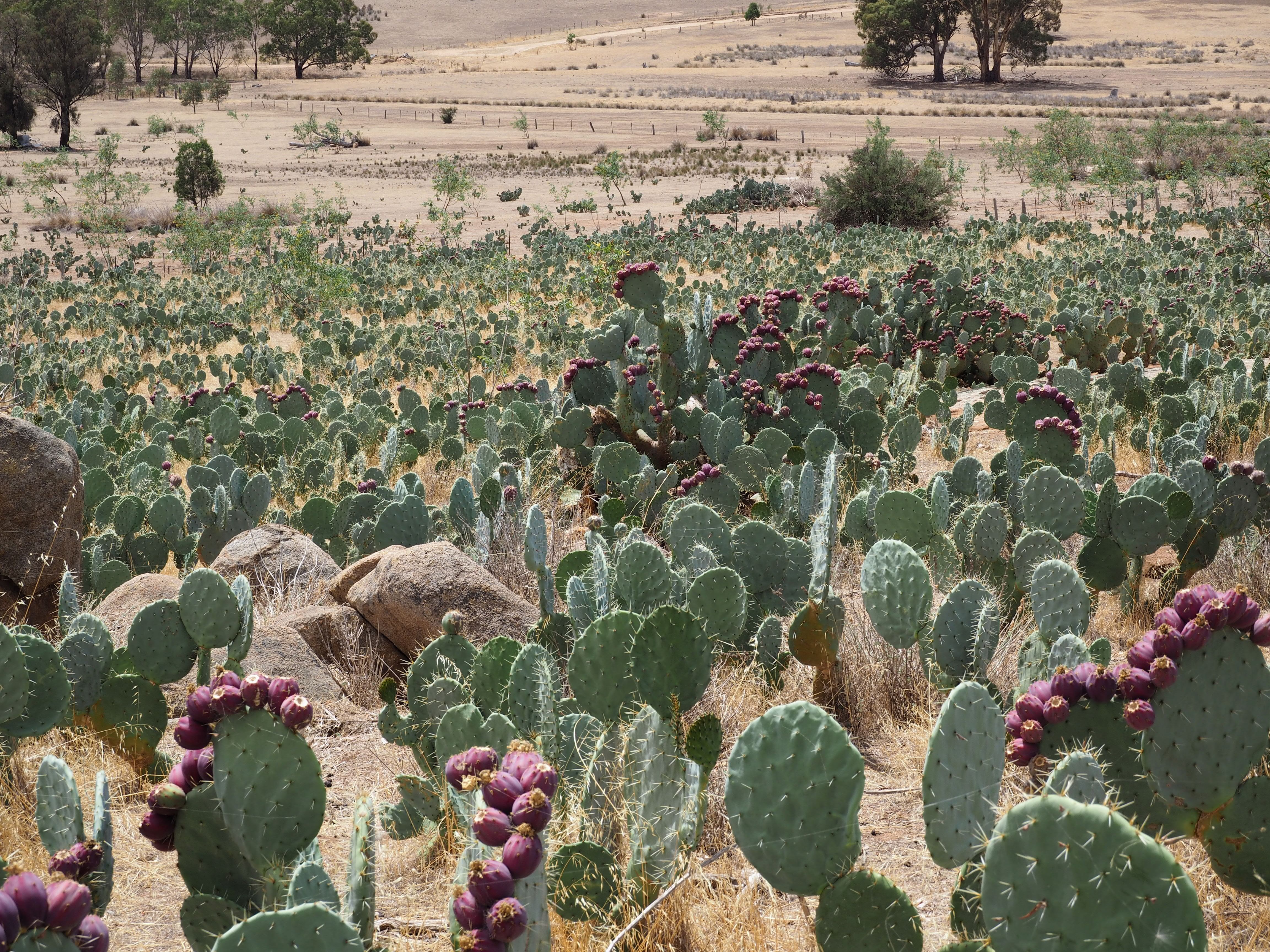
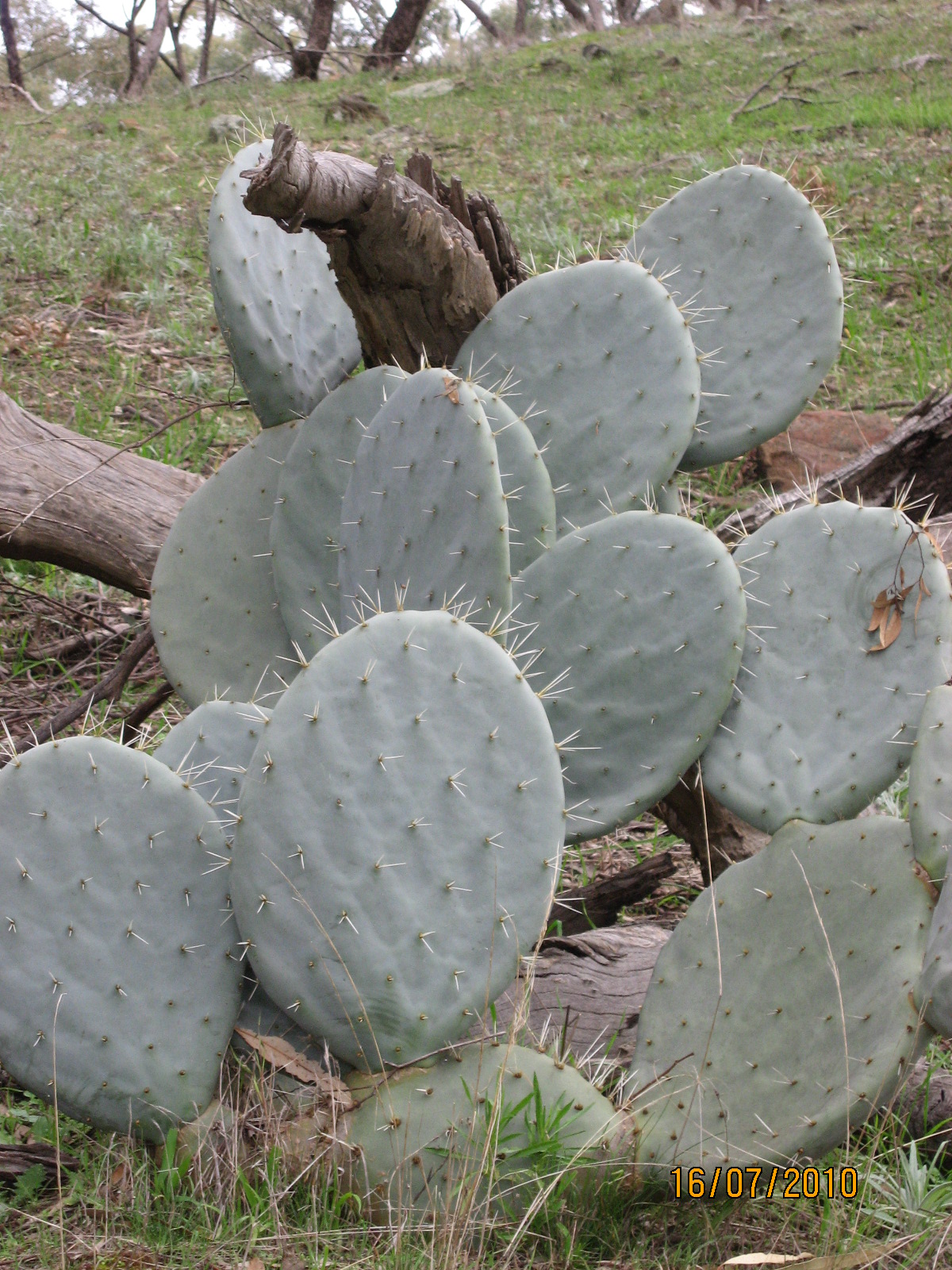
A field of Wheel Cactus
The idea for these brochures was inspired by the need to reach the landowners who are not controlling Wheel Cactus on their properties. Most landowners that don’t control Wheel Cactus infestations are absentee owners or new owners who are unaware of their weed responsibilities.
These problems are not exclusive to Wheel Cactus, so to help overcome the lack of control with many different weeds, TCCG created the new brochures and have asked the Shire to include them in the ‘Welcome Kits’ sent out to all new ratepayers. This will hopefully educate new landowners as soon as they purchase a property and reach the ones that don’t live here.
The brochures provide information about the responsibilities of landowners to manage weeds, the best control methods to use and where to find more detailed information. They also stress that not only rural properties are involved in weed control, but urban properties also have the same legal responsibilities, pointing out that most noxious weeds are escapees from private gardens.
TCCG thanks the many local Landcare groups who collaborated on this project by contributing their votes on problematic weeds and photos of some of their local weed infestations. The brochures include the contact details for these groups and will hopefully lead to future new enquiries and members.
We hope there’ll be an official and fun launch in the near future, but please contact the TCCG via their website at www.cactuswarriors.org if you have any queries. Click on the links below to download the brochure specific to your ward. And if you are unsure of your ward here is a map to check.
🙂 Ward Map
CASTLEMAINE-Weed-Brochure-2018
TARRANGOWER-Weed-Brochure-2018
Junior Ranger program launched for the Castlemaine/Bendigo region
Posted on 4 January, 2018 by Tanya Loos
Parks Victoria Rangers Trudy Nelsson and Mike Hayes dropped into the Connecting Country office to promote their exciting Junior Ranger Program – the first ever Junior Ranger program in the Bendigo Region!
Parks Victoria’s Junior Ranger program encourages children aged 6 to 12 years and their families to explore, appreciate and protect Victoria’s parks. Junior Ranger is designed to get kids outdoors to have fun, get active and learn about Victoria’s wonderful parks, wildlife and amazing natural and cultural heritage.
Trudy and Mike are super excited about all the activities planned for Greater Bendigo National Park, Vaughan Springs, Castlemaine and Lake Boort throughout January 2018. They will be helping our junior rangers discover the secrets of Victoria’s National Parks and reserves.
Parents can book on the website www.juniorrangers.com.au
For more details click on the flier: JR_whatson_bush_Bendigocastlemaine

A Parks Victoria ranger leads a discovery walk at the Prom. From the Junior Ranger website.
Landcare Adapting to Change – Site Visits
Posted on 19 December, 2017 by Asha
As part of Connecting Country’s ‘Landcare Adapting to Change’ project, our resident botanist Bonnie teamed up with Landcare Facilitator Asha to do ten site visits with local Landcare groups. The aim was to offer Landcare groups access to additional knowledge to help identify specific plants, and answer any questions about priority weed control actions, choosing plants for revegetation, and other areas of land management for conservation.
Here is a gallery of photos from the site visits – hover your mouse over the right hand side of the picture and click on the arrow to move through the gallery.
If any other Landcare or Friends groups are interested in a site visit with Bonnie in 2018, please contact asha@connectingcountry.org.au or call 5472 1594.
-

-

-

-

-

-

-

Stinking Pennywort, Hydrocotyle laxiflora
-

Stinking Pennywort in flower
-

Rice flower, Pimelea sp
-

Seed head of a Variable Billy Button, Craspedia variabilis
-

-

-

Shiny Everlasting
-

-

-

-

-

-

Pattersdon’s Curse, Echium plantaginium
-

-

Getting to know our local weeds
Posted on 7 December, 2017 by Asha

Christine Brooke from the CC Committee welcoming everyone to the ‘Get to know your local weeds – Sutton Grange & surrounds’ workshop
Getting to know our local weeds was the focus of three workshops run by Connecting Country as part of our recent Landcare Network Grant. Bonnie and Asha partnered with 17 local Landcare and Friends groups to organise the workshops in Sutton Grange, Newstead and Chewton. A fourth workshop in Maldon focused on both native and invasive plants (you can read about the Maldon workshop HERE). The workshops were a great opportunity for Landcare and community members to learn more about their local weeds, and share their work, experiences and existing knowledge.
Following an opening by members of Connecting Country’s Committee of Management, we asked each participant to share where they were from and what they hoped to learn. Representatives of local Landcare groups also introduced their group and the work they do to manage weeds. This was personally one of my favourite parts of each workshop, hearing everyone’s weed stories and everyone chatting about their shared experiences. It was fantastic to see some members of neighbouring Landcare groups meeting for the first time.
Bonnie led an interactive talk covering ‘what is a weed?’, legislation governing invasive plants in Victoria, different lifeforms of plants, methods of weed control, and other things to consider when conducting weed control.

Bonnie helping a team with the ‘Who am I?’ weed matching activity at the workshop in Newstead
Based on feedback from Landcare groups, 12 noxious weeds were selected for our ‘Who am I? game. Each team received a set of cards with a ‘Who am I?’ description of a weed, and their job was to match it with a corresponding card with the name and picture of the weed. Everyone also received a template to record how and when to treat a few choice weeds, and take home to stick on their fridge.
We finished up with some quiz questions to test what everyone had learned during the workshop. Over a cuppa and some snacks, Bonnie helped identify weeds and other plants from samples or photos that people had brought. Feedback from the workshops was overall very positive: ‘I really enjoyed meeting others and learning new stuff ‘, ‘It is a truly informative learning experience and introduced me to a number of local natives which I thought were weeds’, ‘I came away with renewed vigour and new resources ideas’.
A big thank you to everyone involved in the success of these workshops, especially to our presenters, helpers, and partnering Landcare groups.
This workshop is part of a Landcare Network project funded through the Victorian Landcare Program.

“Who am I?” weed matching activity in Newstead

Weeds quiz in Chewton

Plant ID activity in Maldon
Victorian Landcare Magazine – Issue 70 – with our local winners
Posted on 23 November, 2017 by Asha
 CLICK HERE to download Issue 70 of the Victorian Landcare Magazine. This issue features the Victorian Landcare Awards, with stories about local winners: Tarrangower Cactus Control Group (page 6), Ian Higgins (page 10) and Connecting Country (page 18).
There are also stories about Landcare Award winners from all over the state and a beautiful photo collage in the middle. Well worth a read.
Boosting Bulokes project helps a diamond shine
Posted on 15 November, 2017 by Tanya Loos
Thanks to Connecting Country’s Boosting Bulokes and Diamond Firetails project there are now 1,200 more young Buloke plants in the western parts of the Mount Alexander region. These slow growing trees will eventually set seed and provide a much-needed food source for seed-eating birds such as Diamond Firetails and Common Bronzewing pigeons.
Buloke trees belong to the Casuarinaceae or Sheoak family and were once abundant across the region. Bulokes are so rare nowadays that they are listed as ‘threatened’ under the Victorian Flora and Fauna Guarantee Act 1988. We wanted to help bring this threatened species back into our local area. The Boosting Bulokes and Diamond Firetails project involved 78 landholders on 23 properties, Muckleford Landcare group and the kids and teachers of the Castlemaine Steiner School and Kindergarten.

Project coordinator Bonnie Humphreys with Lisa Hall from Castlemaine Steiner School – you can see the large robust guards in the background, as well as a host of enthusiastic kids and landholders!
Bonnie prepared a comprehensive fact sheet on Bulokes, covering their ecology, threats and importantly – how to plant and care for Bulokes! The sheet can be downloaded by clicking this link: Buloke-Factsheet-CCountry.
Diamond Firetails are attractive little finches whose numbers are declining in the region. Recent studies by Grace Goddard (unpublished PhD, Adelaide University) have shown that the Diamond Firetail relies heavily on the seeds from Sheoaks as a winter food source. Diamond Firetails also eat the seeds of exotic and native grasses. However, it’s the native grass seeds that are a superior food source. The Firetails also use the long grass stems to build their nests.
We can help our declining Diamond Firetail population, by planting:
* Native grass species such as spear grasses (from the Austrostipa and Rytidosperma genera).
* Sheoak trees – the more commonly occurring Drooping Sheoak ( Allocasuarina verticillata) and of course the Buloke ( Allocasuarina leuhmenii).
For a detailed (and somewhat technical) fact sheet on Grace Goddard’s Diamond Firetail studies click this link Diamond-Firetail-Diet-fact-sheet

A Diamond Firetail strikes a pose at the edge of a bird bath, while two Red-browed Finches look on. Thanks to Nick Schulz from Nuggetty for the great pic!
Fun with Phascogales – Jess Lawton’s Talk
Posted on 9 November, 2017 by Asha
At their recent AGM, Newstead Landcare invited Jess Lawton along to talk about her research on Brush-tailed phascogales (Phascogale tapoatafa). She shared some facts above about this special species, along with some interesting results from her PhD research with Andrew Bennett from La Trobe University. Jess used camera traps and habitat surveys to gather information on the habitat requirements for phascogales across central Victoria. Fifty of these sites were in the Mount Alexander region at some of Connecting Country’s nest box sites.

Brush-tailed Phascogale cartoon by Jess Lawton
Jess set up two cameras at each site, pointing towards the ground where she set up a small bait station. She collected these again after 40 days, and found she had a total of 69,611 photos to go through! These included 488 phascogale records in the Mount Alexander region. One brown treecreeper also had some fun with a camera and took 952 selfies (CLICK HERE for GIF)!
Taking into account site factors such as the amount of native forest in an area, elevation, productivity, predators, tree species, number of large trees, structural complexity, logs, and leaf litter, Jess found that phascogales were present at 82% of sites. Interestingly, she found that the amount of native forest in an area was not a big influence over whether phascogales were present at a site or not. However, this could have been due to the time of year data was collected, when males may have been using sub-optimal habitat during breeding season.
The two biggest habitat factors that Jess found influenced phascogale detection were tree species (box versus gum) and leaf litter. Sites with more box species and/or more leaf litter had more phascogale records. This is probably because these provide habitat for invertebrates, which are a critical food source for phascogales.
Jess finished with some tips for landholders who wish to help with phascogale conservation:
- Protect existing hollows and put up nest boxes.
- Keep it messy – leaf litter, logs, and tree stumps and all important for phascogales.
- Help reduce predator pressure by keeping pets inside at night and walking them on a lead.
- Care for your local bush by getting involved with your local Landcare or Friends group.
Thank you Jess and Newstead Landcare for an interesting and engaging talk. Here are some pictures Jess provided from her camera traps – well worth a look!

Brush-tailed Possum

Bat (possibly Lesser Long-eared?)

Brush-tailed Phascogale

Brush-tailed Phascogale

Brush-tailed Phascogale

Eastern Pygmy Possum

Fox
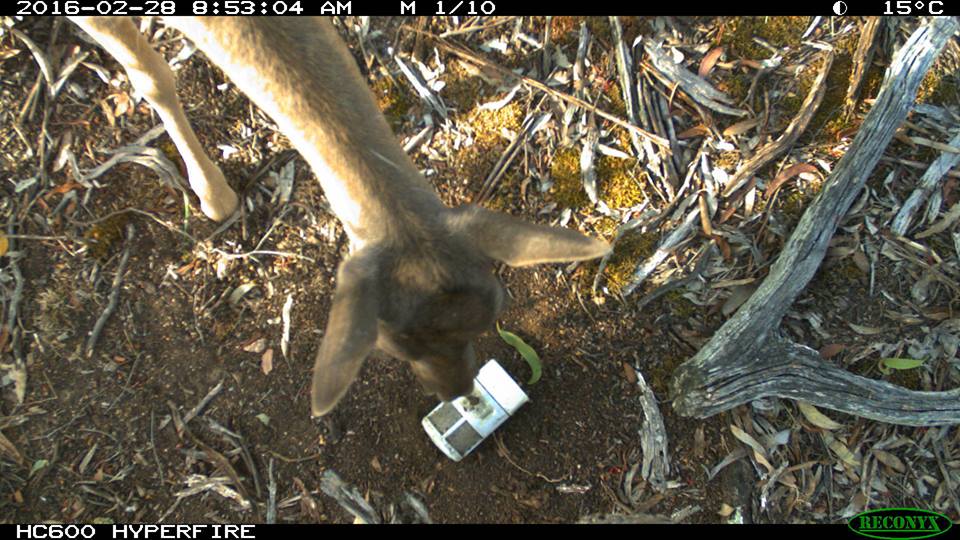
Goat
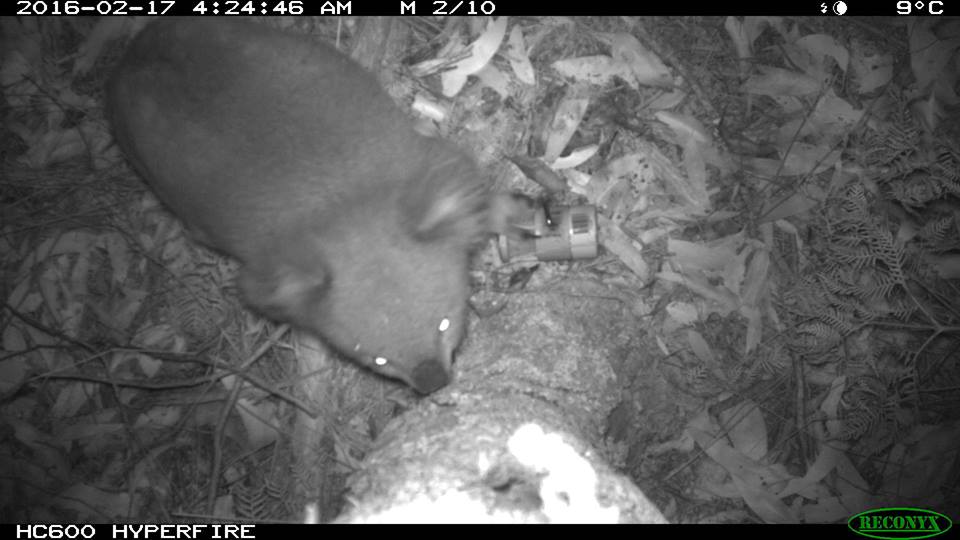
Koala

Tree Goanna

Wedge-tailed Eagle
Phascogale Facts!
I am a small nocturnal marsupial.
I am threatened species.
My range in Victoria has contracted.
My home range area is 40-100 hectares (40-50 hectares for females and 100 hectares for males).
I rely on large tree hollows with small entrances for nesting and breeding, and will use several hollows within my range.
Females of my species give birth to eight young each year. Once weaned, the litter will weigh three times the weight of the mother.
I belong to the Dasyurid family and feed mainly on invertebrates, such as insects, spiders and centipedes.
10 Nov 2017 – The Americans are coming! A talk on invasive grasses from the USA
Posted on 6 November, 2017 by Tanya Loos
Ian Higgins is the guest speaker for the November Castlemaine Field Naturalists Club meeting. Ian is a renowned local botanist, and was recently recognised as the 2017 Victorian Landcarer of the Year for his work with the Friends of Campbells Creek Landcare group.
Ian’s talk, titled ‘The Americans are coming’, is an overview of the invasive stipoid needle grasses that are spreading across many parts of Australia, including the local area. His talk will cover:

What are they? The seven species currently known (or prohibited in the case of Mexican Feather-grass) from Victoria
Where are they? Where they are known to exist in Victoria and in our district
Why are they a problem? Behaviour and the threat posed to natural values
How can I identify them? Identification characteristics, especially how to distinguish them from native grasses
How are they spreading? Dispersion strategies and human involvement.
How to manage them? Duration of seed viability in soil, herbicides, etc.
Ian has also offered to help members and visitors to identify different grass species on the night. If you have a specimen that you suspect is a weed, bring it along (preferably in a sealed plastic bag to prevent the spread of seeds).
When: 7.30pm on the second Friday in November (10th Nov). Members and visitors all welcome.
Where: Uniting Church on Lyttleton St, Castlemaine – next door to the Art Gallery. Due to exams being held in hall, this talk will be held in the chapel at the rear of the main church building.
There will be an excursion on the following day (Sat 11th Nov) to view some stipoid grasses in the field with a specialist.
If you have questions, please contact the Castlemaine Field Naturalists Club.
Tuan Talk by Jess Lawton – Newstead Landcare AGM
Posted on 17 October, 2017 by Asha
This Thursday evening, 19th October 2017, Newstead Landcare Group is hosting a presentation by PhD candidate Jess Lawton. Jess is studying the Tuan or Brush-tailed Phascogale, a threatened and declining species of the Box-Ironbark country. The presentation will start at 8pm at Newstead Community Centre and all are welcome. A gold coin donation would be appreciated. Afterwards there will be supper and a brief AGM.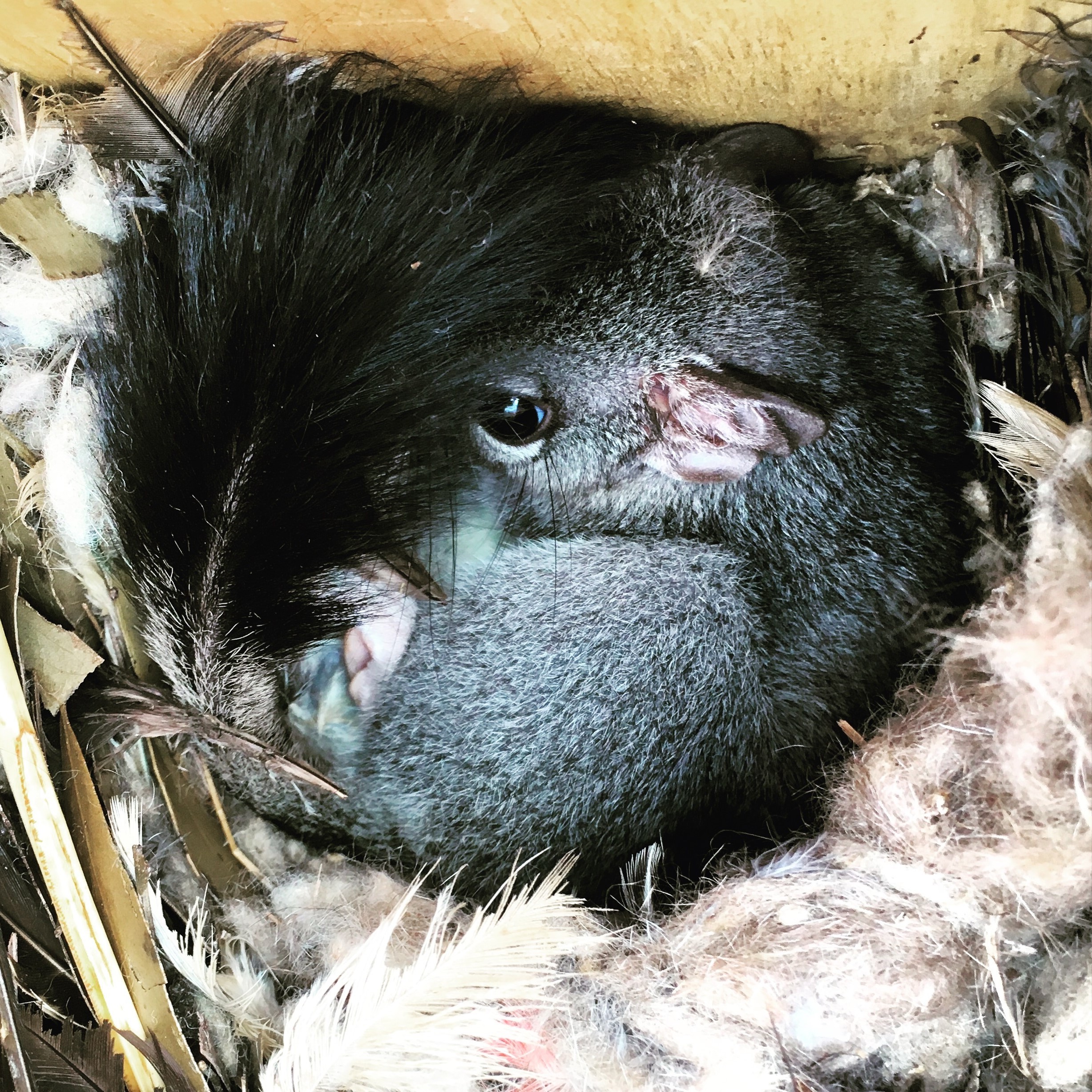
Jess says,
“The Brush-tailed Phascogale is a rare, threatened species, and is declining in Victoria. Our understanding of its conservation biology is limited because it is sparsely distributed, ‘trap-shy’, and has been difficult to survey using traditional techniques. We know that this species has a rapid reproductive cycle, whereby all males die of stress and exhaustion after their first breeding season. We also know that this species often has a large home range of up to 100 ha. Therefore, the current thinking is that it requires large areas of intact forest for a population to persist. However, this species still occurs in modified habitats, such as paddock trees, roadsides, and isolated remnant patches. The aim of my study is to see if the occurrence of the Brush-tailed Phascogale in a modified landscape relates to patch size and patch connectedness.
Connecting Country set 150 nest box sites in 2010 to provide habitat for this species through the Mount Alexander Shire. They have since monitored many of these nest box sites every two years, and now have a number of years of data on this species occurrence in the region. I selected 50 of these 150 sites, stratified according to landscape context (ie. the amount of tree cover surrounding each nest box site). Between April and June 2016, while Connecting Country conducted their nest-box checks, I set two cameras at each of these 50 sites.
In this study, I model the occurrence of Brush-tailed Phascogales in the Mount Alexander Shire with landscape attributes, such as the size of a forest patch, and a number of habitat attributes collected in the field, including forest productivity, forest structure, logs and leaf litter, and tree size and species.
One property near Axe Creek was home to a particularly active population of Brush-tailed Phascogales, and you can watch a video of the sort of footage we detected” https://www.youtube.com/watch?v=VTklMGskLyYc
Getting to know plants of Maldon and surrounds
Posted on 12 October, 2017 by Asha
Intern Sarah Edwards has recently commenced her placement with Connecting Country and attended the ‘Get to know your local plants’ workshop in Maldon on Saturday the 7th of October 2017. This is her account of the afternoon:
Out of the 1100 plant species found in beautiful central Victoria, 60% of these are native species. These native plants are separated by their characteristics (flowers, fruit, seeds, leaves, bark) and are crucial for the survival of the birds, bugs, marsupials and other native animals that are found here.
This was an invaluable workshop. When attempting to correctly identify plants using reference books, there is often a limited amount of information and pictures able to be displayed, making detailed identification a challenge. The last thing I would want to do is accidentally pull out a native plant that I thought was a weed. One of the values of this workshop was being able to use live plant samples to practise on and have experts (Bonnie Humphreys and Frances Cincotta) on hand to help.
We all undertook a series of activities, the aim of which was to use the brief descriptions and other clues provided to identify what a given plant specimen was called. Each table had different types of plants (eucalypts, wattles, pea flowers, prickly shrubs etc.) that share similar characteristics.
Working in small groups, we touched, inspected, smelt and viewed juveniles and adult plant samples and worked as a team to correctly name them. It was like trying to work out a puzzle. Some species were more difficult to identify than others and at times it was quite tricky (and prickly!) but collaborating with others made this activity very enjoyable.
There are two more plant identification workshops coming up that are focusing on local weeds in Newstead and Chewton. See https://connectingcountry.org.au/get-to-know-your-local-plants-weed-and-native-plant-workshops/ for the details.

Sarah working with her team to identify native plants and weeds

The Eucalypt table

Participants hard at work

Groups rotated to try out activities at each table
Barkers Creek bush delights in Nature News – October 3rd 2017
Posted on 4 October, 2017 by Tanya Loos
For this month’s Nature News, local landholder and member of Barkers Creek Wildlife Landcare and Wildlife Group, Lois Denham writes about the joys of getting to know the bushland on her block, and how to care for it. This article was featured on page 38 of the Midland Express, October 3rd 2017.
One of the many joys of living in the bush is observing the wildlife. Today we enjoyed watching the male blue wrens chasing females in and out of the golden wattles. Last week we saw scarlet robins, and we have been amused by the querulous, chattering choughs drinking from our bird bath.
Our soundscape includes the faint soprano sounds of the bats at night and the continuous croaking of the many frogs in our dam. We have learnt to identify some birds by their calls, but not many of the frogs! We are delighted by the kangaroos and the resident wallaby hopping through the bush; the lizard scurrying around or sunbaking on the rocks and then there is the thrill of discovering an echidna or two. No need for pets here!
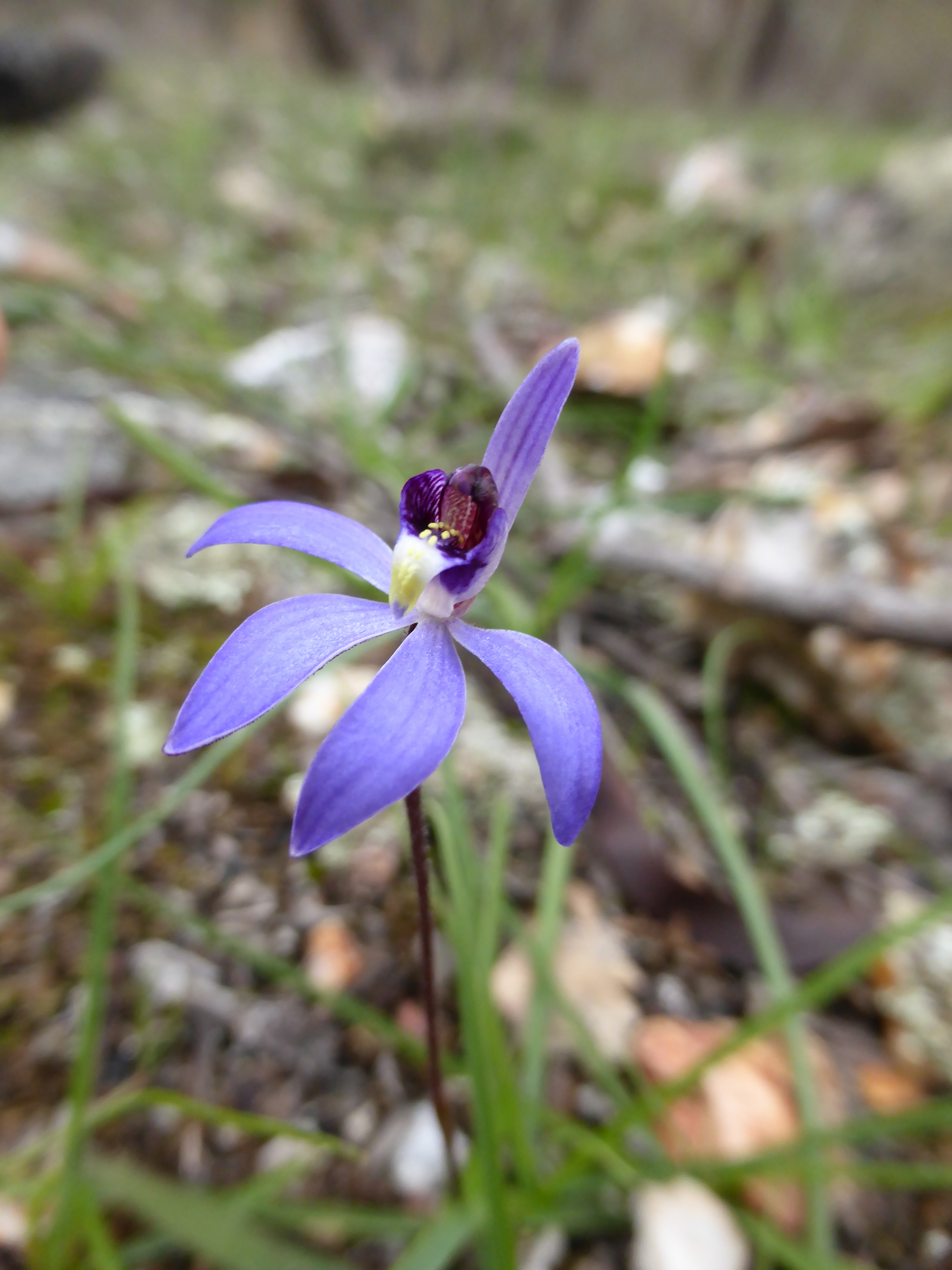
A tiny Caledenia sp, by Bonnie Humphreys
My husband and I retired to live on eight acres of Box Ironbark bushland block 19 months ago. We had no desire to own much land but this block and its lovely mudbrick house and studio ‘found’ us. A friend, who is a local and an active Landcare member, informed us it was a good bush block even though it had been turned upside down by miners in the gold rush days. He also noticed that there weren’t too many weeds we would have to control. With our friend’s encouragement, we bought the property and joined Landcare with the knowledge that there would be help available to manage and continue the rehabilitation of the land.
We knew we would be on a steep but enjoyable learning curve. With the help of Landcare members, Connecting Country’s Bonnie Humphreys, and some professional assistance we learnt to identify the native plants and weeds. Our newly acquired weed management skills haver resulted in fewer invasive species and more natives on the property than were here when we moved in.
We were fortunate that there was good rain and a bumper wildflower season last spring. This year the wattles have put on a magnificent show, and I am enjoying watching many other wildflowers come into bloom. I will always remember the joy of discovering the tiny ground orchids as they emerged and I thought I had struck gold when I found our first spider orchid. I wonder how many orchids I will find this spring?
22 October 2017 – Little Habitat Heroes “Tree Caring Day”
Posted on 28 September, 2017 by Tanya Loos
The trees and shrubs planted by an enthusiastic crowd of young and old Habitat Heroes are thriving – with a 98% survival rate! The Little Habitat Heroes team invite you to come along to their first ‘Tree Caring Day’ on: Sunday 22nd October 2017, 9:30am – 12noon at Mount Alexander Regional Park.
The Tree Caring day will involve follow-up maintenance including replacing any missing guards and light weeding around the plants. Morning tea is provided – but please do BYO lunch.
The day will also include a half hour information session from Brendan Barbetti, a local environmental contractor and Little Habitat Heroes dad, about the species planted, the importance of ongoing maintenance, and the significance of biodiversity in your own garden and land.

The planting site in June – it will be great to see the site now!
A few things to note:
- No toilet on site. The closest is at the Leanganook Campground (aprrox 1km away).
- Parking: at Leanganook Campground or the Koala Park parking area (a few hundred metres away) and walk down the hill. Please take lots of care when walking on the road.
- BYO: gloves, sturdy shoes, wet weather gear, warm weather gear, sunhat, sunscreen, pen and paper (if staying for the talk), picnic lunch.
- Provided: tea, coffee and morning tea snacks.
Donations – If you’d like to donate to our Little Habitat Heroes campaign, please go to https://www.givenow.com.au/littlehabitatheroes. Funds will be used for ongoing maintenance of the already planted trees and future plantings to further enhance the site.
Feel free to pass on this invitation to others that might be interested. The more the merrier! So that the team can cater adequately, please RSVP through Eventbrite by 14 October. You can also RSVP and share the invitation at the Facebook event site.
For further information, contact the Little Habitat Heroes team:
Meg: 0466 333 419
Jodi: 0410 838 083
Get to know your local plants: weed and native plant workshops
Posted on 15 September, 2017 by Asha

Learn how to identify plants such as Bridal Creeper at Connecting Country’s “Get to know your local plants” workshop series (photo by Bonnie Humphreys).
Connecting Country and local Landcare groups will be running four plant identification workshops over the next couple of months for community members. These free workshops will include the chance to chat with a botanist, meet members of Landcare groups over a cuppa, and learn identification tips through fun games.
Three of the workshops will be focused on how to identify and manage noxious weeds; the fourth will be focused on both native and invasive plant species. With workshops in Sutton Grange, Maldon, Newstead, and Chewton, there will be a workshop nearby for everyone to learn about the plants and weeds most relevant to their local area. You can also bring along photos or samples of plants (in a ziplock bag) if you’d like help from a botanist to identify them.
Details of the workshops are below, or you can contact Asha Bannon for more information at asha@connectingcountry.org.au or 5472 1594.
Get to know your local weeds – Sutton Grange & surrounds
When: Saturday 23rd September 2017, 10am-12:30pm
Where: Sutton Grange Hall, 921 Faraday-Sutton Grange Rd
RSVP: by Wednesday 20th September for catering purposes
Get to know your local plants – Maldon & surrounds
When: Saturday 7th October 2017, 1pm-3:30pm
Where: Maldon Community Centre, 6 Francis St, Maldon
RSVP: by Wednesday 4th October for catering purposes
Get to know your local weeds – Newstead & surrounds
When: Tuesday 24th October 2017, 6pm-8:30pm
Where: Newstead Community Centre, 9 Lyons St, Newstead
RSVP: by Thursday 19th October for catering purposes
Get to know your local weeds – Chewton & surrounds
When: Wednesday 15th November 2017, 6pm-8:30pm
Where: Chewton Community Centre, Pyrnees Hwy, Chewton
RSVP: by Friday 10th November for catering purposes
North Central Chat – September edition
Posted on 13 September, 2017 by Tanya Loos
This month’s North Central Chat is a nice companion to Try Out Landcare month, and features an article by Tess grieves answering the oft-asked question “How can Landcare attract new people, and free up more time for our current, overworked members”?
You can download the September North Central Chat by clicking the following link : North-Central-chat-September-2017.
Local groups and volunteers honoured at the Victorian Landcare Awards 2017
Posted on 4 September, 2017 by Connecting Country
 Environmental groups from the Mount Alexander Shire dominated the 2017 Victorian Landcare Awards ceremony at Government House last Friday, the 1st September 2017. Connecting Country was awarded the Landcare Network Award, and the Tarrangower Cactus Control Group was awarded the Fairfax Media Landcare Community Groups Award.
Individuals were also recognised for their voluntary work; Ian Higgins, from Friends of Campbells Creek won the Australian Government Individual Landcarer award, and Ian Grenda was Highly Commended in this category.
Around 350 Landcarers from around the state gathered at Government House, with a jubilant group of 16 from the Mount Alexander region. The Landcare Awards are an opportunity to showcase people and projects that are contributing to sustainable agriculture and the protection of Victoria’s environment.
This year’s awards received significant interest from right across the state, with 85 nominations submitted across the 14 categories. Also nominated from this region were Asha Bannon for the Young Landcarer Award; and Chewton Primary and Winters Flat Primary for the Junior Landcare Team Award.
These awards are a strong testament to the energy and enthusiasm of the Mount Alexander Shire community for our natural environment. Mount Alexander Shire is incredibly fortunate to have such an active network of Landcare groups, schools and individuals working together with passion and a focus on landscape scale restoration. Congratulations to all the nominees and winners at the Landcare Awards this year.
CLICK HERE to read all of the winners’ stories from across the state.
Here are a few shots from the exciting day:


Now is the best time to try out Landcare!
Posted on 31 August, 2017 by Asha

Tanya on a walk with some excited ‘nature detectives’ at the 2017 Camp Out on the Mount
Landcare Week is coming up next week: September 4th – 10th 2017. It’s the perfect time to get outside, get your hands dirty, and connect with other community members. We have over 30 groups in the Mount Alexander region alone, so it’s easy to find an event or working bee that’s near you and suits your interests.
Landcare and Friends groups are always looking for extra hands to help and are keen to share their knowledge of our beautiful local plants and animals. During September, there are more than eleven events being run by Landcare groups, including nature walks to learn from experts and soak up the bush, and working bees to develop some hands-on skills and help improve habitat for native species.
CLICK HERE to visit our page with information about all of the Landcare events happening in the Mount Alexander region in September 2017.
20 Million Trees Connects Woodland Bird Habitat
Posted on 30 August, 2017 by Asha

The Green Army helped with planting at Baringhup Landcare’s Loddon River site
Four Landcare groups, six sites, and over 6300 plants! Over the past 18 months Baringhup, Harcourt Valley, Sutton Grange, and McKenzie’s Hill Landcare groups have been working hard on a landscape-scale revegetation project funded through the Federal Government’s 20 Million Trees Programme. With the help of community volunteers, the Green Army team, and local contractors, the Landcare groups have revegetated private and public land across the region creating and connecting important habitat for our threatened woodland birds.
The photopoints below are taken from the same location at one of Baringhup Landcare’s 20 Million Trees sites along the Loddon River. The first was taken before planting in 2016, the second after planting in 2017. As you can see in the second photo, the revegetated plants are thriving at this site! Birds in abundance were already enjoying the new habitat on the sunny day it was taken.

JUNE 2016 – Baringhup Landcare’s Loddon River site

Planting along Baringhup Landcare’s Loddon River site (photo by Asha Bannon)
Well done to all the Landcare groups involved in this project and this amazing achievement.
This project was supported by the 20 Million Trees Programme, through funding from the Australian Government’s National Landcare Programme.
New Map of Wheel Cactus in Victoria
Posted on 22 August, 2017 by Asha
The Tarrangower Cactus Control Group (TCCG) has recently completed a project aimed at increasing awareness and knowledge about the noxious weed Wheel Cactus (Opuntia robusta), funded by Wettenhall Environment Trust. One of the valuable outcomes from this project is the construction a new map showing the distribution of Wheel Cactus infestations in Victoria. 
Our well-known former Landcare Facilitator, Max Schlachter, was employed as project officer by TCCG and has collated 345 recorded sites of Wheel Cactus within our state. These sites covered 105 different localities around Victoria, mostly in a band from the northwest to Melbourne, but including some surprising outliers elsewhere. The majority of the sites (69%) were new records, and the rest were existing records taken from current government maps, such as the Victorian Biodiversity Atlas.
Some alarming conclusions from this mapping exercise were that within some of these localities, for example ‘Maldon’, there are too many infestations to record, plus there are very likely many infestations that were not able to be captured. The information gathered through this project will help communities and land managers better understand how Wheel Cactus spreads and how best to manage it.
If you want to know more about Wheel Cactus and how to control it, you can go along to TCCG’s next Community Field Day on Sunday 27th August, CLICK HERE for more details.
Tarrangower Cactus Warriors August 2017 Field Day
Posted on 22 August, 2017 by Connecting Country
Tony Kane from the Tarrengower Cactus Control Group has let us know that their next Community Field Day will be held on Sunday 27th August, starting at 10:30am. They’ll be meeting at a property on Tarrengower School Road, south of South Parkins Reef Road to inject an infestation of Wheel Cactus. From Maldon the way will be signposted from Parkins Reef Road. Tony notes that ‘our events are family friendly, but we ask that all children be accompanied by a parent or guardian at all times.’
Further information is provided in the attached flyer (click here).
Flora of Castlemaine and surrounds – the online guide is launched!
Posted on 9 August, 2017 by Connecting Country
On 1st August 2017, the online edition of the Wild Plants of the Castlemaine District was formally launched. This comprehensive guide contains details on the identification, locations, preferred habitats and history of hundreds of native and introduced plant species found in Castlemaine and surrounding areas. It can be viewed at the following stand-alone website location – https://www.castlemaineflora.org.au.

In November 2016, local natural historian – Ern Perkins – sadly passed away. Ern’s passion for the understanding the intricacies of natural environment was matched by his passion for sharing his knowledge with others. A few months before his passing, he first launched this compendium of local plant species as a freely available resource via USB memory sticks. Ern had developed this guide based on information that he and others had collected and compiled over more than 40 years. With the support of Ern’s family since his passing, the Castlemaine Field Naturalists Club has worked with a local IT graphics firm to make this guide available as an online resource, allowing it to reach a much wider audience. Financial contributions and other support towards this important project has also been provided by the Friends of the Box Ironbark Forests (FOBIF) and Connecting Country. Each of these organisations will have a link to this flora guide from their websites. A permanent link to it has been established from the Connecting Country website here.
It is intended to be a dynamic website, with updates made over time in response to taxonomic changes, new photographs and new findings. Landholders, Landcarers, students and many other people from the Mount Alexander Shire and beyond will appreciate this valuable and easy-to-use resource.