

Bird of the month: Swallows and Martins
Posted on 19 February, 2026 by Hadley Cole
Bird of the Month is a partnership between Connecting Country and BirdLife Castlemaine District. Each month we take a closer look at a special local bird species . Thanks always to the brilliant Jane Rusden and Damian Kelly for these wonderful articles and fabulous photos. 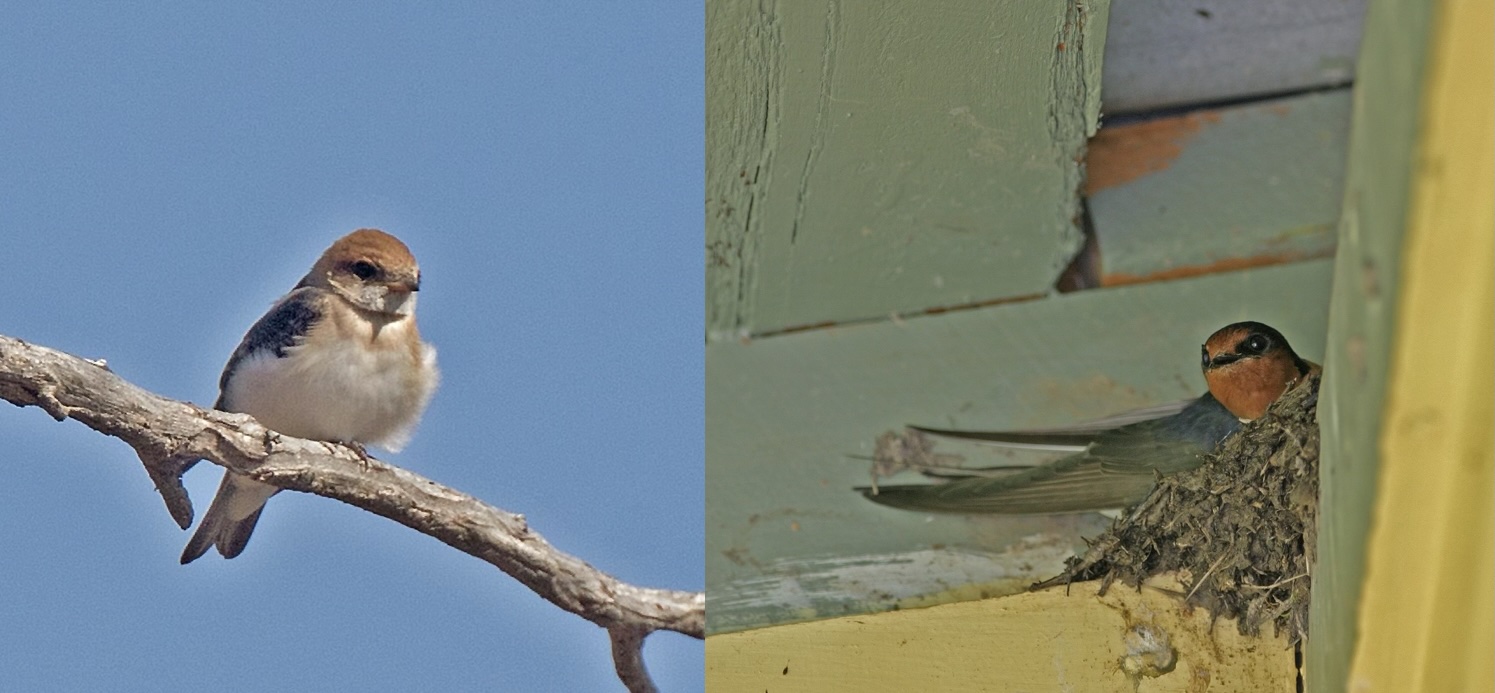 Photos above (left to right): Fairy Martin and Welcome Swallow. By Damian Kelly.
Swallows and Martins are often observed at high speed, zipping around in summer skies, as they twist and turn in pursuit of flying insects. A delight to watch, but from a distance they are often tricky to differentiate as often more than one species can be seen together. In fact, there are four species in this region:
All are members of the Hirundinidae family and they exclusively feed on the wing, catching a variety of flying insects. In flight they can be distinguished by their long pointed wings and small bills with wide gapes, to easily catch airborne insects. As aerial specialists they have quite weak feet adapted to perching rather than walking. They tend to be gregarious (hanging out in flocks) and often associate in multi-species groups when prey is abundant, as well as forming breeding colonies in season. Which can add to the complexity of identifying which species are present in a flock. Calls of all species are soft and not distinctive from a distance.
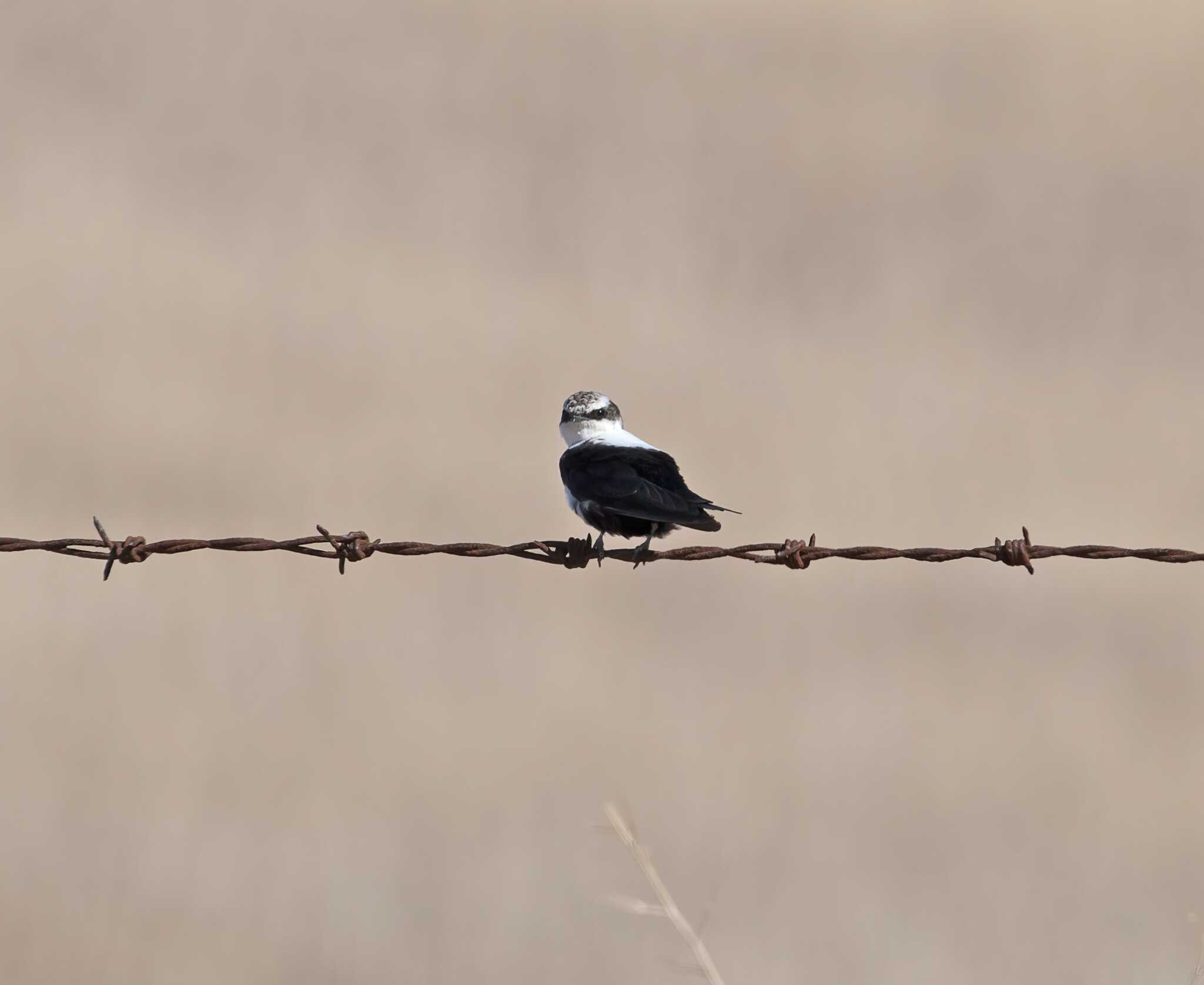
White-backed Swallow. Photo by Damian Kelly.
Identifying the individual species at a distance relies on colour and feathers, particularly the tail. The White-backed is the easiest as it is the only one with a distinctive white and black pattern. But it is the least common in this region, preferring northern areas.
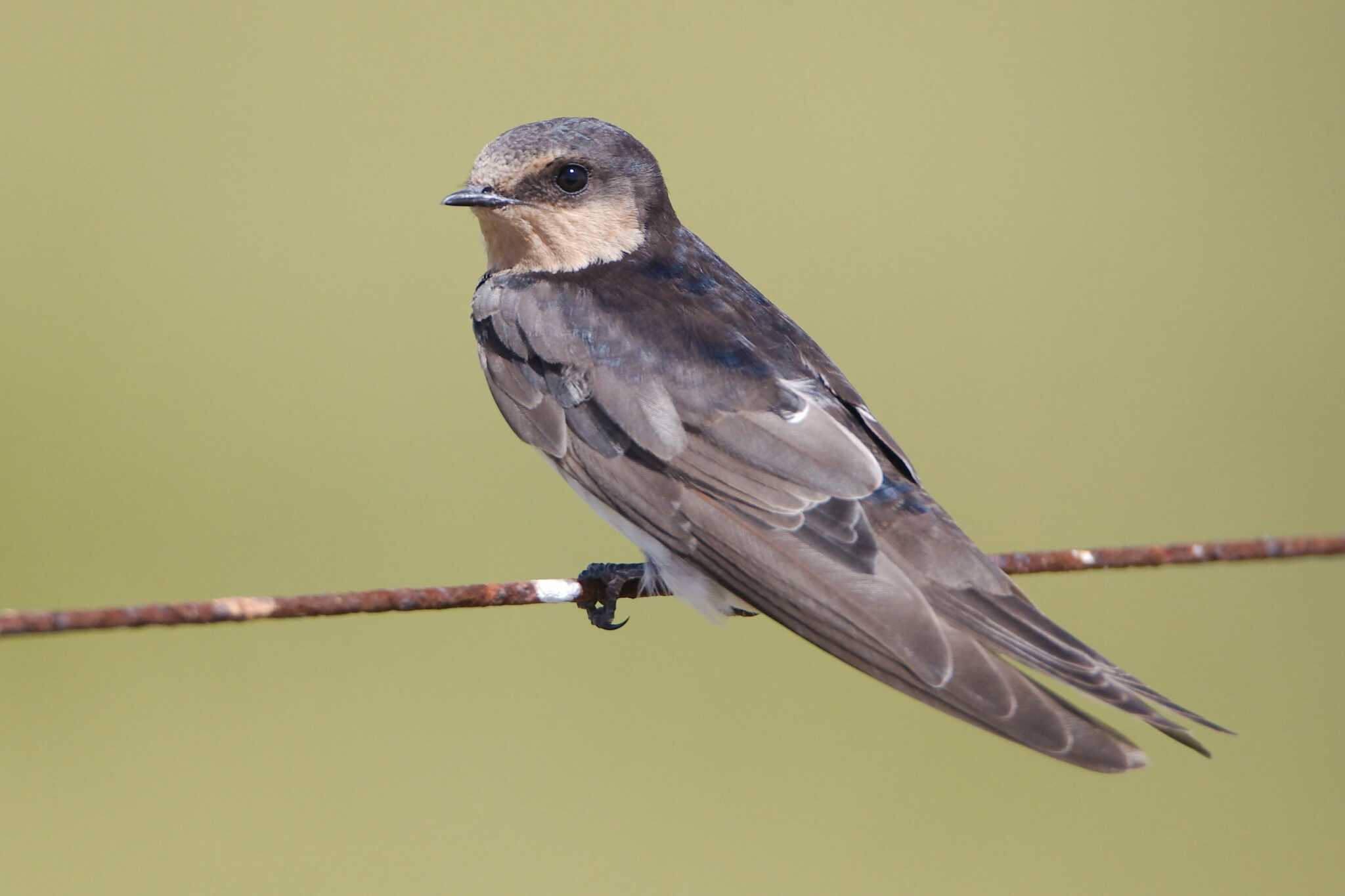
Juvenile Welcome Swallow. Photo by Damian Kelly.
The Welcome Swallow is the most common and has a deeply forked tail with a very dark back and is rufous-brown around the throat and face. It is often seen in conjunction with the Fairy Martin. The Fairy Martin can be distinguished from the Welcome Swallow by its white rump and rufous-brown over the head but not the throat.
The two swallow species have deeply forked tails, where as the two Martin species have a shallow fork in their tails, which can be hard to see at times.
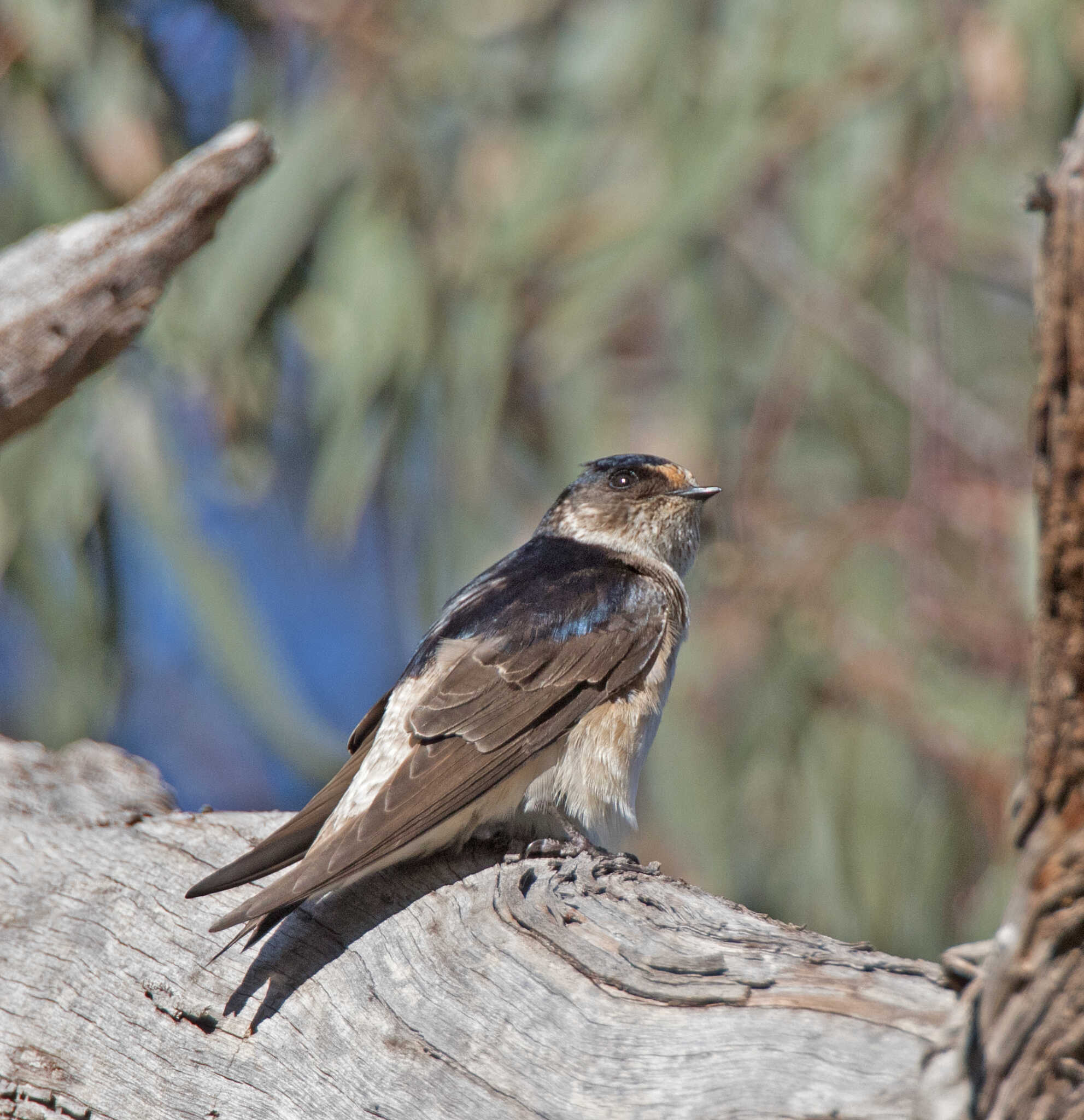
Tree Martin. Photo by Damian Kelly.
Unlike the others, the Tree Martin is more often found in more timbered habitats. It lacks the rufous patterning and is pale beneath. As the name implies, it needs trees and other hollows for breeding. Also they mostly migrate north in the cooler months, where as with both Swallow species, some migrate north and some don’t which makes them partial migrants.
Welcome Swallows and Fairy Martins build mud nests (see photos), often located around bridges and buildings, unlike Tree Martins which generally nest in tree hollows. White-backed Swallows excavate horizontal tunnels in stream banks and mounds of earth. Needless to say, the species that build mud nests are often to be seen near water, although I have frequently seen them raiding puddles for just the right consistency of mud for their nests.
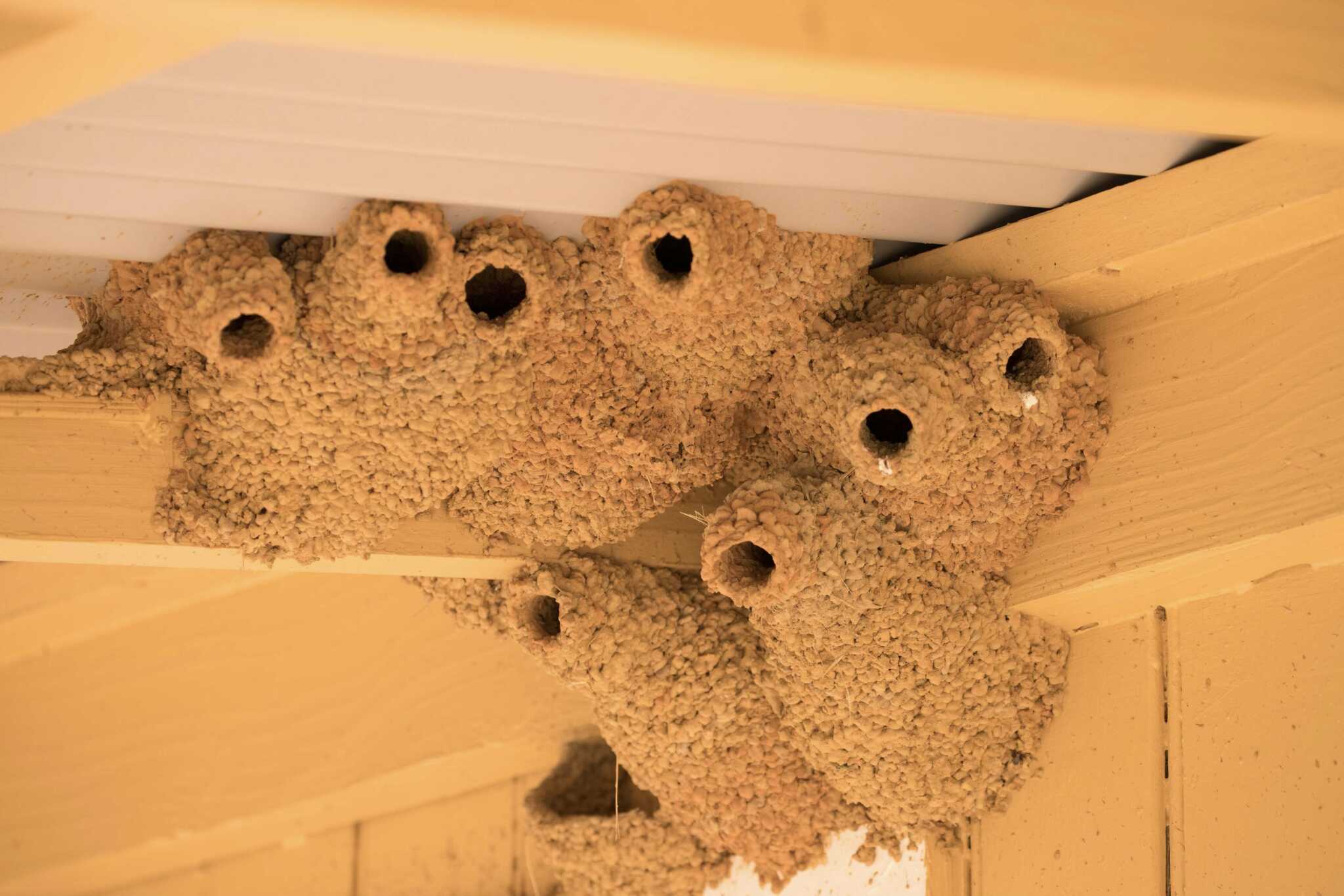
Fairy Martin nests made of mud. They have the distinctive slightly drooping tunnel that leads into the nest chamber. Photo by Damian Kelly


Leave a Reply