

Bird of the Month: Supporting birdlife through extreme weather
Posted on 16 January, 2026 by Lori
Bird of the Month is a partnership between Connecting Country and BirdLife Castlemaine District. Each month we usually take a close look at one special local bird species but this month is a special edition focusing on how to support birds through extreme weather events such as heat waves and after bushfires. Thanks always to the brilliant Jane Rusden and Damian Kelly from BirdLife Castlemaine District for this topical article.
The importance of birdbaths in hot weather.

White-eared Honeyeater enjoying a bath, a bold species that will dive in, regardless of what other small birds are trying to drink and bathe. Photo by Jane Rusden
In our hot climate the availability of shade and water is crucial for birds. The simple action of providing a reliable water supply will encourage birds to use your garden. As well as providing enjoyment and connection to nature, you will be aiding the survival of species. There is nothing quite like watching a group of birds drinking and splashing in a water bowl. And you might be surprised what species turn up, even in an urban garden. Not only that, you will learn a lot about bird behaviour.
Some species, for example White-browed Scrubwrens and Pardalotes, are very cautious and will lurk in foliage before alighting on the edge of the water. Others such as honeyeaters will just barge in and splash away. To attract the cautious ones you need foliage close by.
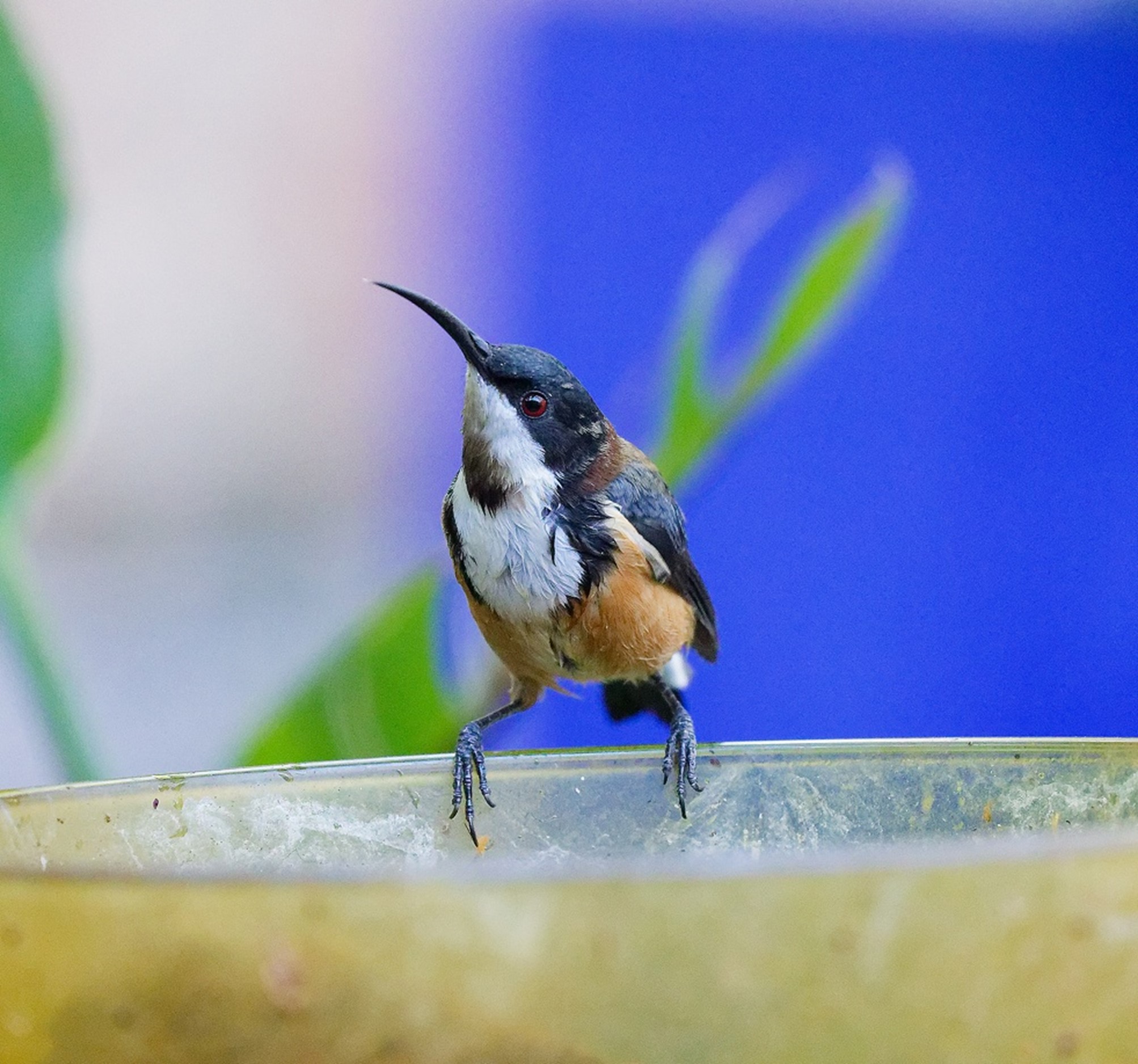
Eastern Spinebill likes deeper bowls – maybe something to do with length of bill? Photo by Damian Kelly
So, what do you need to do? Some simple ideas that I have found useful:
- Place water sources close to foliage and shade, not out in the open as some birds are very wary.
- Have it off the ground to limit cat and fox access.
- Provide a variety of different types of bowls – some birds like it shallow, others prefer deeper options.
- And of course keep them clean.
Just after I wrote the above, fires descended on the Mount Alexander Shire. Having lived through the 2009 fires near Kinglake, where our bush block survived untouched due to a wind change, I can say that water was critical for the birds in the aftermath of the fires. Our house and surrounds experienced a sharp increase in the range and numbers of bird species – all fire survivors who moved from the burnt zone to our block. We added more bird baths and experienced a remarkable range of birds, plus diverse species, in the water at the same time (see Rufous Whistler and White-naped Honeyeater image). Interestingly, some species – like the Grey Shrike-thrush and Eastern Spinebill – stayed on and nested successfully later in the year right next to house, where they had not before.
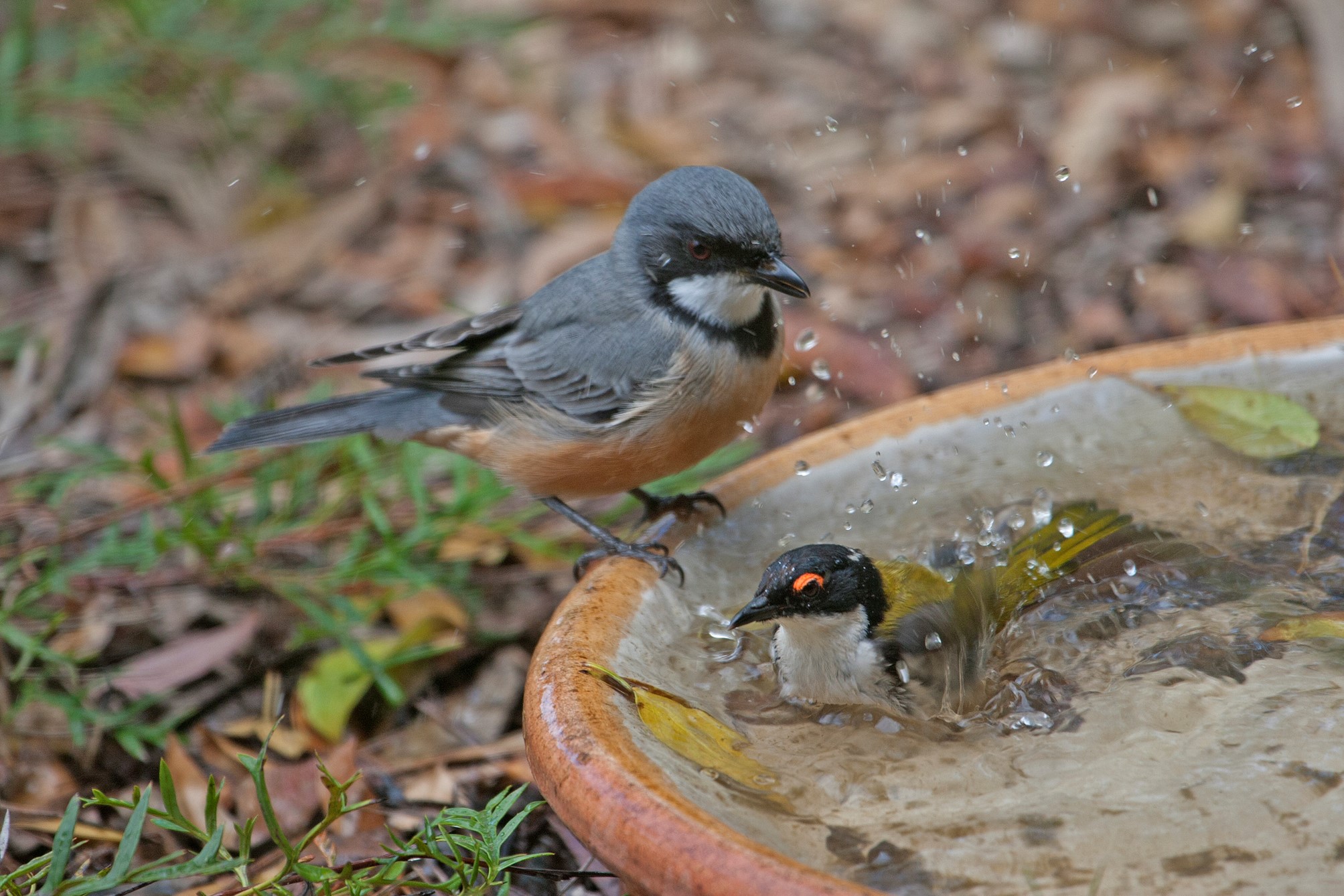
Rufous Whistler and White-naped Honeyeater will happily share the same bowl. Photo by Damian Kelly
Similar changes have been observed in the last few days at water bowls in and around Castlemaine. So make sure you always keep a good supply of fresh water available. It will always be utilised by the birds.
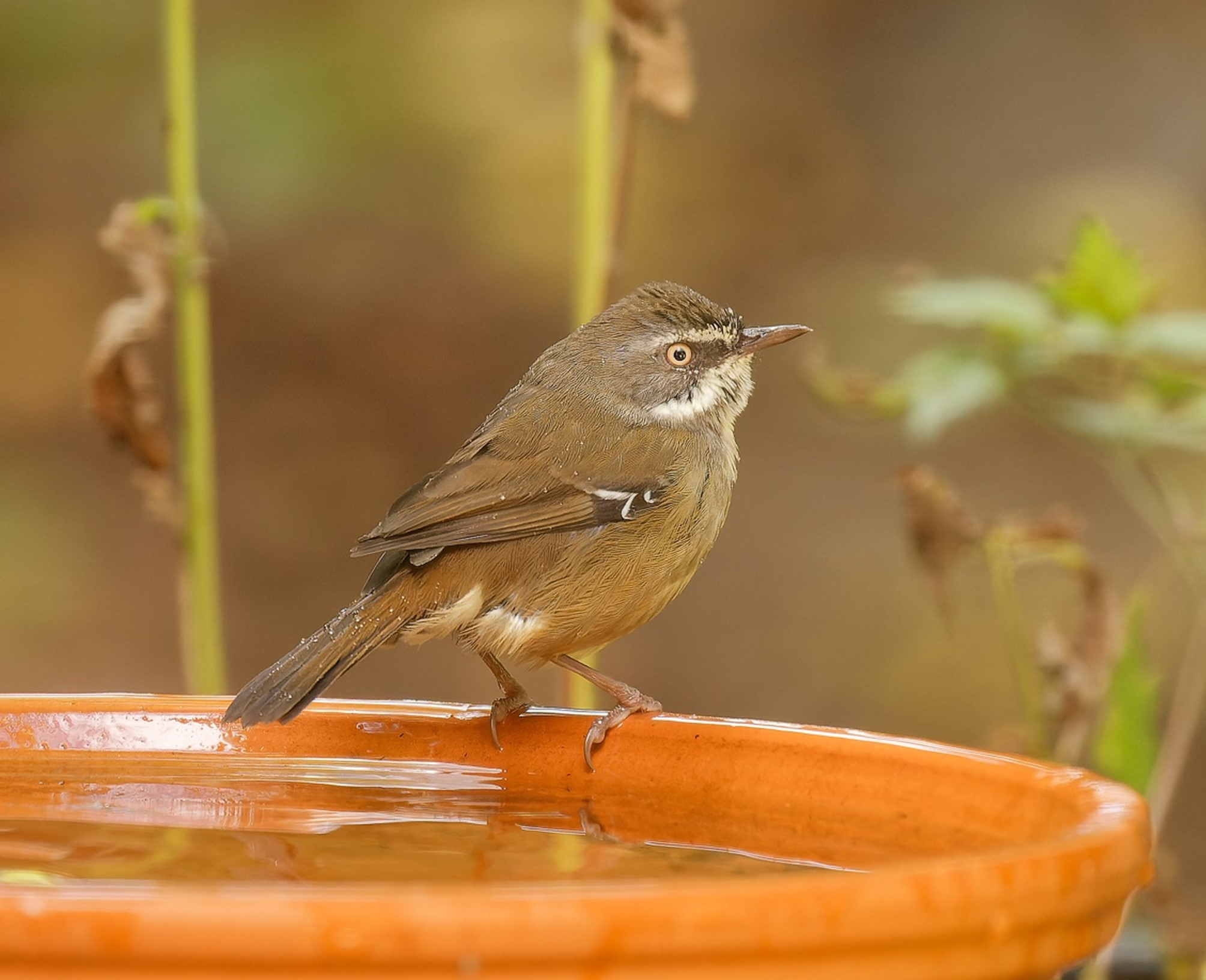
White-browed Scrubwrens are one of the lurkers and don’t hang around long. Photo by Damian Kelly.


Leave a Reply