

Bird of the Month: Australian Darter
Posted on 25 June, 2026 by Hadley Cole
Article by Damian Kelly and Jane Rusden
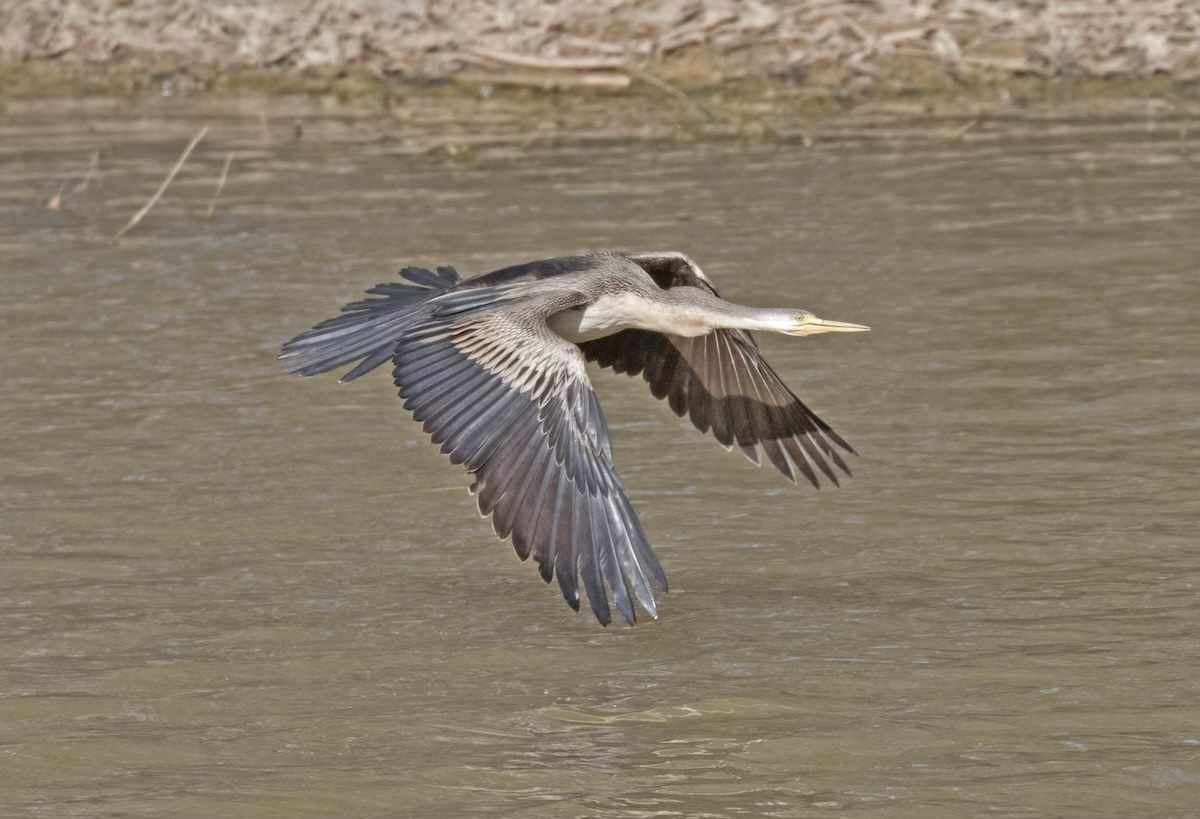
Australian Darter in flight. Photo by Damian Kelly.
The Australian Darter (Anhinga novaehollandiae) is a strange but elegant looking bird, with its highly mobile snake like neck and long sharp bill earning it the name snakebird. Adding to the snakebird illusion is it’s swimming behaviour, with it’s body fully submerged and only the snakey neck and bill visible above the water. However, snakes are not on the menu for the Darter.
Darters, or Anhingas as they are sometimes known, consist of three species which are spread across the world: one in Africa, one in Asia and the third in Australia and Papua New Guinea. They can be found everywhere except Europe and Antarctica.
The Darter can be seen around Mount Alexander shire on larger bodies of water such as reservoirs and bigger dams and sometimes rivers if deep enough. It’s a native species that has benefited from recent land management practices, in this case the enlargement and creation of larger scale water catchment areas.
So why does a Darter love a deep water body? Well it’s a large diving bird (75-80cm long) and catches fish underwater. It can easily stay submerged for a minute or more as it hunts, often spearing the fish with its long sharp bill. With good underwater vision it easily navigates the darker depths. Food includes a variety of fish, including the introduced carp which are considered a pest, as well as insects and tortoises collected on the water and on banks where they like to catch a bit of sun at times.
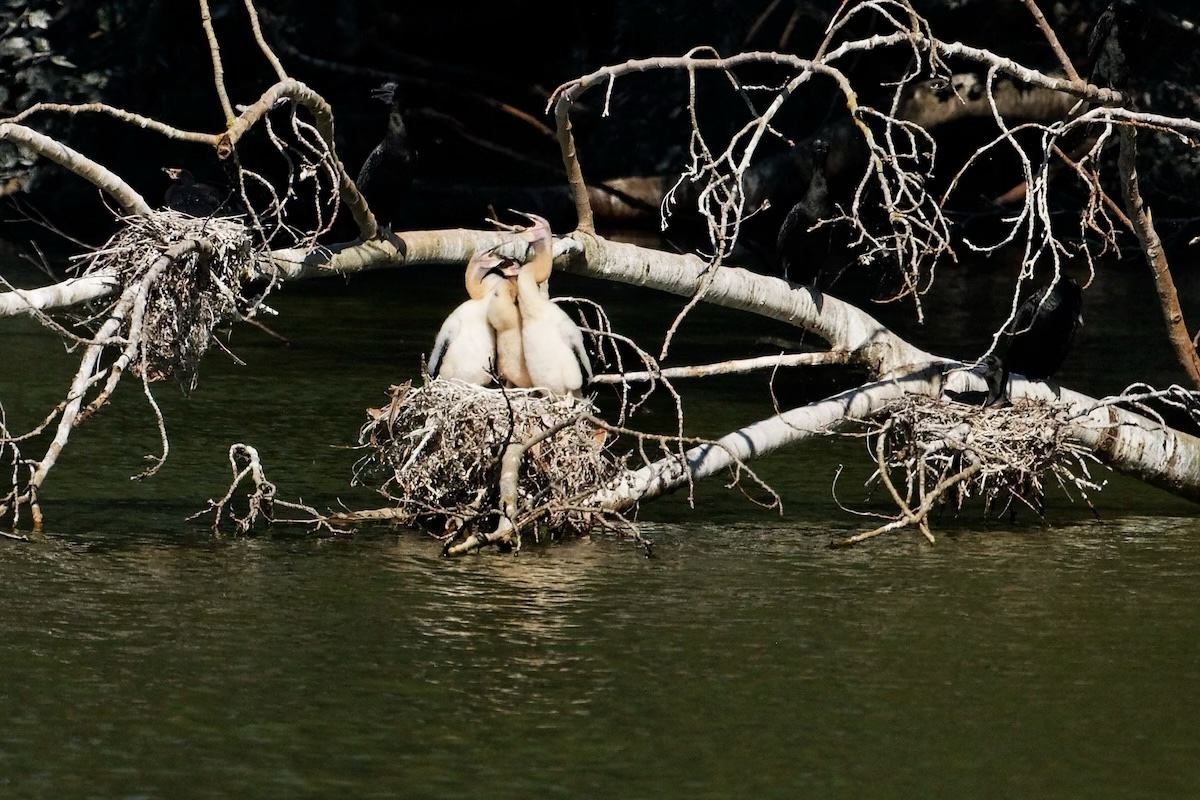
A family huddle of Darters. Photo by Damian Kelly.
The majority of birds have very waterproof feather structure that holds a lot of air, but similar to cormorants, the Darter has only partially waterproof feathers. This makes them expert divers, allowing them to easily slip under water without resistance or any buoyancy. It also means their wings get very wet, so you will often see Darters drying out on a perch near water with wings elegantly spread out after they have been in the water.
They are good flyers and will soar up high when conditions are favourable. They are known to travel long distances with movements of more than 2000 km recorded at times, depending on conditions.
Nesting occurs near rivers and lakes with a platform of twigs and sticks (see photo). It will breed at any time of the year, depending on conditions. Usually 2-4 eggs are laid and both parents feed the young. Darters tend to be solitary, although sometimes they congregate in small groups where there is an abundance of food and will sometimes nest associated with cormorants.
In the field at a distance Darters can sometimes be confused with cormorants but the long thin neck is the clear marker of this species. A stunning bird with glossy feathers and wings held out to dry, often with their reflection in the water below their perch.
Bird of the Month is a partnership between Connecting Country and BirdLife Castlemaine District. Each month we take a close look at one special local bird species. We are very grateful to have the brilliant Jane Rusden and Damian Kelly from BirdLife Castlemaine District writing these! We’re excited to join forces to deliver you a different bird each month, seasonally adjusted, and welcome suggestions from the community.


Leave a Reply