

Bird of the Month: Boobook Owl
Posted on 23 April, 2026 by Lori
Bird of the Month is a partnership between Connecting Country and BirdLife Castlemaine District. Each month we take a closer look at a special local bird species . Thanks always to the brilliant Jane Rusden and Damian Kelly for these wonderful articles and fabulous photos.
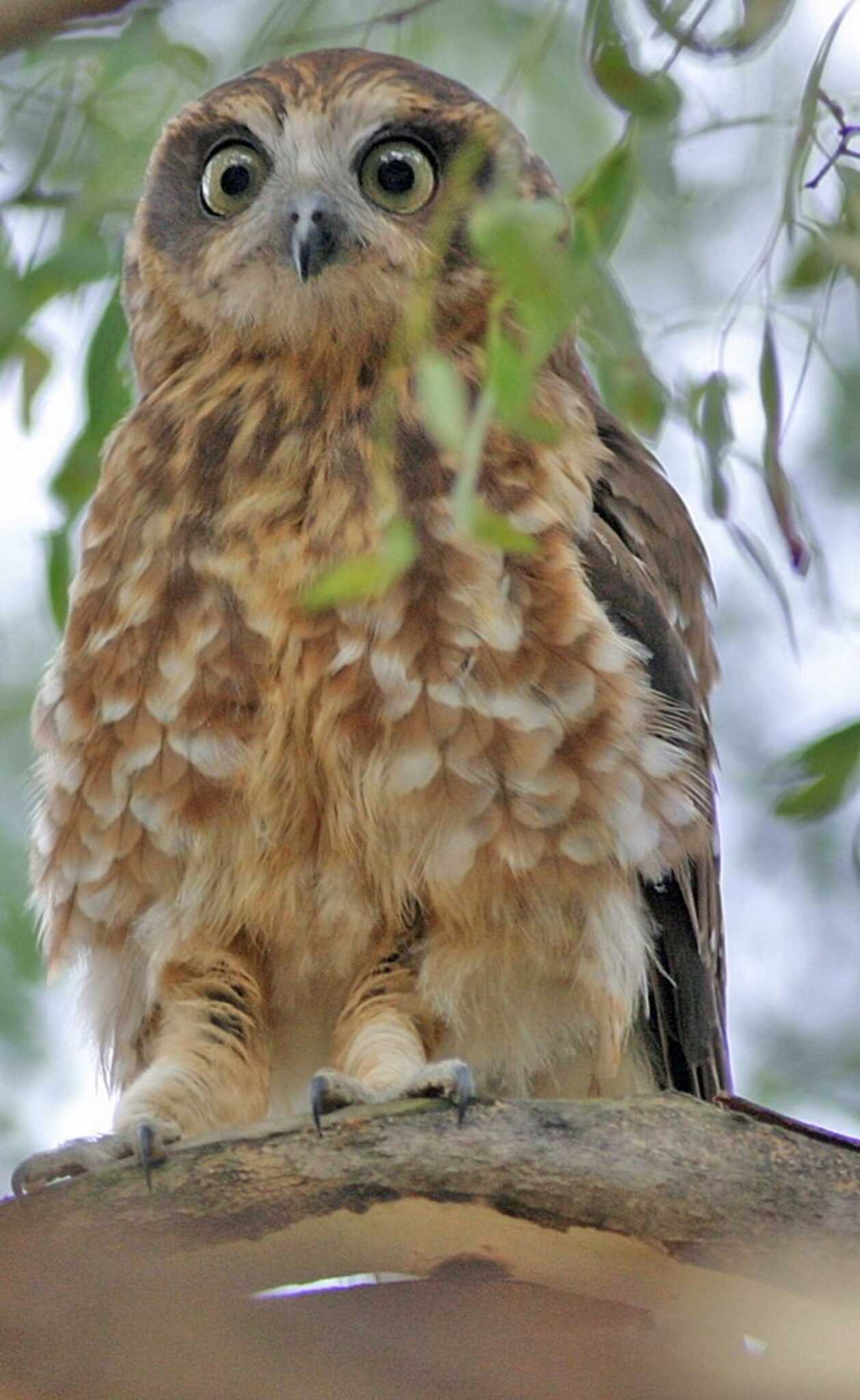
David Fleay, in his classic book ‘Nightwatchmen of Bush and Plain’ and the first comprehensive study of Australian Owls, Frogmouths and Owlet Nightjars, describes Boobook Owls as the most versatile of them all. A small pretty owl with grey green eyes surrounded by a dark facial disc, they can be found in a wide variety of habitats from dry inland areas to coastal areas and wet mountain forests. If you have camped out, you have probably heard the characteristic two-syllable call “boobook”. From time to time our authors have heard them calling in Castlemaine and the bush around Campbells Creek, as well as observing them in the Castlemaine Botanic Gardens and Kalimna area.
The habitat range of the Boobook Owl extends to Papua-New Guinea, Indonesia and adjacent islands. Related species can be found in New Zealand and Norfolk Island. There are various sub-species with varying plumage patterns. Like the Silvereyes we wrote about last month, the Tasmanian sub-species migrates each year, island hopping across Bass Strait to spend winter away from the colder Tasmanian conditions.
Breeding sites are generally in tree hollows and often occurs later than other owl species such as the Powerful Owl, typically August to December. One to four eggs are laid, usually in a deep hollow, but occasionally on a cliff or in a cave. The white eggs sit on wood debris, which can stain brown patterns on the eggs.
Food includes insects, especially nocturnal beetles and moths, along with small rodents (such as mice), small marsupials, bats, birds, frogs and lizards. This reflects their adaption to a wide range of ecological niches across all of Australia and beyond.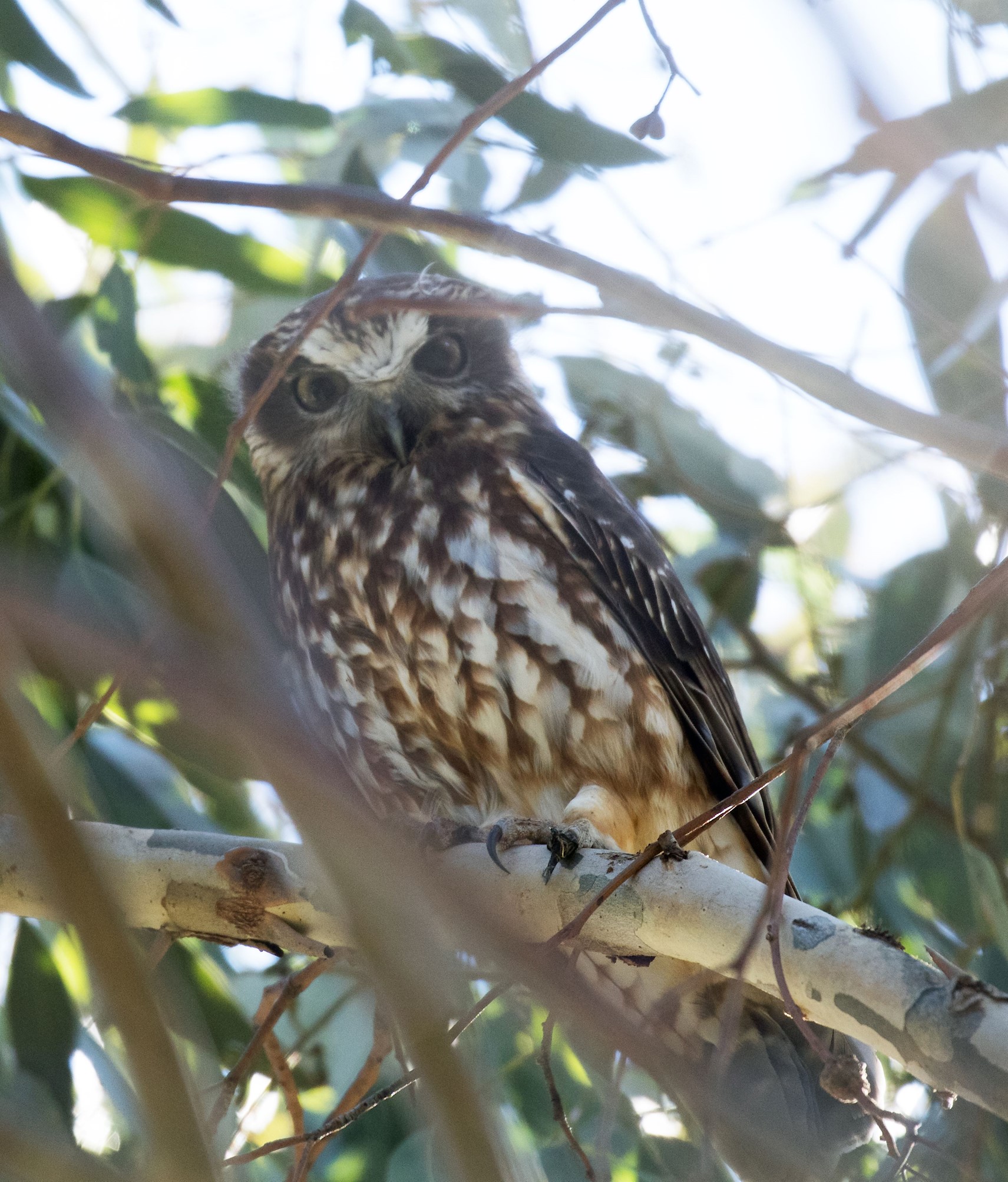
Alas, populations are in decline, brought on by habitat loss, particularly the destruction of large trees with hollows, and poisoning due to the use of second-generation anticoagulant rodenticides (SGARs). To help Boobook’s, protecting habitat, large old trees and younger trees that will become large old trees over time, is vital. Probably the simplest way to protect birds such as the Boobook, along with other owl species, eagles, magpies, as well as other wildlife and even our much loved family pets, is to use alternatives to SGARs to control rats and mice. There are many options including humane traps, natural deterrents, physically blocking up access holes and reducing food availability by keeping areas clean.
Words by Jane Rusden and Damian Kelly. Photos by Damian Kelly.


I love that photo at the top! He looks like he has very fashionable boots
What a great read
Thanks Jess, its great isn’t it! We are so lucky to have Jane and Damian within our realm.
Many thanks – our local boo book (we think) keeps the mice down around our place in Vaughan
Fantastic natural rodent control!