

Bird of the month: Mistletoe Bird
Posted on 28 November, 2025 by Lori
Written by Damian Kelly and Jane Rusden.
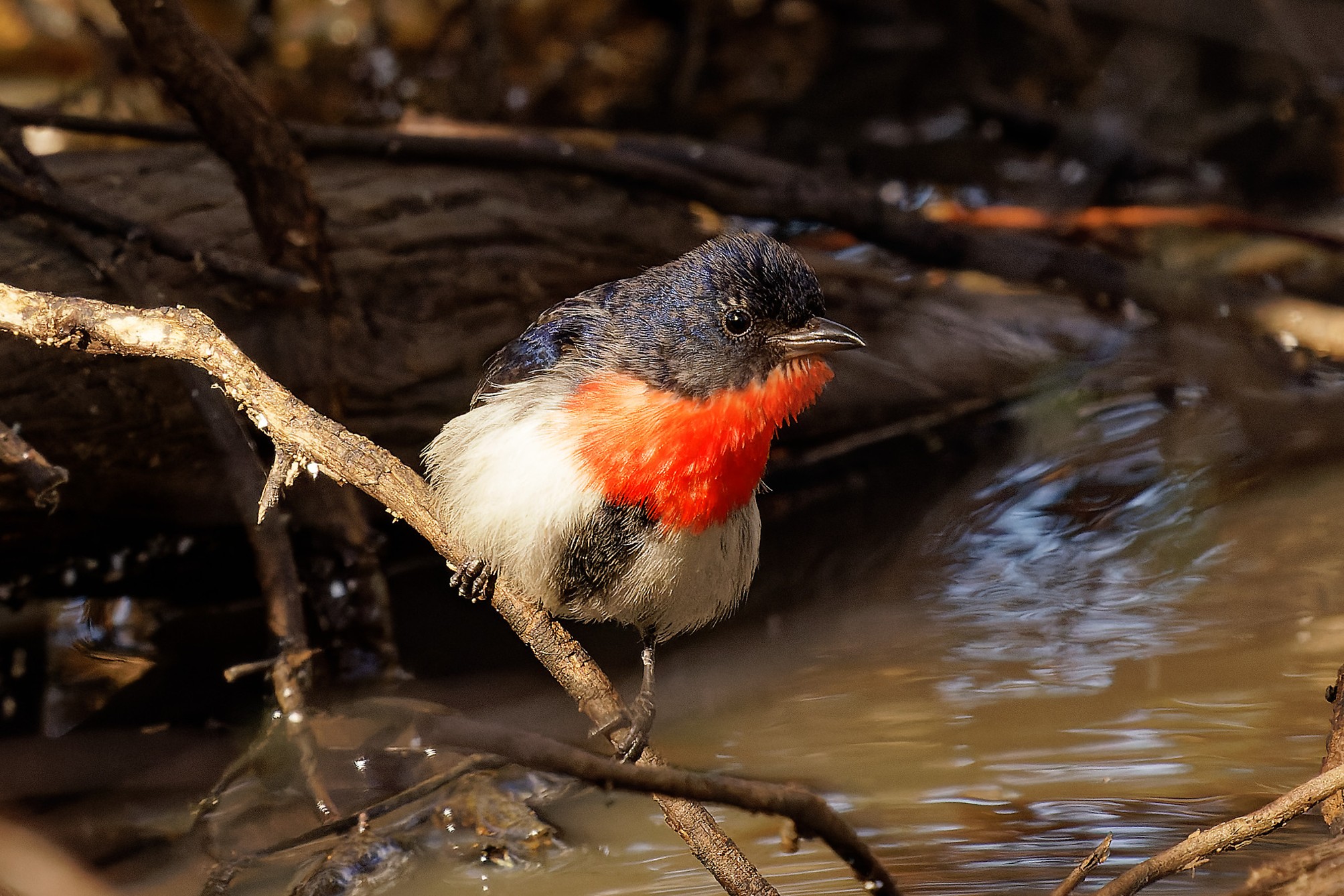
Male Mistletoe Bird showing off it’s gorgeous red chest. Photo by Damian Kelly
The high squeaky call of the Mistletoe Bird (Dicaeum hirundinaceaum) is what often signals its presence. Then the search is on to find the tiny bird, keeping a look out for the males vibrant fire engine red splash on its chest and under tail coverts. Given its name, it is not surprising that the Mistletoe Bird specialises in mistletoe – a plant that parasitises other plants. Specialisation in one plant may sound a little restricting until you find that there are about 75 different species of mistletoe in Australia. Clearly lots of variety is around.
The close symbiosis, a situation where two species “use” each other and both benefit, between mistletoe and the Mistletoe Bird possibly demonstrates the most highly developed example of this phenomenon amongst Australian birds. This bird is a major vector for the dispersal of the seeds of the plant, spreading them to potential new host trees. Timing of breeding tends to coincide with flowering and fruiting and so assists with cross-pollination and seed germination. The unusual structure of the birds’ digestive system emphasises the degree of specialisation that has evolved. The berries pass through the alimentary canal, but the structure of the digestive system allows for berries to be shunted from the oesophagus to the intestine whilst insect food is diverted to the stomach. Mistletoe seeds are passed about 15-20 minutes after ingestion. It appears only the skin of the berry is removed revealing the very sticky coating, this ensures that a lot of the seeds actually stick to trees as the bird moves about. A completely different take on plant fertilisation. Why the Mistletoe Bird wants to spread seed for the mistletoe plant seems to be a mystery, but perhaps it’s because it harbours so many insects, which are a mainstay food source for the bird?
The distribution of Mistletoe Birds is all over Australia except for some of the drier desert areas, but not Tasmania, and it is resident on some Torres Strait islands. Habitat type does not seem to matter as long as there are mistletoes and with 75 species chances are good that they are present. They also eat a range of insects gathered from foliage.
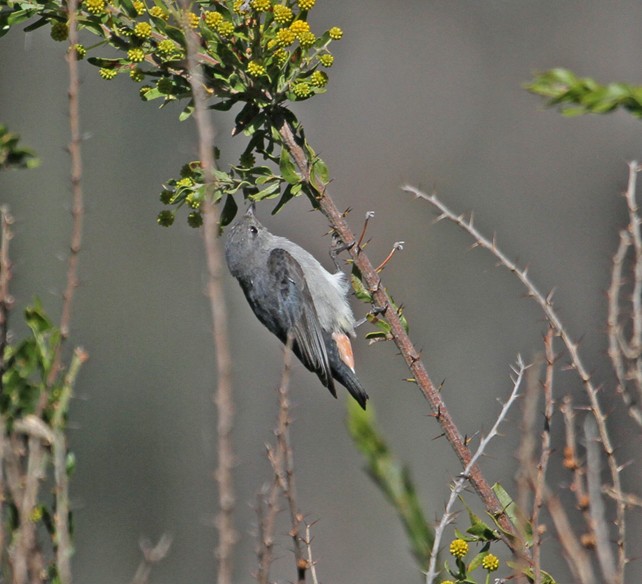
Female Mistletoe Bird, she is grey rather than black and lacks the bright red chest. Photo by Damian Kelly
Nests are precariously suspended from the end of a twig in foliage. It is an enclosed pear shape and is made from lots of soft materials such as wool, woollen threads and such like, and is held together with spiders’ web. A clutch of 2-3 eggs is laid and both parents feed the young – initially only on insects but then also with berries.
A largely sedentary species, they remain in an area all year round although some altitudinal migration has been demonstrated in NSW and Victoria over winter. Banding studies have recorded 98% recovered within less than 10km of the banding site. The oldest bird recorded was over 9 years old which is a fair age for such a small bird.
Mistletoe often gets a bad rap, …except at this time of year when apparently, it’s good for kissing under! But before you think badly of this parasitic group of plants, perhaps think instead of the huge number of species each plant supports, including the beautiful Mistletoe Bird.
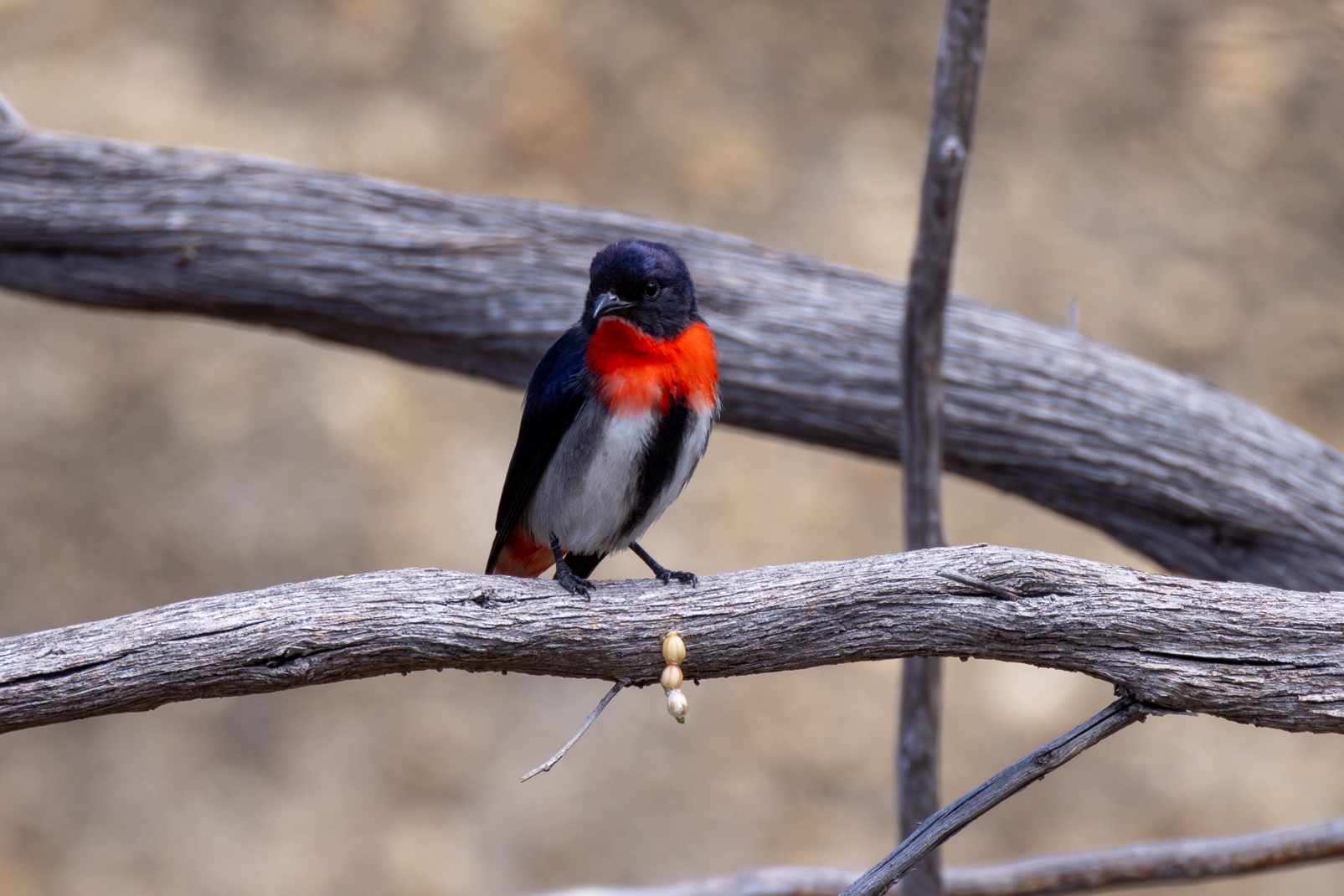
A male Mistletoe Bird and it’s poo of mistletoe berries stuck to a branch. Photo by Jane Rusden
Bird of the Month is a partnership between Connecting Country and BirdLife Castlemaine District. Each month we take a close look at one special local bird species. We are blessed to have the brilliant Jane Rusden and Damian Kelly from BirdLife Castlemaine District writing these! We’re excited to join forces to deliver you a different bird each month, seasonally adjusted, and welcome suggestions from the community.


Leave a Reply