

Bird of the Month: Grey Fantail
Posted on 20 October, 2025 by Lori
Words by Damian Kelly and Jane Rusden. Photos by Damian Kelly
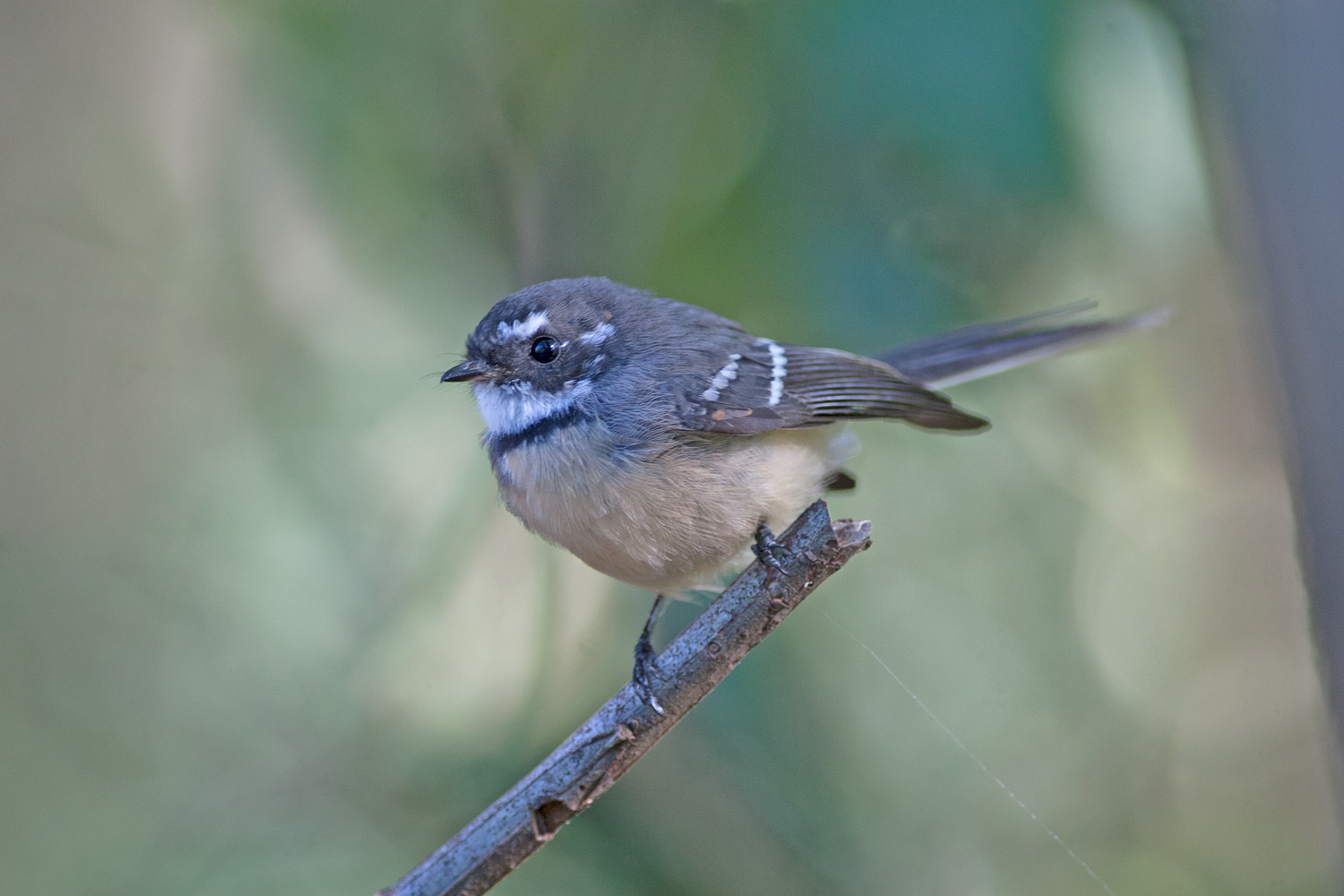
Always a delight to watch, the Grey Fantail (Rhipidura fuliginosa) swishes its tail around directing insects into easier catching distance. And then there’s their tinkling call, often heard before the bird is seen. Luckily for us bird watchers, Grey Fantails can be very curious, which means they come much closer to us than many other species. They do have rather a disapproving look on their tiny faces, characterised by their drawn down white eyebrows.
A confiding and widespread species, the Grey Fantail can be found all along the wetter eastern and western areas of Australia and occasionally spreading into drier areas inland. Tasmania, New Zealand and other islands also have populations of this species.
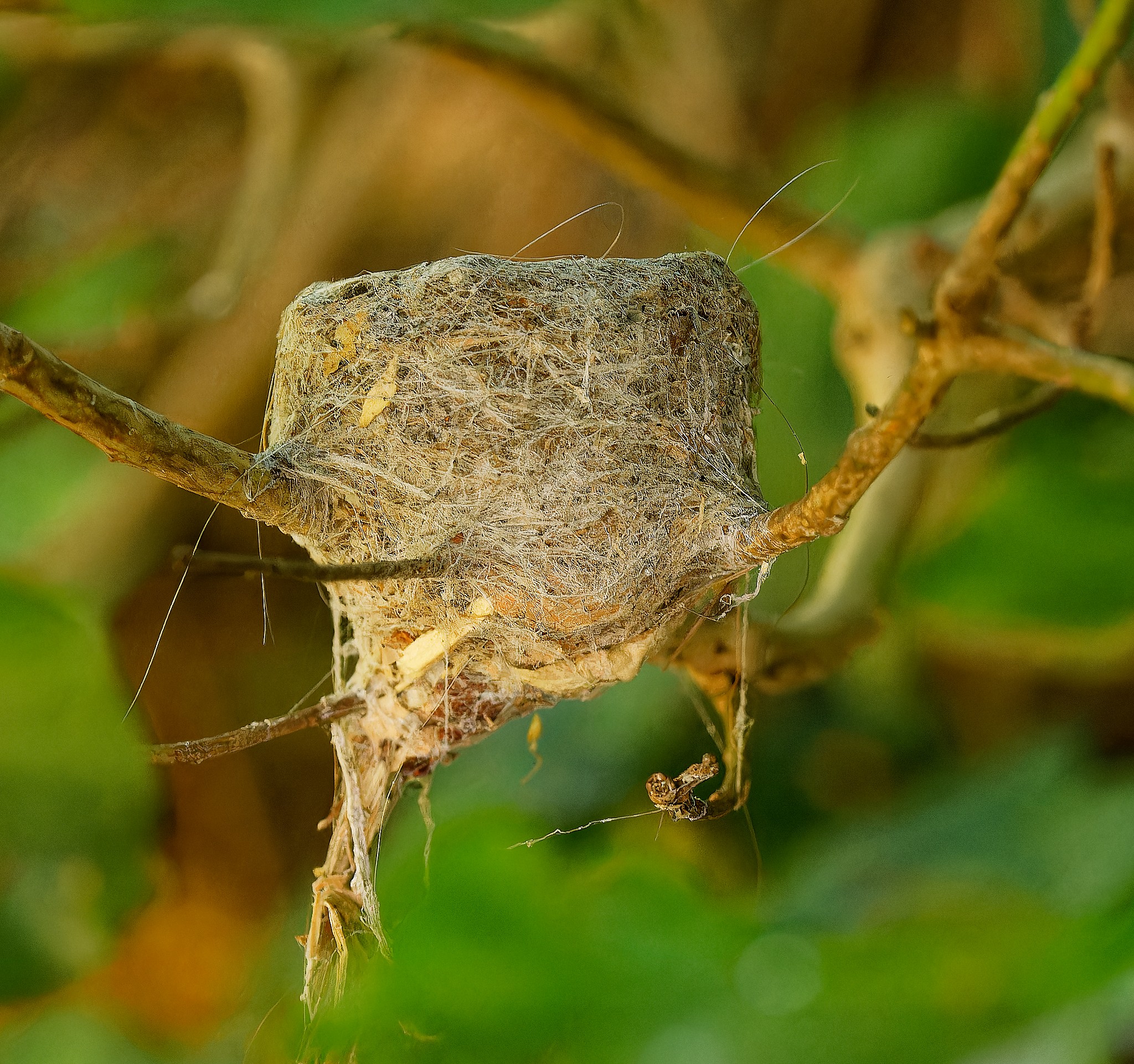
Nest of a Grey Fantail (Damian Kelly)
Urban gardens are also utilised and here in Castlemaine, in our garden near the centre of town, a pair of Grey Fantails has successfully fledged young for the last two years. The nest is concealed in dense vegetation right next to a garden path, but human traffic does not seem to concern them. Whenever I walk past, a beady eye is watching me, but the bird never leaves the nest. Two young were raised each time which is quite a feat given the tiny size of the nest. Built from small twigs, grass and hairs and held together with spiders’ webs, the nest is a beautiful construction. The nest from two years ago was simply refurbished with more web prior to the second season of breeding (see photo).
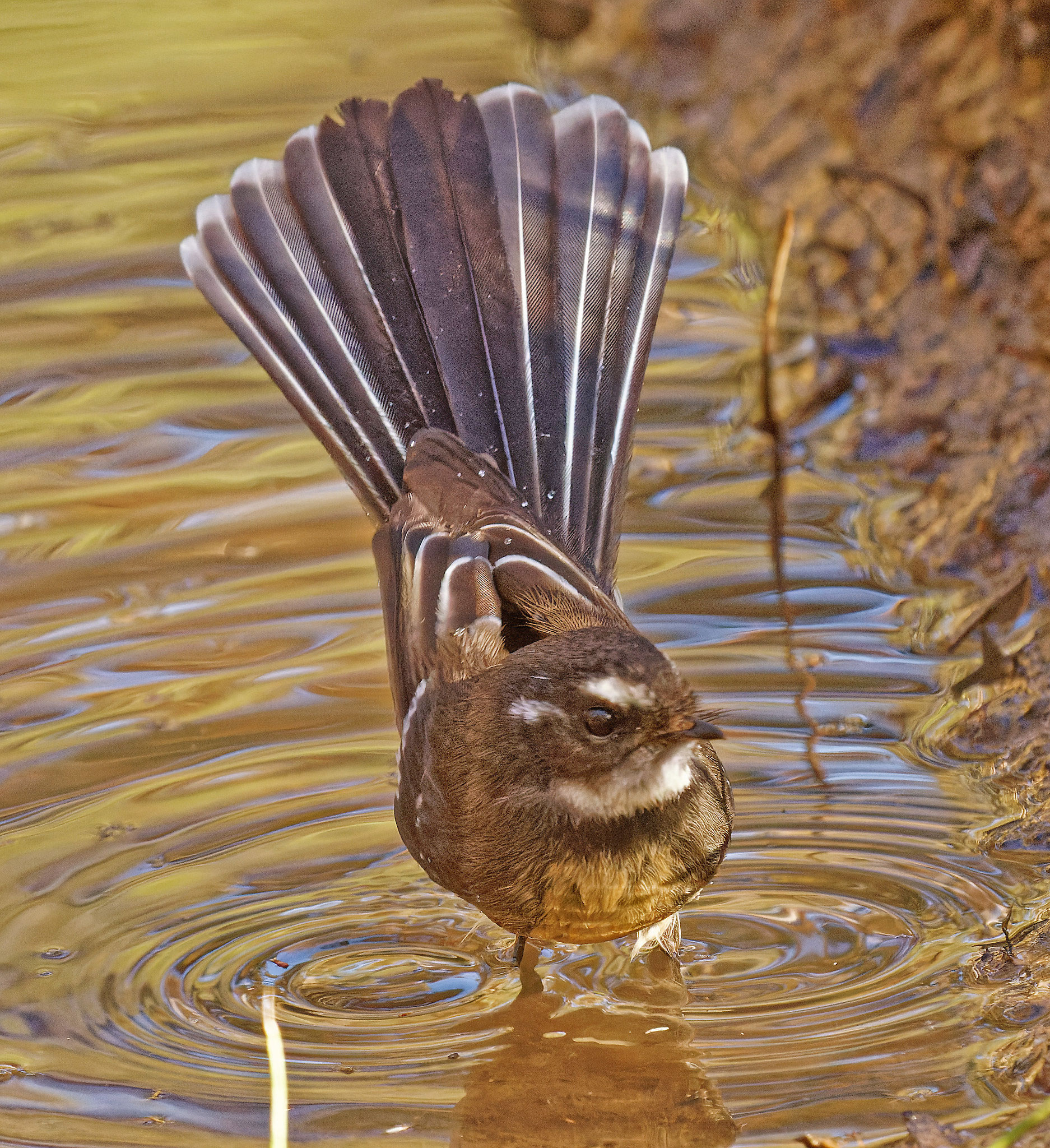
Although not fully understood, the movements of Grey Fantails are a mixed bag. In some areas populations are partly or fully sedentary, whilst in other areas migration takes place. Movements can be driven by food availability and temperature. There seems to be a whole east coast movement of birds. All in all, a mixed bag of movements. I can report that the birds who breed in our garden are not present over winter but have returned now as spring advances.
Some of the Tasmanian birds migrate to the mainland over winter. Groups of Grey Fantails have been regularly recorded moving across King and Flinders Islands on the way to the mainland. There are probably some altitudinal movements, but this is often confused by other movements occurring. At times small groups up to 30 birds can be seen moving through areas.
Feeding tends to be arboreal, often catching prey in flight, although they will also feed on the ground. Food consists mainly of insects, but they occasionally take fruit or seeds. Often associated with mixed feeding flocks moving through vegetation.
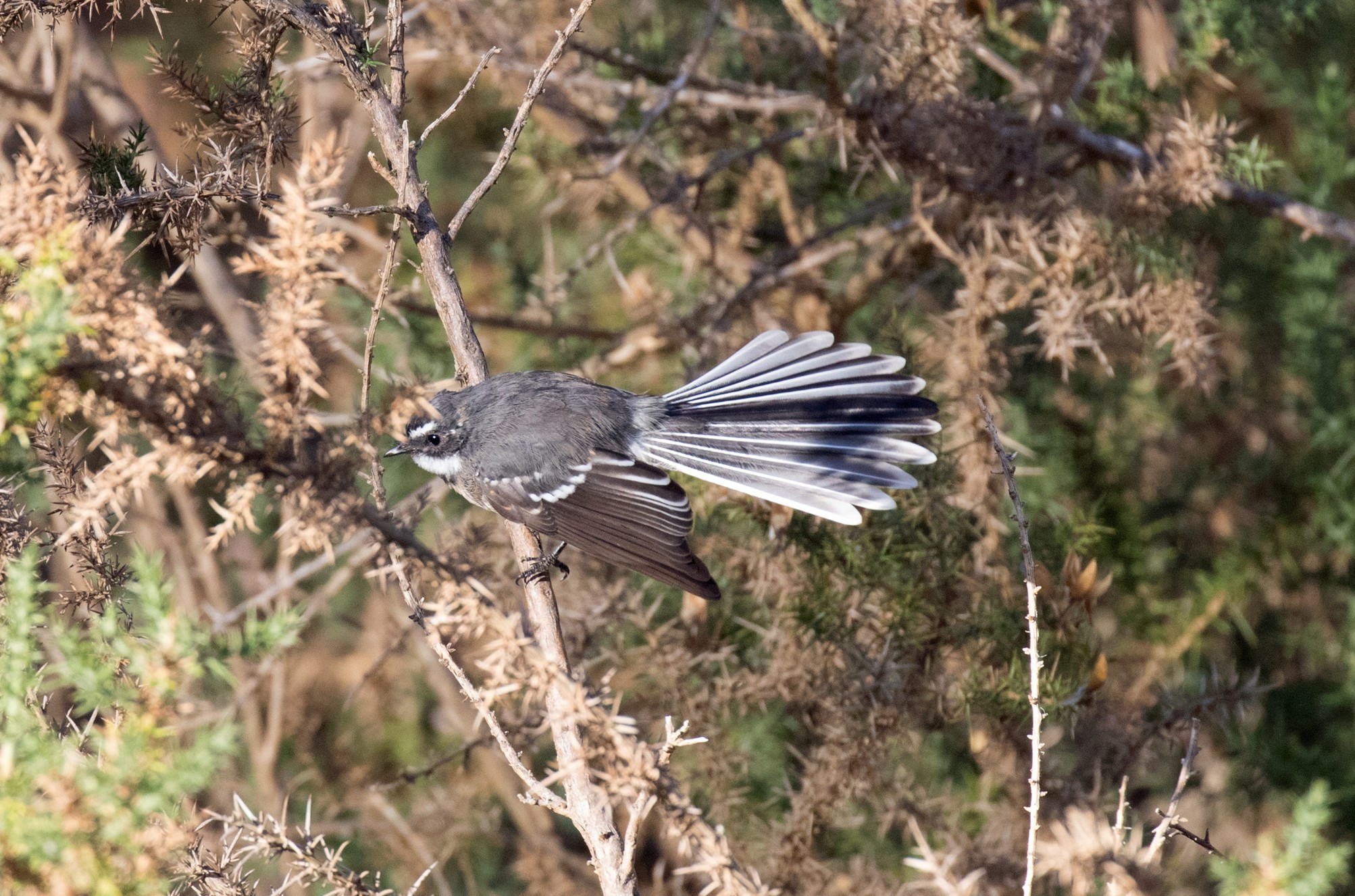
Grey Fantail utilising prickly cover of Gorse, (an invasive weed), with its tail characteristically fanned. Photo by Damian Kelly.
Bird of the Month is a partnership between Connecting Country and BirdLife Castlemaine District. Each month we take a close look at one special local bird species. We are blessed to have the brilliant Jane Rusden and Damian Kelly from BirdLife Castlemaine District writing these! We’re excited to join forces to deliver you a different bird each month, seasonally adjusted, and welcome suggestions from the community.


Leave a Reply