
Nature Kids Which Bird Are You?
We acknowledge Djaara and Taungurung as the traditional owners of the Mount Alexander region. Use of Dja Dja Wurrung language in this resource has been approved by Djali Balak (Djaara language repatriation committee) and the content has been informed in discussions with Djaara people. Permission for reprinting or use of language outside of these resources should be sought from Djali Balak.
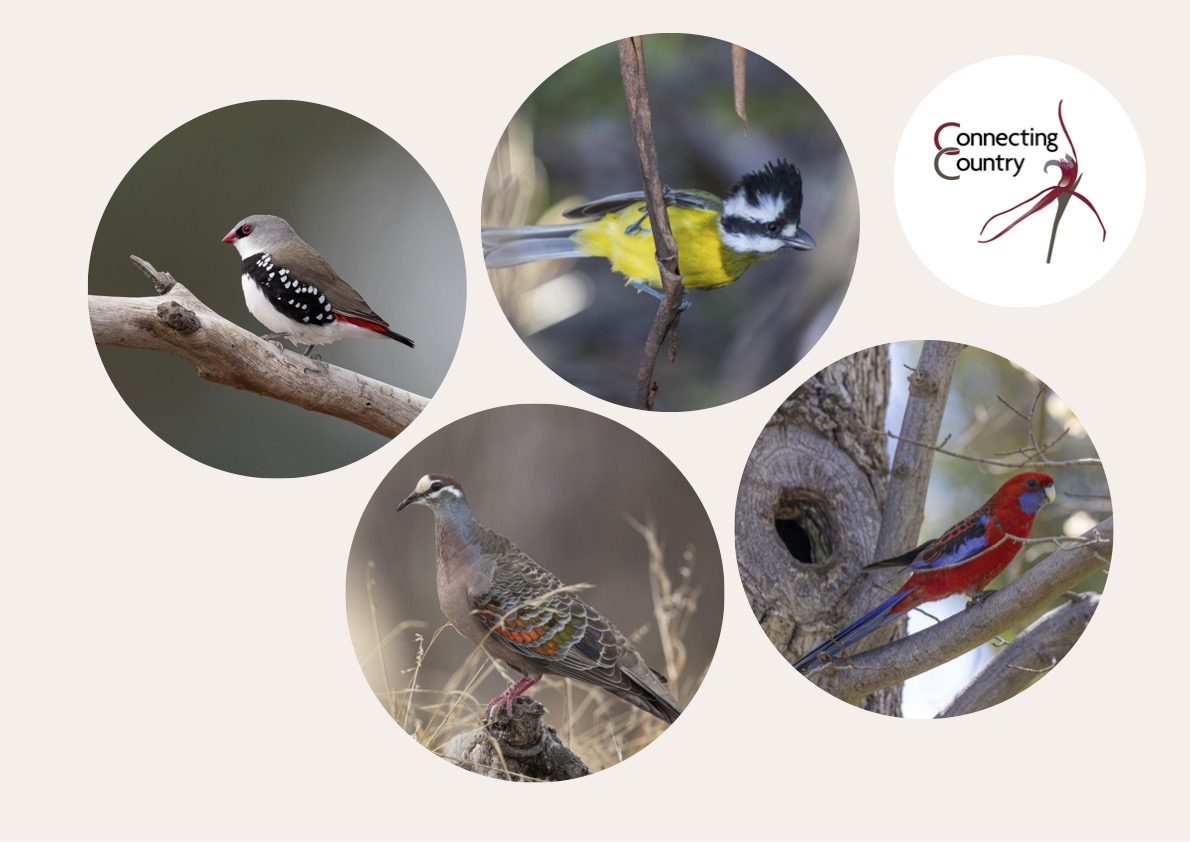
There are over 230 bird species recorded in the Mount Alexander region. Here are some species profiles for a small number of local birds. The profiles describe the bird’s habitat, diet, and behaviour and a little bit about their personalities. You might be able to see some of your own personality in the different birds. Maybe you are like a Majestic Wedge Tailed Eagle, or a playful Galah or a secretive Diamond Firetail.
You may come across some of these birds at home in the garden, or the local park, or even just outside the classroom, whereas others in the list are rare and harder to see in the wild. You might have to go to different parts of the Mount Alexander Shire to see them, or you may have to wait many years to catch a glimpse.
Resources
Bird Images Presentation with Links to Calls
Main Activity:
- Learn about local birds by engaging with some or all of the bird profiles with the class/group. You can choose to look at a few birds at once, or a different bird each week, or however you like, really!
- Show the bird pictures and read out the profiles. As a class, talk about whether you’ve ever seen these birds before and where you have seen them. Maybe you can mark where you’ve seen these birds on the Nature Kids map.
- You could play a game of ‘Which bird are you?’. Students select a bird they connect with and can explain why. It may be because the bird is blue and they like blue or perhaps it is because they like to stay up all night like the Powerful Owl.
Extension Activities:
- Go for a walk-in nature and see how many of these birds you can see. What other birds can you see?
- Mask creation! Decorate a mask like your favourite bird.
- Imagine you are one of these birds, write a story about a day in your life. Describe your home. Who is there with you? What would you eat for breakfast? What time would you eat breakfast if you wake up at nighttime!?
- Make your own class bird book or zine (draw or use photographs of local birds)
- Do you have a favourite bird already that doesn’t appear in this list? Tell the group about it and why you like it.
Associated Awareness Events and Celebration Days:
- Aussie Bird Week in October.
Bird Activity Photo Credits:
Swift Parrot Photo: Chris Tzaros (Birds Bush and Beyond). All other bird photos: Geoff Park (https://geoffpark.wordpress.com/).
Where the Dja Dja Wurrung word for a species is known it is listed below the English name. The word for bird is wiriynwil. Please note the Djaara nouns approved and provided by Dja Dja Wurrung Clans Aboriginal Corporation for this project did not use capital letters as is usual in the English language.