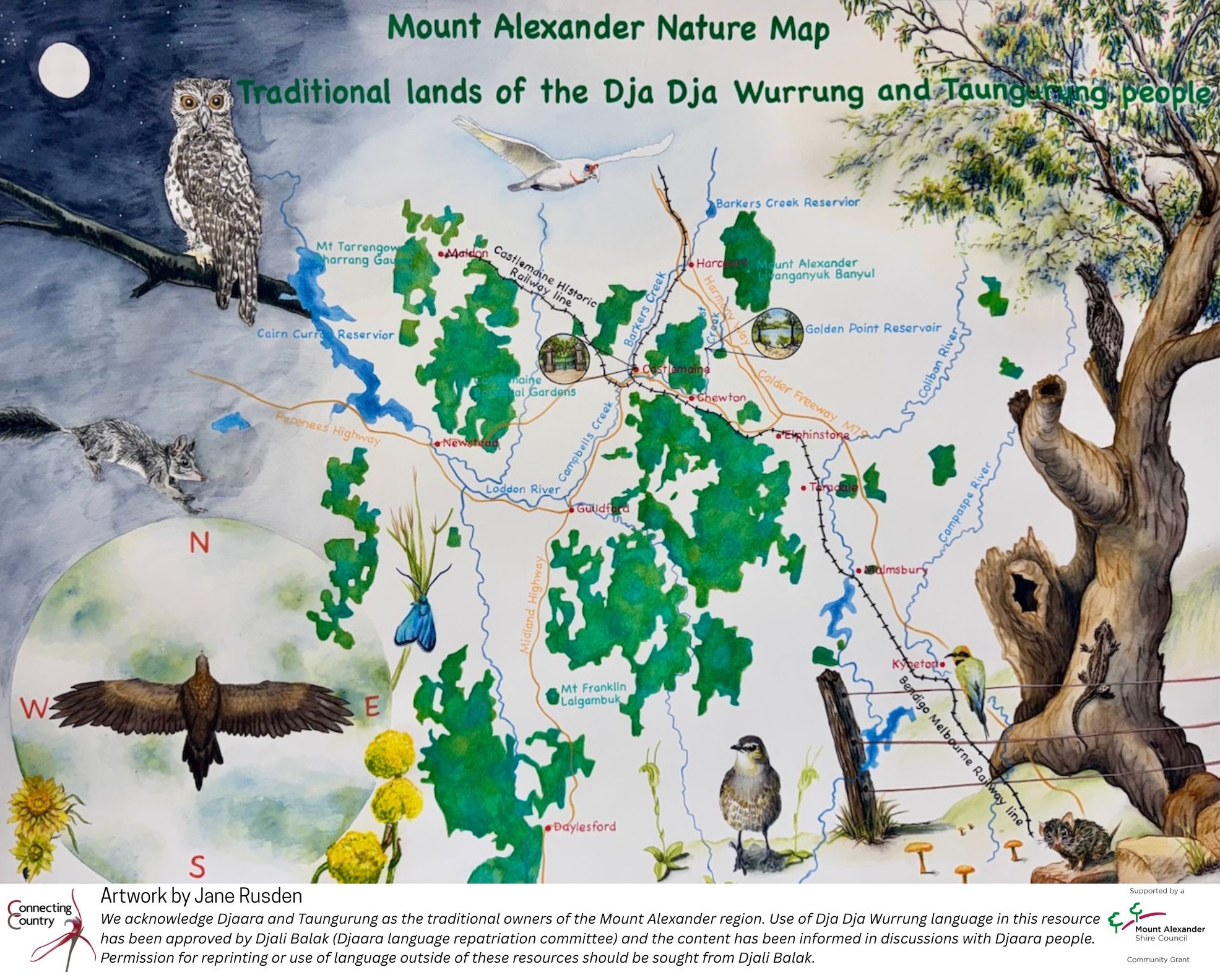

Mount Alexander Nature Kids Map
We acknowledge Djaara and Taungurung as the traditional owners of the Mount Alexander region. Use of Dja Dja Wurrung language in this resource has been approved by Djali Balak (Djaara language repatriation committee) and the content has been informed in discussions with Djaara people. Permission for reprinting or use of language outside of these resources should be sought from Djali Balak.
A beautifully illustrated map of natural landmarks and ecological highlights of the Mount Alexander Region by local artist Jane Rusden. The map is a key part of the resource pack, tying all activities together and giving a sense of place and context.
The Nature Map can be used interactively in the learning environment, as individual kid’s maps or a larger map on wall. It can also be used as a resource with accompanying workbooks to take home and engage with family activities.
It includes natural landmarks such as key waterways/waterbodies that kids might know and visit, local mountains- Liyanganyuk -Banyul (Mount Alexander) – Dharrang Gauwa (Mount Tarrengower), and Lalgambuk (Mount Franklin , main roads, railways and key conservation areas/national parks.
A select number of local fauna species are also included on the map, including the Wedge-tailed Eagle as a compass indicating north. The Nature Kids Map with Key Resources features a legend with the fauna species shown on the map.
Resources
Mount Alexander Nature Map with Key
Mount Alexander Nature Map Colouring in Sheets
Activity ideas:
- Use the map to talk about how the landscape is all connected.
- For younger age groups, the map is accompanied with colouring sheets that feature the plants and animals featured in the map. Students can colour these and then talk about what environments these species may be found and/or match them up with the images on the map.
- What locations do you like to visit? Discuss places where you have been and what you may have seen there (plants and animals). How does it feel being amongst nature.
- Look at how the creeks run into each other and think about how what we put down the drain, ends up in the environment.
- Mark where the learning environment (e.g. school) is and then where nature activities have been completed, or different animals have been spotted throughout the year by different kids.
- Write and/or talk about a memory of being in nature and how it made you feel.
- Photo assemblage – bring in a photo of you in nature and talk about it.